

12 Genius Home Items You Can Only Buy From South Korea
It might seem like Americans' modern love of South Korean culture — as evidenced by the enthusiastic importation of everything from beauty products and foods to K-pop and cinema — has left little of Korean culture left to explore. But, of course, an ancient culture will have traditions, crafts, materials, and methods all its own, and there's still plenty to discover. The only problem is finding some of the most iconic Korean home items locally. You might find brassware utensils, woodcrafts, or even Dansaekhwa art prints on international marketplaces like Amazon. However, you'll still find the most and the best examples of Korean crafts and home goods within South Korea itself.
This is starting to change as both contemporary artists and manufacturers find ways to integrate traditional Korean arts into new products ... and those products will inevitably, it seems, find their way onto shelves and into the homes of the West. But, for now, many of these crafts are most readily found in the markets, festivals, and galleries of South Korea, particularly around Seoul.
Of course, it almost goes without saying that some Korean arts and goods will find their way onto shelves intact. In contrast, others will arrive as mere imitation or even cynical approximations without much in the way of authenticity. For the moment, you might find more authentic craft from local Korean artisans than from mass-produced imported goods. Sometimes that won't matter much — in a sense, a brass chopstick is a brass chopstick — but sometimes it will make all the difference, as with Hanji papercrafts, traditional pottery, and fine woodworking.
Traditional hand-forged HoMi hand hoes
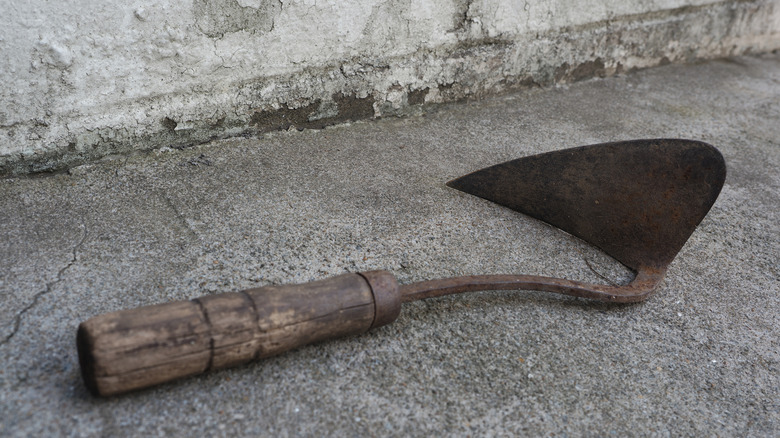
The HoMi, a hand-held tool for working garden soil, is an example of how some Korean home and garden goods have entered U.S. homes by way of Amazon and other online retailers. The uniquely shaped, multipurpose cultivator became popular in the U.S. starting around 2018, but that doesn't always mean you'll find and an authentic HoMI, even today. Models stamped from steel sheets are comparatively less strong than blacksmith-crafted Korean HoMi. Before you shop, keep in mind that HoMi come in left- and right-handed versions.
Bangjja bronzeware bowls, cups, plates, and spoons
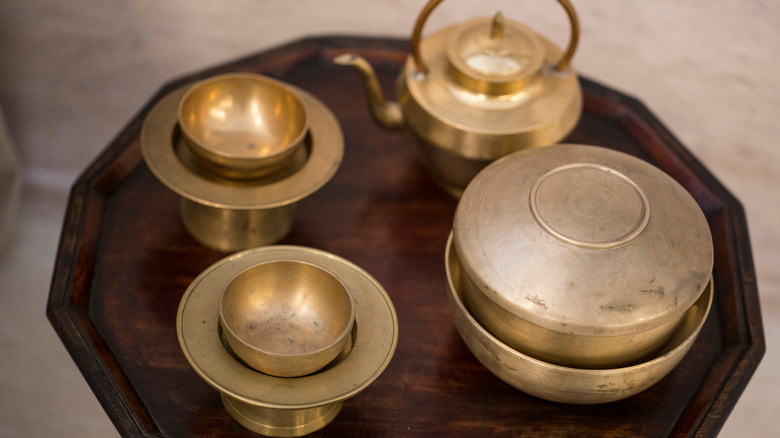
Often referred to as brassware, Korean Bangjja is actually a bronze alloy of copper and tin in very specific proportions, hand-forged at a very specific temperature. It's a labor-intensive process even in fairly modern manufacturing facilities, and a proper piece of yugi (traditionally hand-crafted bronzeware) can take a lot of hands to make and many dollars to purchase. The alloy composition makes the resulting plates, bowls, and utensils somewhat anti-bacterial. It also retains heat well and is used for several musical instruments, including gongs.
Dansaekhwa contemporary art
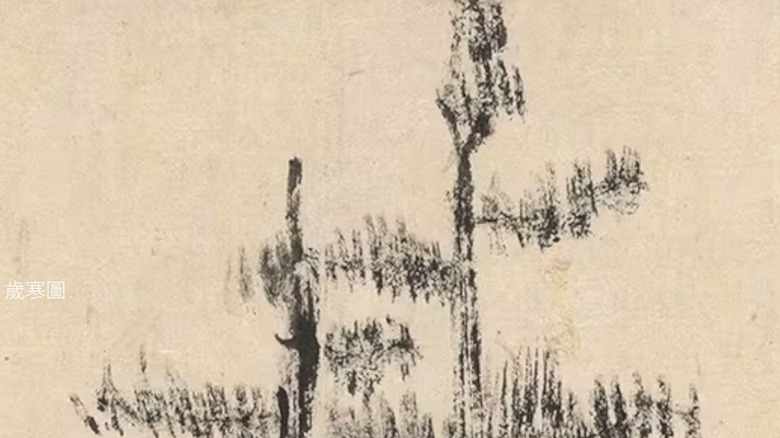
Just as some half-moon hoes from Japan and Korea made their way into Western markets via European versions, you might have encountered the Korean Dansaekhwa movement thanks to exhibitions at the Guggenheim or the European Fine Art Foundation (TEFAF) in New York. It's a uniquely Korean genre characterized by a monochrome palette and meditative, repeating patterns. The style was a movement to bring a Korean perspective to abstract art in an era when representational art was the rage. You can find fine Dansaekhwa prints in Seoul, and a few on Amazon as well.
Minhwa traditional folk painting
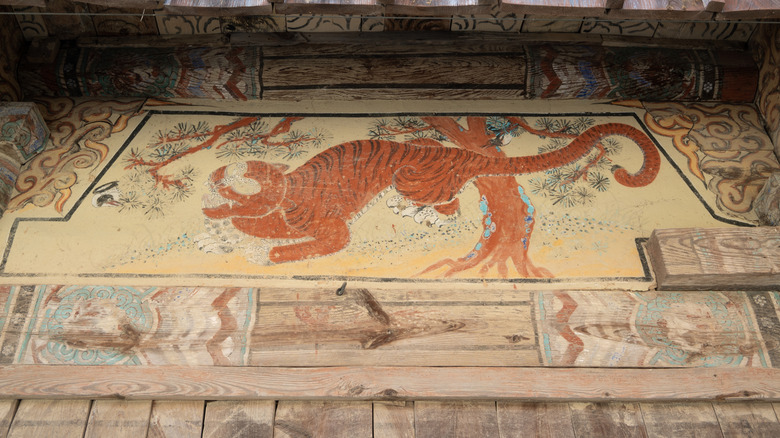
If the Dansaekhwa movement was high-minded, Korea's popular folk art — dubbed Minhwa — was more down-to-earth, and its best examples might be centuries-old works by anonymous painters. But Minhwa is no less beautiful or intriguing for its popularity, and has a unique vividness and occasional whimsy, as seen in motifs like the friendly tiger ... a recognizable creature that is non-threatening and sometimes positively silly. You can find some Minhwa wall art outside of South Korea from online shops selling both digital downloads and fine prints.
Mokjogakjang carved wood sculpture
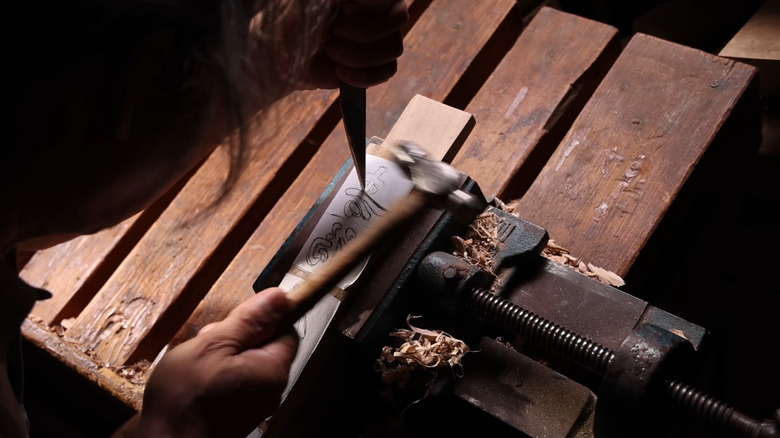
Mokjogakjang, Korean wood sculpture, can be high-minded and refined, as in sculpted objects of religious worship. It can also be a decorative touch added to the practical and everyday ... and the latter might be the more remarkable. Simple devices like wax seals and rice cake molds can be executed with staggering skill and beauty. These are objects of great craft and often considerable expense that might be difficult to find outside of South Korea, and replicas on Amazon tend to be of CNC and laser-cutter provenance.
Somokjang fine woodworking and furniture
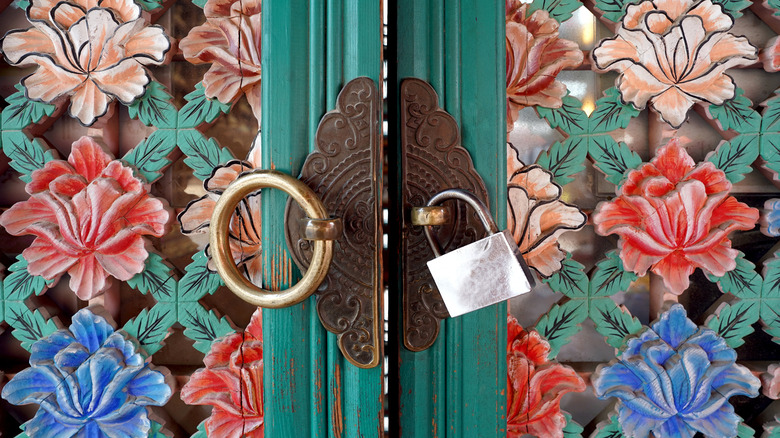
Somokjang is roughly equivalent to fine woodworking in English, while Mokjogakjang is wood sculpture, and Daemokjang is the lived-in crafts of carpentry. But these descriptors of size and scope reveal nothing about the effort or skill involved. Korean woodworking is an ancient art of exacting and traditional techniques that strive to accentuate the pattern and beauty of natural wood. It is likely you will not find authentic examples of Nakdong, the manual process of hand-charring paulownia to preserve it and emphasize its grain, in your local World Market.
Ttukbaegi earthenware pots
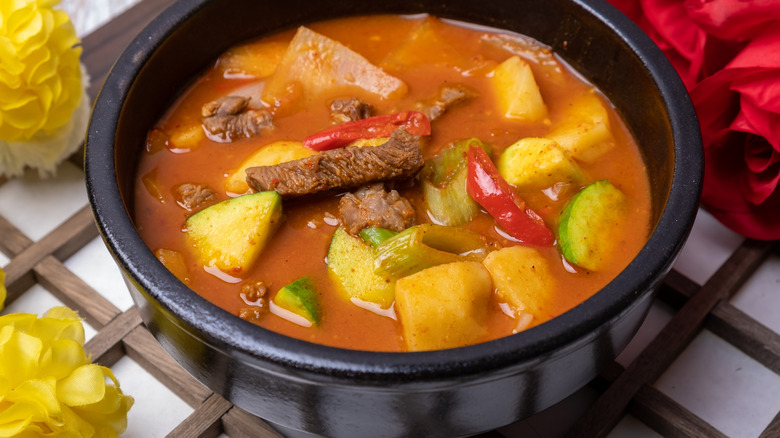
Until recently, saying "earthenware Korean pot" to an American would probably have called to mind the crocks in which kimchi is fermented, but Ttukbaegi are for cooking ... and they do it well. These clay pots heat slowly and retain heat like cast iron, cooking faster and better than ordinary stainless cookware. You can find perfectly serviceable Chinese-made Ttukbaegi on Amazon, and Korean Ttukbaegi for only a little more. You might need to invest some time, and possibly get a passport, to explore the full variety of authentic Korean Ttukbaegi.
Korean barbeque grill pans
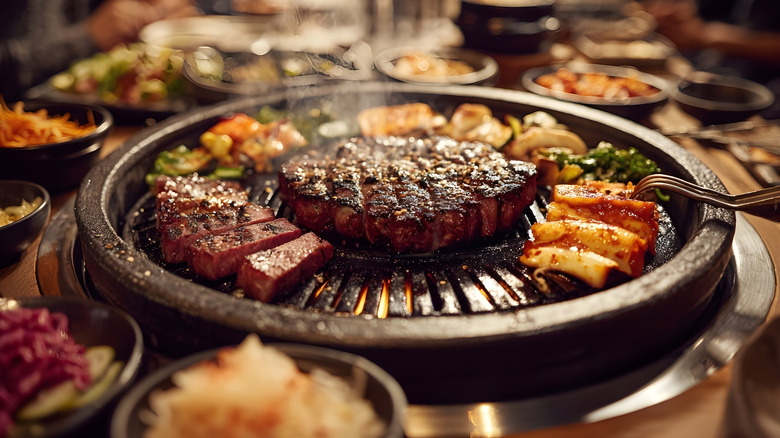
You'll have an easier time finding Korean barbecue (predictably, now called "KBBQ") pans than Ttukbaegi in U.S. markets. These grill/griddle pans come in many forms. The most common stovetop version is often made of cast iron and has a gentle curve, causing it to resemble a mostly flattened wok. Restaurant-style grill versions have a dome that sits in the pan for cooking meat and managing oil. Electric versions can be used without a stove. An authentic version with a stone cooking surface might be difficult to track down outside of South Korea.
Hanji (traditional handmade mulberry paper) products
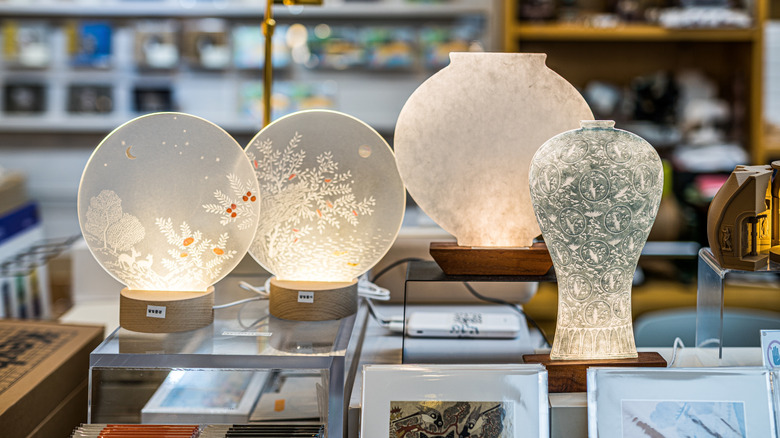
Aside from world travel, local Korean markets are your best bet not only for sesame oil but also for traditional Korean crafts like Hanji. Hanji is a handmade mulberry paper that is the core of a number of Korean handicrafts like Jiseung, weaving with Hanji cord; Joomchi, a glue-free collage technique in which Hanji is fused into sheets; Hanji Gongye, in which Hanji is applied to objects, decoupage-style, or objects are made from only Hanji; Hapjukseon, traditional Korean folding fans made from Hanji; and various forms of paper cutting and folding.
Jogakbo, traditional Korean patchwork
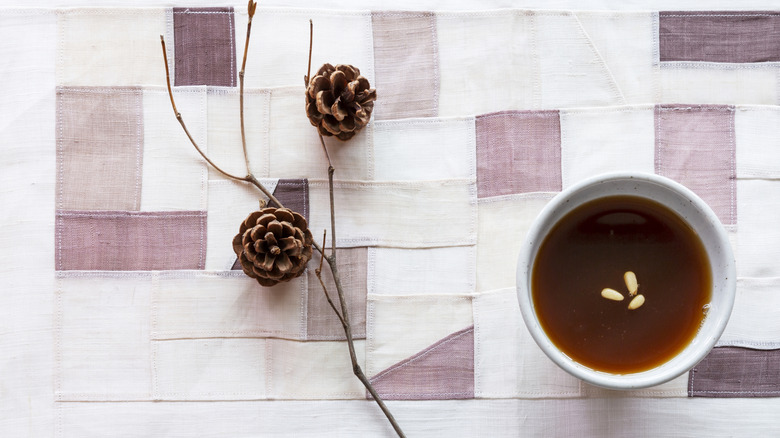
Jogakbo, the traditional Korean patchwork of fabric scraps, can be used for anything — even a cute DIY covering for your windows. But it's commonly used to creating clothing and to Bojagi, the Korean craft of wrapping objects and gifts in fabric and sealing them with folds. Jogakbo is often made from leftover scraps of silk and accompanied by the Korean crafts of hand-sewing and hand-embroidery. You can find examples and applications of Jogakbo in markets like Etsy and eBay, but take care that you're getting authentic Jogakbo, with all the skill that implies.
Maedeup, traditional Korean decorative knotting
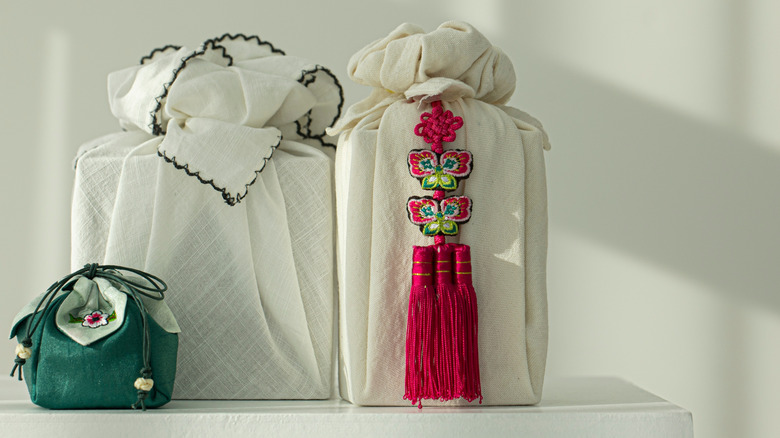
You might be somewhat unimpressed at the mention of decorative knotting, but what you should be is nonplussed ... bewildered, at a loss for words. In its traditional form, Korean Maedeup involves dyeing thread, braiding it into cord, tying knots with that cord, and structuring those knots into the final product. The result can be as simple as a single knot or as elaborate as a tree full of cherry blossoms. The knots sometimes have specific meanings or natural inspirations. Examples of maedeup beyond the simplest forms can be difficult to find in U.S. marketplaces.
Ceramics and lacquerware
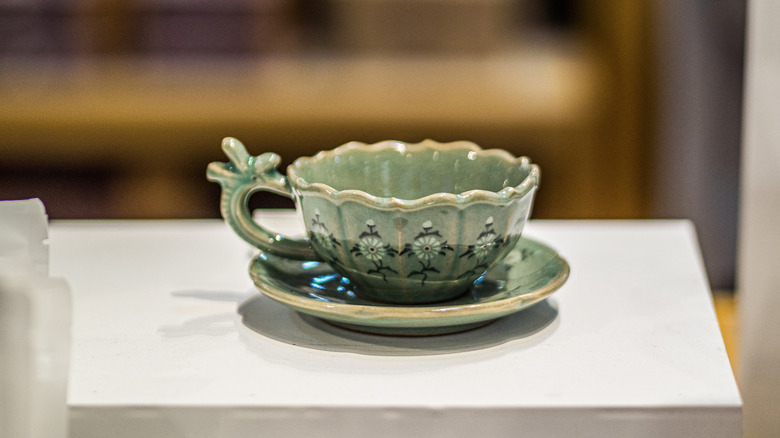
South Korea has a long tradition of ceramics and lacquerware. A notable example is Goryeo Celadon, a pottery-glazing technique that results in a range of greens, typically described as "jade green." "Celadon" is now used to refer to a specific color hue, and adding the color celadon to your decor might be most convincingly done by incorporating Goryeo Celadon itself. In Najeon Chilgi, lacquered wood objects are inlaid with mother-of-pearl. Otchil is a particular form of lacquer that forms a durable coating that can last for thousands of years.