

Ditch Asphalt Driveways: A Greener, More Attractive Alternative

Homeowners in search of sustainable property improvements should look at durable and stylish asphalt driveway alternatives. Asphalt is a common, affordable driveway material with several environmental drawbacks: it is petroleum-based, contributes to heat absorption, and it's usually impermeable. On a large driveway surface, asphalt prevents rainwater from soaking back into the ground. This process contributes to pooling, flooding, and contaminated runoff. However, permeable pavers are a more eco-friendly alternative. This includes one appealing choice — turfstone pavers.
Turfstone pavers are made of concrete and have an open grid or lattice-style design. Grass is often grown in the gaps. These pavers offer the strength of a solid driveway, but they have the look and permeability of a natural material. The Belgard Turfstone Grid Paver is an example of this product. When it rains, water can filter through the pervious surface. This process helps replenish groundwater, which is important for ecosystems. Since the water absorbs in-place, permeable pavers also help keep pollutants out of local waterways.
When rainwater flows down traditional asphalt driveways, it can collect residue such as oil, gasoline, and de-icing salts as it passes. These substances can pollute streets, storm drains, and waterways. This is especially concerning when you consider the concentrated result of runoff from multiple homes. The gaps in these pavers also offer better drainage and air flow in the winter, reducing the risk of ice refreezing and creating a dreaded ice rink of a driveway. This means less deicer is needed, minimizing the use of one type of pollutant.
Turfstone pavers are better for the environment and look lush too
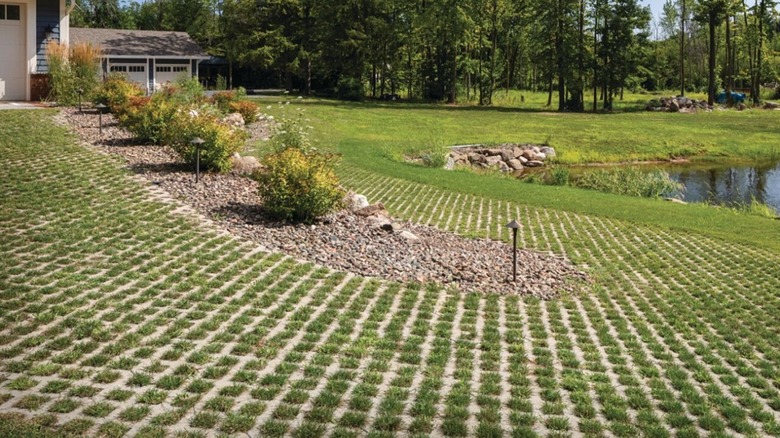
Permeable options, such as turfstone pavers, can make a difference locally. Some areas even offer rebates or stormwater fee discounts to encourage the use of permeable driveways that reduce waterway pollution. There are a couple of direct benefits to homeowners as well. Mainly, turfstone pavers are less prone to pooling and flooding in heavy rain. If storm drainage is a concern on your property, this type of driveway can help with water absorption across a substantial surface area.
The presence of more green space is also a benefit in the summer. Asphalt can get very hot, while grass remains cooler in the summer heat. With its grassy gaps, turfstone pavers will be more comfortable to walk across than a large asphalt expanse. Depending on your neighborhood, the switch might help contribute to less heat absorption and help reduce the urban heat island effect.
Restoring groundwater stores and reducing runoff and heat absorption is great. However, homeowners also value curb appeal when planning a new driveway. Luckily, turfstone pavers don't sacrifice looks, especially if you prefer greenery. The vegetation provides a rustic, lawn-like appearance that's still distinct from the actual grass. Rather than having a dark expanse of blacktop, turfstone pavers better integrate into natural landscaping.
Installing and maintaining turfstone pavers
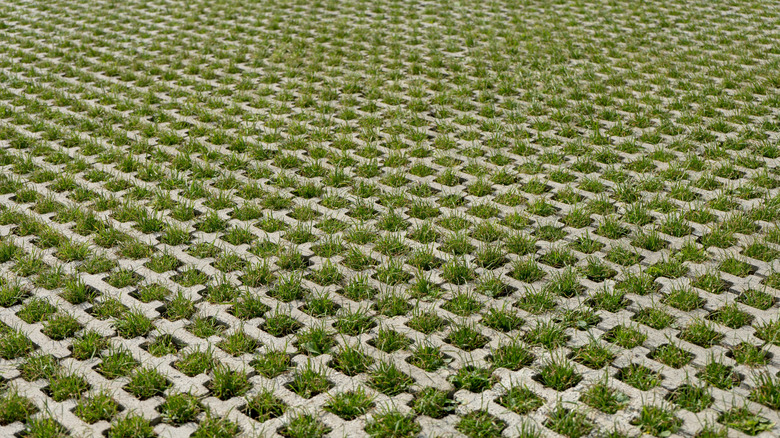
Having permeable pavers installed is generally more expensive than asphalt. It's not just a matter of laying the pavers down. Multiple layers are often needed to create the drainage system. The turf pavers are just the surface layer. Underneath, there is a stone bedding layer and aggregate base that lets water filter through. This means installation is a more involved process, so you might want to consider hiring a professional for the job.
Just like a grassy lawn, turfstone pavers need a level of maintenance to keep vegetation in check. This includes common lawn tasks, like watering, mowing, and weed removal. Sometimes, you may need to reseed patchy areas. It's a little extra work, but that's to be expected from a more natural, eco-friendly, and lush driveway.