

Vinegar Isn't The Only Way To Kill Weeds — There's A Natural Option That's Overlooked

Weeds are a thorn in any gardener's side, especially for those trying to shirk the commercial herbicides in favor of safe, natural control methods. Vinegar is well-known as a household DIY weed killer, but constant applications are time-consuming, especially if you have a lot of land to cover. If you'd prefer something that's not a finite resource and practically works on autopilot, you might be overlooking the perfect living weed weapon residing right in your backyard flock.
Enter the humble chicken, a voracious muncher of many types of garden pests and greenery, including those pesky weeds that won't stop popping up in your landscape. Unlike vinegar, your backyard chickens don't just help eliminate weeds and their seeds; they offer a range of benefits while they forage, and they're glad to take on the task, free of charge.
When it comes to natural weed control on your property, your chickens' dinner is a win-win. Aside from getting a tasty snack, your chickens will love the change of scenery and the fresh soil that they can happily claw up as they chow down. Their natural scratching behavior will help loosen and aerate the soil, keeping it primed for planting. That's why chickens are often helpful for weeding and prepping soil for new garden plots. Fertilization is the cherry on top: You can use chicken manure as a garden fertilizer, and any leftover greens will break down as mulch to enrich the soil.
Safely using your chickens for natural weed control
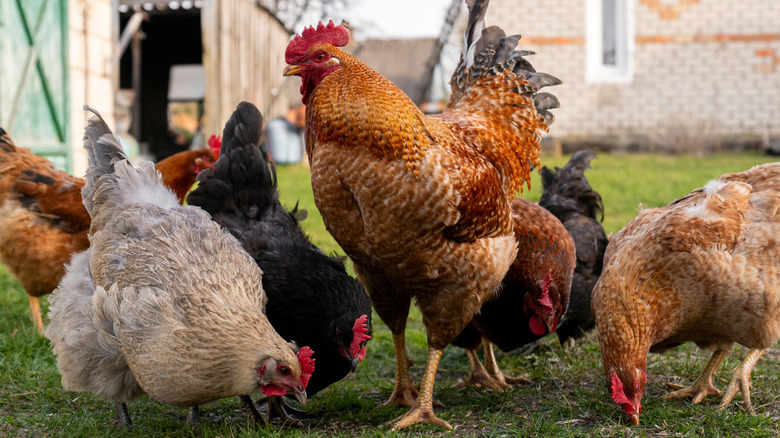
Since chickens can be destructive and often don't discriminate what they feast on, containment is key for an effective chicken weed control strategy. Use garden fencing, chicken wire, or other barriers to protect your beds and prized plantings from hungry beaks. Block off any plants that could harm your chickens if they decide to nibble, including ornamentals like foxglove, daffodils, or lily of the valley as well as hemlock, milkweed, nightshades (such as potatoes or eggplant), and raw beans. This list isn't exhaustive, so be sure to fully research the plants to watch for in your area. Also, avoid letting chickens loose in areas recently treated with pesticides, herbicides, grass seed, or fertilizer. Alongside fencing, well-placed chicken tunnels make a clever hack to keep chickens out of the garden and control their movement around the yard.
Once you've got your setup planned out, customizing your weed control may take some trial and error, depending on how many birds you have. One study (reported on by the University of Maine Cooperative Extension) recommended stocking roughly eight to 15 chickens per 1,000 square feet, though the time it takes to work an area depends on the amount of weeds and the chickens' behavior. It's also good practice to rotate where your chickens eat on a daily basis to avoid oversaturating the soil with manure and keep your chickens supplied with fresh food.