

Overthinking My Home Isn't A Flaw — It Actually Made Me A Better Interior Designer
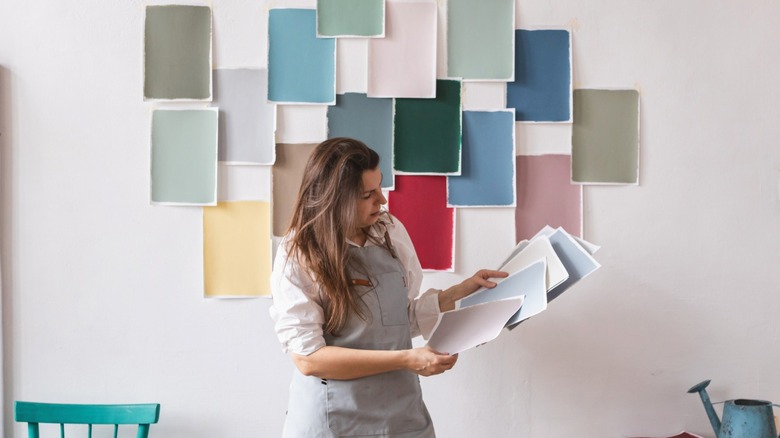
As a professional interior designer, I'm swift and decisive when it comes to making furniture or material selections, giving advice, troubleshooting a renovation surprise, and more. Guiding clients in the right direction feels instinctual and rooted in years of practice. But in my own house? It's totally a different story. I have projects over five years in the works, paint samples taped or painted on multiple walls, and two different sets of knobs installed on my bathroom vanity (the ones I used for this affordable cabinet hardware makeover) because I simply can't choose. This is only partially due to the old "plumber with the leaky pipes at home" adage, not having the time or energy at the end of the day to focus on my own projects. In many cases, it's often my paralyzing indecision that grinds the process to a standstill. And I don't think my personal design paralysis is an isolated incident — it's a common occupational hazard ... but, in my opinion, not necessarily a bad thing.
Hear me out. The reason people hire an experienced interior designer is because they can't visualize what they want or translate their style to a space. But they at least create a starting point. A client's desires guide and ground me, and it's easy to lend my creativity and experience to open the possibilities for them. In our own homes, though, designers have the opposite problem: We imagine every wonderful possibility, and the challenge is narrowing it down to just one. The struggle is real, and I know so many professionals that fall into this rut from time to time ... or always. Still, one thing I know for certain: My at-home design paralysis is actually a good thing that I wouldn't change for the world.
Design paralysis makes me an effective, empathetic designer

The first reason I think my design paralysis is actually a great thing is because of the positive effects it has on my professional skills. To start, it certainly makes me a more compassionate designer. A huge factor in renovating, building, and/or designing a house is that extreme decision fatigue that nearly all clients experience at some point in a project. I can literally see it on their faces when they're spent and have hit the wall. But because I can absolutely relate to that feeling after living it (hard) at home, it's so much easier for me to empathize and take a firmer hold of the reins on their behalf to ease that decision exhaustion.
Secondly, as a recovering Type-A overachiever, I get all of my overanalysis out of the way on my time. In our day-to-day career, designers see endless options for new materials, selections, and techniques, each one more exciting than the last. It's like we know too much, and this leads to inspiration overload. However, wrestling this phenomenon on my own terms until I've wrapped my head around it and learning to satisfy my picky tastes makes me better prepared to tackle my professional challenges — especially knowing that few clients are likely to be as difficult to deal with as myself. I'm only partially kidding. In all seriousness, there's a relief to working out the speed bumps, research, and critical fussiness in my world so I can process it, learn from it, and leave it behind in yours. I come ready to rock, decisive and confident — all thanks to my puttering and overthinking at home.
An experimental design process leads to an elevated home
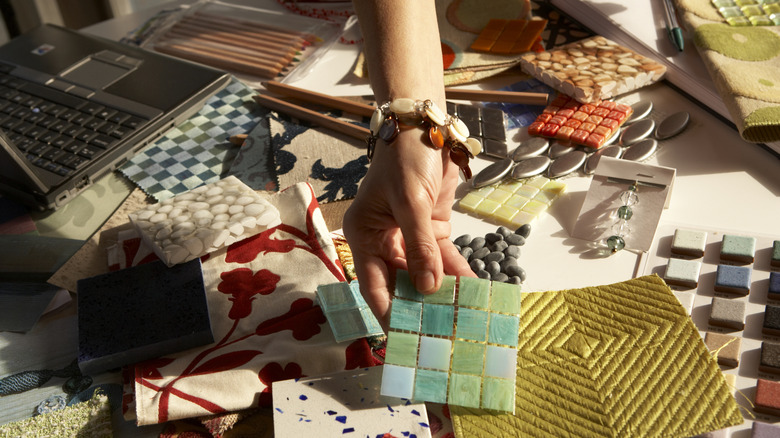
The more important reason I value design paralysis — and so should you — is entirely creative. When planning my space, I willingly abandon my design compass that so strongly guides my client decisions and keeps projects moving. I, like many designers, am a dreamer. Without the occupational standards in place, I'm free to float through the design playground that is my home without restraint or deadlines. If that sounds chaotic, it's because it is.
But sometimes, wandering off-grid is exactly the fuel creative people need to keep dreaming. There's a beautiful freedom and fluidity in that, and this absolutely applies to you as you decorate your own home. If you aren't going to push the envelope as you explore and develop your personal design aesthetic, who will? The alternative is an imagination-less, cookie-cutter process that simply mimics current trends. You'll have a pretty home but not necessarily one that will inspire, leave an impression, or showcase your personality.
Rather than vie for the distinct before-and-afters we see on TV and social media, take on the work-in-progress mentality with ever-evolving experimentation. Shirking instant-gratification makeovers in favor of an artistic look curated over time will open you up to a mindful approach to renovation and design. The result is an intentional, elevated, and sometimes offbeat (in the best way) interior that celebrates perpetual growth and imagination. Doesn't that creative opportunity justify the chaos? I say absolutely (even if it make my endlessly patient husband roll his eyes). Embrace this gradual exploration and curation process, and genuinely appreciate the flash of exasperation in your family's eyes when you once again reach for the tape measure. They'll come around eventually. Godspeed.