

The Clever Way To Update Honey Oak Cabinets Without Painting Them
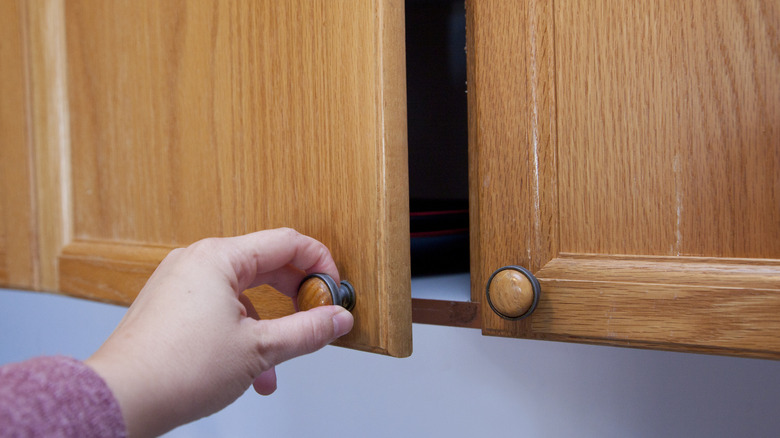
Nothing rivals the organic warmth that wood cabinets bring to a kitchen or bath. These sturdy beauties do an epic job of standing up to wear and tear for the long haul. And though they're trending now, wood cabinets can be an incredibly time-tested pick with the right stain. But what if you inherit a space with a not-so-timeless stain color, like the ubiquitous 1990s and 2000s honey oak with overbearing orange undertones?
However, you don't have to change the finish itself or replace the still-in-great-shape cabinets altogether. In fact, one of the most effective ways to update your honey oak cabinets is to modernize your countertops. They are likely laminate or speckled granite if we're talking about the 1990s or early 2000s. Though it's hardly an inexpensive route, upgrading your outdated countertops that were originally paired with the cabinets will bring the whole look into the modern era. While natural stone always has the aesthetic edge for me personally, manmade stone-like counters also offer great functionality and a contemporary look.
Now don't go impulse buying a new countertop that fails to do the trick, or worse, exacerbates the orange-yellow glow that honey oak is famous for. First, let me break down my rules as an interior designer that will help you make a smart selection. You want to create some contrast while paying close attention to undertones. Then, your new stone countertops will help neutralize the overbearing orange tones of honey oak and modernize your space.
Create contrast with your countertops to balance mid-tone honey oak cabinets
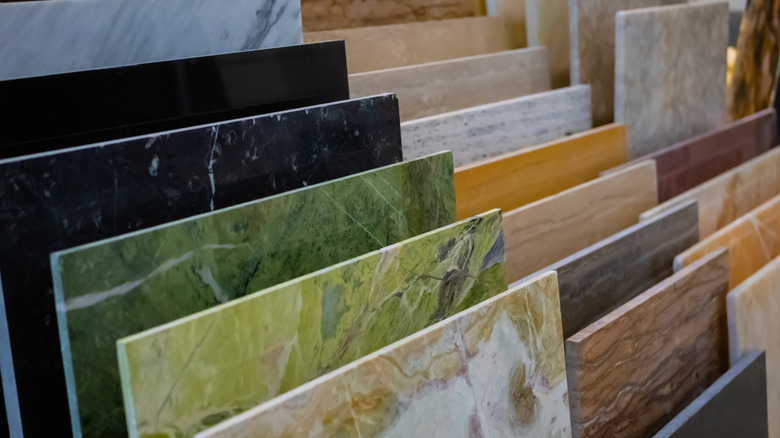
Head to the stone yard to select your kitchen countertop materials (yes, always go in person and bring a cabinet door panel and other room finishes for reference). The first key to finding a material to neutralize the unfavorable yellow-orange undertones is to create some contrast. Honey oak falls into the category of a mid-tone. And while generally I can absolutely appreciate a chic tone-on-tone cabinet and countertop pairing, this is not the time to try that look. By choosing a mid-tone neutral countertop too similar to the cabinet finish, you'll likely run into one of two issues. The first is that you'll have a countertop with similar heavy yellow and orange undertones, which in and of itself is dated to begin with. So, while it aesthetically matches, the new countertop just emphasizes how stuck in the past the honey oak material really is. The second issue is that you may select a beautiful (and totally trending) mid-tone brown countertop. But its soft, subtle undertones clearly demonstrate the striking difference between that and the undesirable yellow-orange tones in the honey oak.
Instead, aim for stones that create some contrast with the honey oak stain. This can mean lighter selections in the warm white to soft taupe range (including beiges, greiges, and desaturated creams). Or it can mean black, dark brown, and warmer charcoal slabs. When it comes to natural stones with unique colors, green and blue options tend to be the prettiest organic companions to honey oak. However, pulling this off involves another massively important consideration: undertones.
Downplay overbearing honey oak undertones with warm countertop finishes
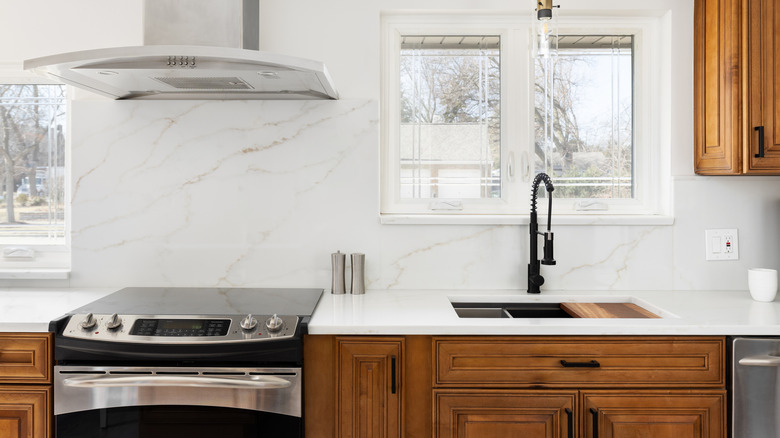
The second major consideration for choosing a stone countertop that will play nicely with honey oak cabinets is the warmth of the undertone. Clearly, the wood stain has very warm, saturated orange-yellow undertones. So, the key is choosing a slab with similar warmth to help complement and downplay the honey oak glow. Anything too stark or cool, like a silvery gray, will just emphasize the saturation of the cabinet finish by comparison. Instead, look for slabs that feature warm hues in their background color and veining. This could be a creamy white quartz with tan organic veining, a Taj Mahal quartzite, Black Pearl honed granite with subtle brown flecks, or a warm slab of natural marble.
When it comes to movement in engineered stone countertops (natural stones usually have more visual interest and depth), too little on a creamy-white slab may read too similar to laminate. However, bold veining with tons of movement is a busier look that isn't for everyone. A moderate amount of imperfect veining will make the material look organic and sophisticated, reconnecting the honey oak to nature.
And that's really the crux of it. To reinforce that honey oak is an organic material connected to the outdoors, choose a slab with earth-tone neutrals that will ground and elevate the finish. So along these same lines, you may want to incorporate color. Blue and green varieties of quartzite, marble, and granite with warm veining help create that soothing connection to nature that makes honey oak look high-end.