

Gorilla Glue Vs. Super Glue: Which Is Stronger?
We may receive a commission on purchases made from links.
With a brand name that's created its own niche in the world of maximum-strength adhesives, Gorilla Glue is often compared to super glue, another trademarked product that has since become a generic term for cyanoacrylate adhesives. With both products marketing themselves on their superior bonding power, the main question, naturally, is whether Gorilla Glue or super glue is the stronger adhesive. Gorilla Glue is often considered stronger overall due to its expanding properties, but it has its drawbacks that might render it the inferior option in some circumstances.
Original Gorilla Glue, the brand's eponymous flagship product (not to be confused with their expansion of other types of glue and adhesives, such as wood glue or their own cyanoacrylate-based adhesive), has a water-activated polyurethane formula that expands as it cures. The glue fills in nooks and crannies as it foams up to form a tighter bond. Super glue creates a rigid and fast-setting bond without expanding, so there are fewer points of contact, making it potentially easier to break apart. Still, it's somewhat of a sticky and nuanced debate, because overall strength is only part of the equation. Both options can generally supply over 3,000 psi of holding strength on certain materials, but you might find that one is the clear winner for you, depending on your project.
When to choose Gorilla Glue and super glue for strong bonds
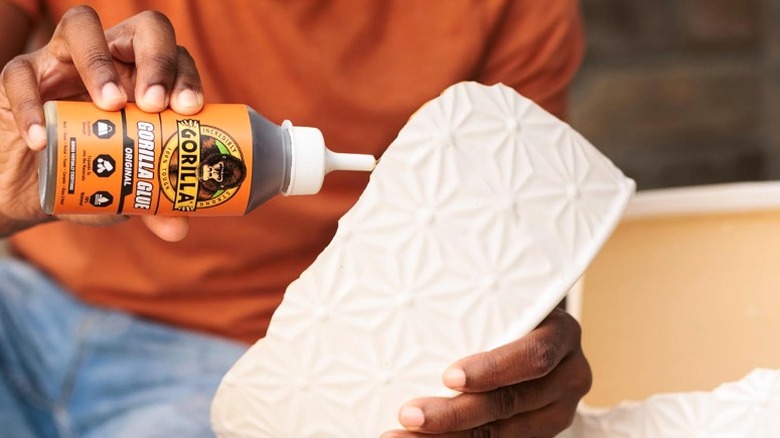
While it offers a superior hold for certain projects, Gorilla Glue needs to be clamped or otherwise held together (e.g., rubber banded) for one to two hours while it cures. You could make Gorilla Glue cure slightly faster by applying heat, but it still won't have instant bonding capability. This makes it best suited for projects you can clamp, such as repairing shoes or large furniture pieces. Since it expands to fill in gaps and create more surface contact, it's also a strong pick for pieces that don't fit together perfectly.
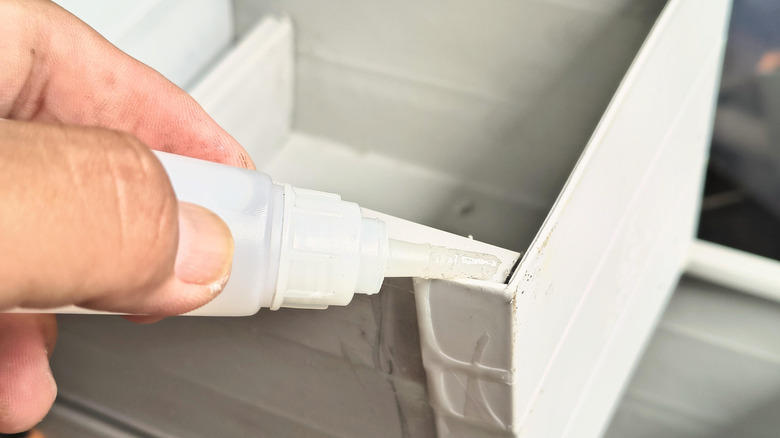
Cyanoacrylate-based super glue, on the other hand, is suitable for quick repairs, as you only need to hold the pieces together for around 30 seconds for a secure bond. It's great for tight spaces and projects where clamping isn't feasible, such as precise repairs involving jewelry, eyeglass frames, or finely detailed ceramics. In the right applications, super glue can provide just as much strength as polyurethane glue. Super glue is ideal when working with smooth surfaces where expansion doesn't make a huge difference in bonding strength, such as gluing metal to metal.
Both Gorilla Glue and super glue are suitable for various nonporous and porous surfaces, including wood, metal, glass, stone, and more. Similarly, neither adhesive is recommended for low-energy and "non-stick" surfaces such as polyethylene or polypropylene. Gorilla Glue and super glue also aren't the strongest glue choice overall; instead, you'd want to reach for an epoxy when you need maximum holding power from a typical household glue. In fact, an epoxy resin known as DELO MONOPOX even holds the Guinness World Record for the heaviest weight lifted by glue.