

Skip Vinegar: There's A Better, More Effective Way To Descale Kitchen Appliances
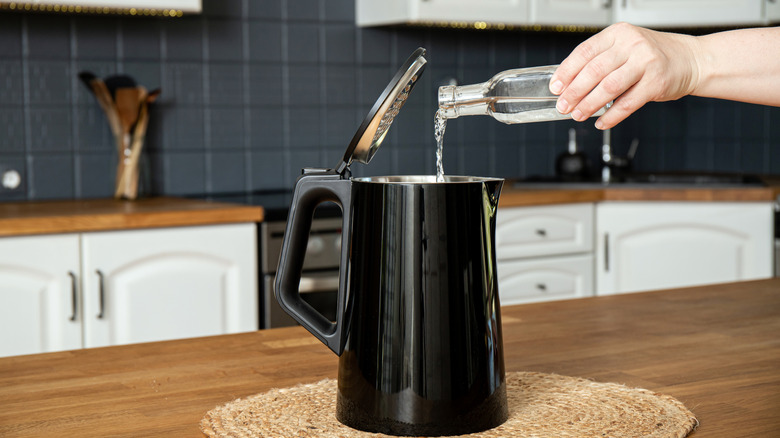
Limescale buildup is a common occurrence in kitchen appliances like coffee pots, kettles, and dishwashers. It happens when hard water — which contains deposits of minerals like calcium and magnesium — is dried or heated into the appliance surface. Vinegar is a popular kitchen-cleaning ingredient that can be used to melt grease off cabinets and descale coffeepots. Yet, however good vinegar is as a cleaner, citric acid is a better, more effective solution for removing limescale from your kitchen appliances.
Citric acid is a natural weak acid that is present in all forms of citrus fruit and is what gives them their characteristically tart flavor. In powdered form, it is used in cheesemaking and in preserved foods. For cleaning purposes, a simple solution of 2 tablespoons of citric acid mixed with 500 milliliters of warm water in a spray bottle can be used to wipe down appliances with limescale accumulation.
For descaling, you can use citric acid directly inside of coffee pots or tea kettles, and even to clean your dishwasher. For this, fill a detergent cup with a few ounces of citric acid and run the washer through a full cycle. The citric acid will cling to the limescale, remove it from the surface, and dissolve it, leaving you with a sparkling clean dishwasher interior without the harsh acetic smells associated with vinegar.
How citric acid chemically descales your kitchen tools
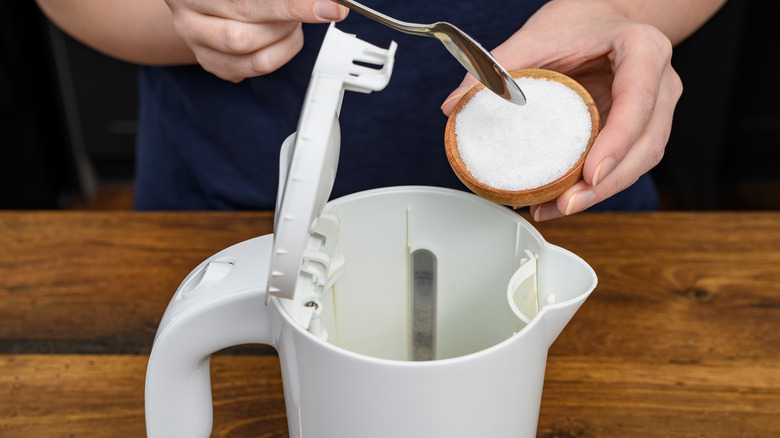
But how exactly does citric acid work as a homemade coffee pot descaling cleaner? To examine that, we have to get down to the molecular level and look at the chemical reaction that occurs when citric acid meets limescale. There are two processes at work here: acidification and chelation. The acidification will dissolve the minerals that have accumulated, while the chelation will bind any leftover ions together so that they will wash away when the cleaning solution is drained.
The chelation is the primary difference between using vinegar and citric acid to descale kitchen appliances. Vinegar does not have the chemical composition to create chelation, and therefore only uses acidification to dissolve the built up limescale. The main issue is that vinegar's acidity drops the moment it comes into contact with the more alkaline minerals in the limescale. As such, you will likely need to use vinegar several times before you get all the limescale cleaned away.
The citric acid, by contrast, should only take a half an hour to clean a coffee pot and a single cycle to make a dishwasher sparkly. Beyond the kitchen, citric acid can also be used to clean showers and tubs, bathroom sinks, and as a water softener for laundry, though only for white items as it can have a bleaching effect.