

Before You Buy A Vinyl Fence, Here's How Long It Actually Lasts
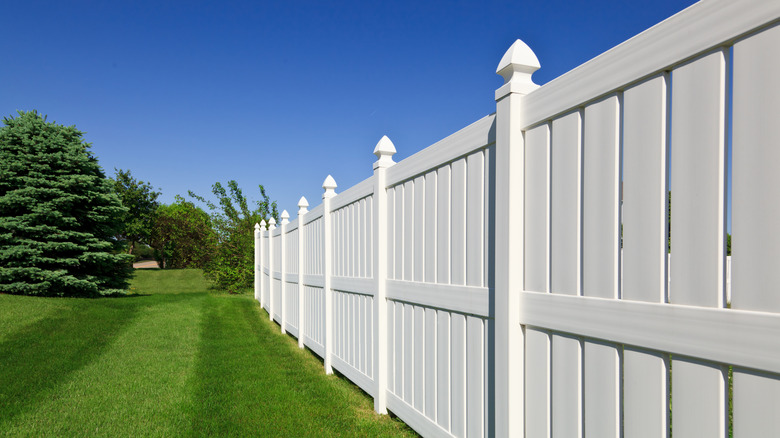
Good fences make good neighbors, but that's not the only reason to consider adding one to your property. They can increase curb appeal while decreasing the chance your precious pooch or curious children will dart toward the street while you're not looking. Plus, certain types of fencing can block out noise and potential intruders. To maximize the benefits of installing a fence, picking the right material and style is crucial. According to Andrey Likhman, owner and principal of Vandeck Builders, homeowners should buy a vinyl fence if they want a long-lasting option that requires minimal maintenance. "Most vinyl fences will last 30+ years, but I usually tell clients to expect it to look its best for about 20," Likhman told Hunker during an exclusive interview. "The material itself holds up a long time. It's the appearance that starts to show age first."
Originally invented in 1872, vinyl was refined into the product commonly used for fencing by the 1920s. The synthetic material, which is also known as polyvinyl chloride or PVC, has long been considered one of the lowest-maintenance fencing options to consider for your yard because it doesn't deteriorate like wood or rust like metal versions do. Because pigments are blended into the PVC during the manufacturing process, colored vinyl fences don't need constant repainting or staining to look fresh. However, it's important to pick a color you'll love for the long term since changing it down the road could require significant time and expense.
Pros and cons of vinyl fencing
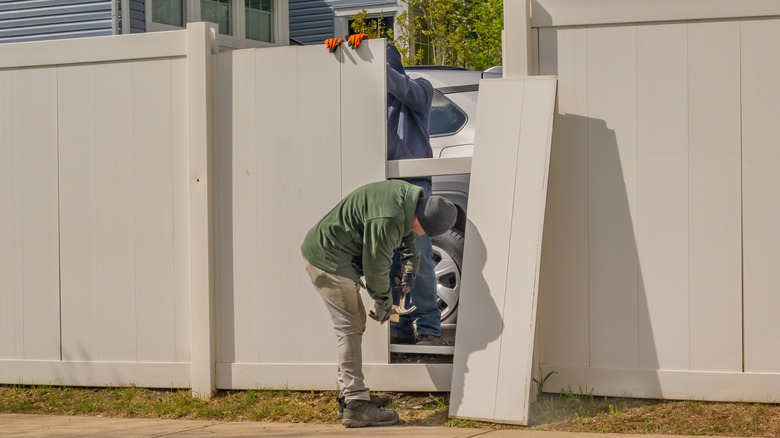
Installing a vinyl fence can cost thousands of dollars when you hire a pro, so it's important to understand the benefits and drawbacks before making the investment. According to Likhman, there are plenty of things to love. "Vinyl is cost-effective, durable, and about as low-maintenance as fencing gets, which makes it a solid choice for backyard perimeter fences," he said during his exclusive interview with Hunker. While the cost upfront is higher than traditional wood or chain-link fencing, vinyl provides long-term savings by cutting down on costs associated with frequent refinishing or repairs.
Of course, there are cons of vinyl fencing, too. "The downside is mostly aesthetic. White vinyl is the most typical option, and it's pretty basic looking. If you want something with more character or a more modern feel, materials like composite or wood give you a lot more design flexibility," Likhman explained. Because vinyl fences look more modern, they can feel out of place when paired with older or more traditional-style homes.
Along with price and style considerations, it's also important to consider your local climate while determining if installing a vinyl fence is right for you. Although high-quality versions are designed to withstand most conditions, cheaper vinyl can crack in freezing weather. Heat and UV exposure can make some vinyl fencing become brittle or start to fade, and if you live in a humid climate, vinyl panels provide the perfect place for algae and mildew to take hold.
What you need to know about vinyl fencing maintenance
While Likhman admitted that vinyl fencing stops looking its best around the 20-year mark, he also noted that homeowners shouldn't need to do much maintenance over the decades. "Honestly, there's no real maintenance required, which is a big part of why people choose vinyl," he told Hunker during his exclusive interview. "Depending on the location and exposure, you might want to power wash or hose it down every five to eight years just to keep it looking fresh." Likhman also pointed out that the PVC material eliminates the need for painting, staining, or sealing.
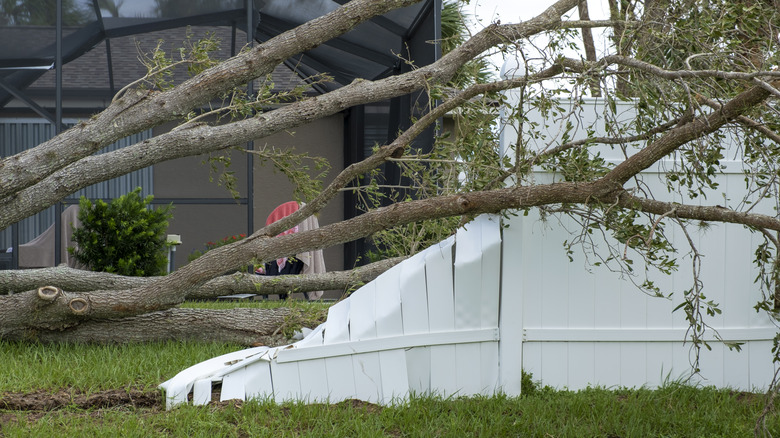
Even if yours gets covered in algae more frequently, cleaning a vinyl fence involves little more than some household cleanser, a few soft rags, and a lot of elbow grease. That's not to say you're guaranteed to get decades of use from your vinyl fence. Along with general environmental conditions like high heat or bitter cold, Likhman cautioned that extreme weather and storm damage can affect the potential lifespan of a vinyl fence. "The big ones are fallen trees and branches, high winds, and extreme temperature swings," he said of the major threats to longevity.
While maintenance is relatively easy to handle, rough weather and other types of damage can become a costly problem. Exposure to chemicals can cause discoloration, tree roots can lead to cracked posts, and poor installation can cause warping or buckling over time. No matter what causes vinyl fence damage, repair options are limited, which means you may find yourself replacing entire sections.