

The Low-Maintenance Fencing Option To Consider For Your Yard

Fences are a good way to maintain your privacy, keep your dog from wandering off, and stop your plants from spreading into your neighbor's yard. There are several common types of fencing, and each has its own benefits and drawbacks. If one of your priorities is easy maintenance, then vinyl fencing might be a good fit. It's easy to clean and versatile, coming in a wide range of colors, sizes, and styles that makes it simple to coordinate with the rest of your garden.
Now before you start rushing to get this fence because it means fewer maintenance days, there are a few things you should know first. When it comes to installation, installing a vinyl fence yourself isn't the easiest process in the world. You'll need to secure the posts deeply and ensure that they're level, without hammering the vinyl directly. Yes, vinyl is durable, but hitting it with a hammer can definitely damage it. Repairing vinyl fences is also tricky, as you may need to remove the railing or replace entire panels rather than single posts. Plus matching the color of the new panels to the existing ones isn't always possible. However, if you buy from some fencing manufacturers and still have your receipt, you can order replacement posts instead of panels.
Another factor to consider is the environmental impact. Vinyl is a type of plastic, which makes it less environmentally friendly than something like wood or a hedge. However, it can be recycled, and it lasts a long time before needing to be replaced. Vinyl recycling isn't available everywhere though, so it's important to check with your local recycling plants first.
What makes vinyl low-maintenance?
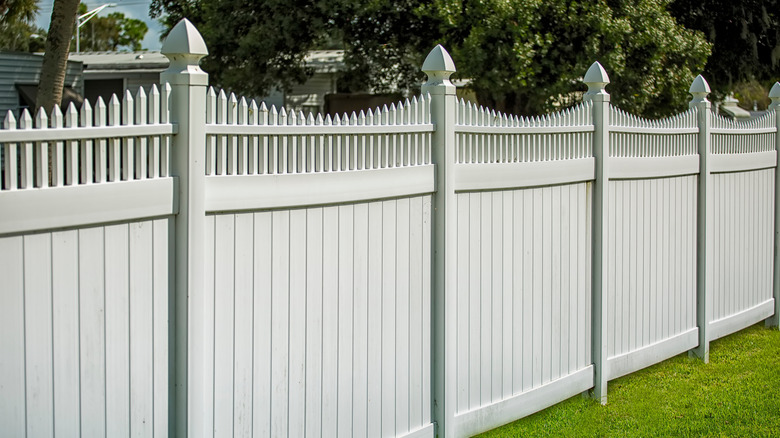
Vinyl simply doesn't need some of the regular care that other fence materials like wood do. It doesn't need to be sealed or painted, and it is quite durable. Vinyl fencing is synthetic, so you don't need to worry about dry rot or termites. However, it isn't completely invulnerable. It can still be damaged if, for example, a large tree branch falls onto it. As part of your care routine, check it over for damage after large storms and try to remove or secure any hazards before they become an issue.
Other than checking for potential dangers, your regular care routine is pretty simple. In fact, compared to other fencing materials, vinyl might seem almost no-maintenance! Wood fences need to be sealed and they're vulnerable to damage from certain bugs. If you want your wooden fence to match your decor, you'll need to paint or stain it. Since colors can fade and paint can peel, adding a fresh coat regularly is part of the care routine, too. Similarly, metal fences are prone to rust if not properly maintained. Vinyl fences only need annual or semiannual washing with soap, water, and vinegar to keep them looking sharp and prevent mildew build-up.
Being low-maintenance comes with another benefit. While the initial cost of a vinyl fence is higher on average than that of wood, composite, concrete, and chain link fencing, you'll be spending less money overall on maintenance. Since you won't need to buy sealant or paint, you'll actually save money over time. The only additional costs you may need to factor in are occasional repairs and the average cost of installing a fence if you don't plan on installing it yourself.