

13 Perennials To Plant In August For A Color-Packed Fall Garden

August may seem like a rough time for your garden. Usually, around this time, you're giving plants a nice haircut so they won't look as bad now that they're done blooming. Fortunately, August is also ripe for a few perennial plantings, such as garden mums and certain sunflower or goldenrod varieties. It's also a good time to plant a shade garden, involving white turtlehead or anemone that are just gearing themselves up to bloom.
However, bear a few things in mind for August plantings. To start, you're unlikely to start new perennials with seeds unless you have a very long growing season. This means you're looking at a mix of young or near-blooming plants. This can make the whole exercise a tad expensive. But since perennials return every year, this investment may still be worth it. Plus, many nurseries run sales on them at this time. You must also monitor the weather. Push your planting to a later date if you expect an extreme heat wave, as it may damage new plants, even if they're heat-tolerant. Also note that August-grown plants need extra care, in that you must keep them well-watered so they can root themselves in well before winter arrives.
Garden mums
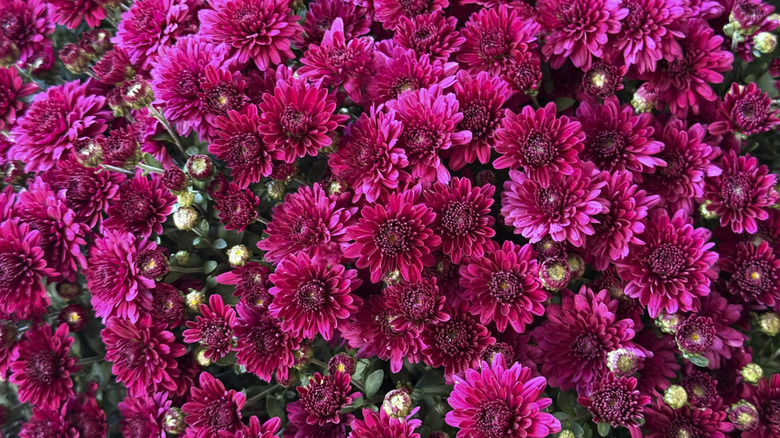
Although it's usually recommended to plant garden mums (Dendranthemum x grandiflorum) in spring so they'll have ample time to develop a sturdy root system, August isn't too late in the season, either. As long as they have over six weeks of ideal climate conditions. Caring for mums involves regular watering and providing them with excellent drainage (no water pooling). Then, they'll reward you with a fair amount of bold color until frost kills the flowers. To ensure their reliable return next year, heavily mulch the beds and retain the dead foliage until temperatures warm in spring. They grow well and are hardy in zones 5 to 9.
'Autumn Gold' narrow-leaved sunflower
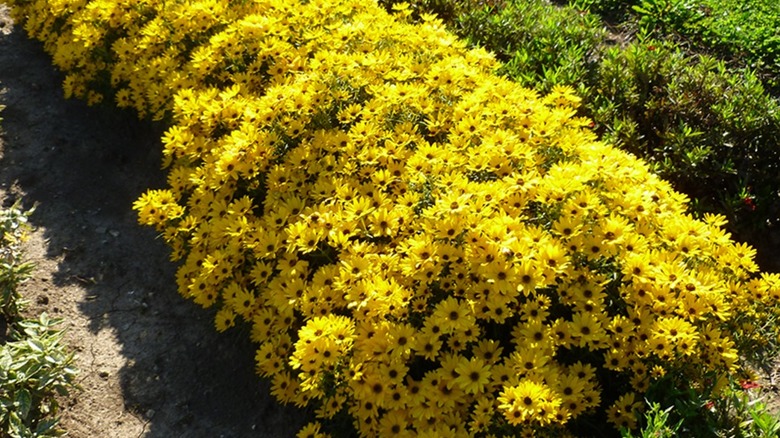
Hardy in zones 5 through 10a, 'Autumn Gold' narrow-leaved sunflower (Helianthus salicifolius 'Autumn Gold') makes an excellent addition to fall beds and containers. Right up to the hard frost, it's covered in sprays of yellow blooms that draw in butterflies, bees, hummingbirds, and seed-eating birds. The best part, though? It has a compact size, expanding about 2 feet in height and across, so you don't have to stake it like other sunflower plants. Locate it in an area that receives about six hours of direct sunlight with moist, well-draining soil.
False aster
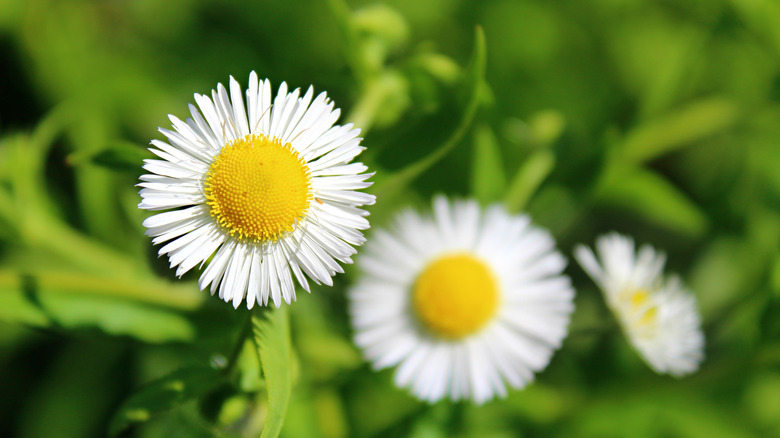
With a slew of other names, including false chamomile and white doll's daisy, false aster (Boltonia asteroides) is a sun-loving perennial you can plant in August from potted packs. This 3-foot-high plant is topped by daisy-like, purple, or pink-tinged white blooms that remain standing through October or the first frosts. Butterflies, bees, moths, and skippers are attracted to these native perennials that are hardy in zones 3 to 10. False asters can spread via seed or underground roots, which can be managed by container gardening or growing well-behaved, compact cultivars like 'Snowbank.'
Black-eyed Susan
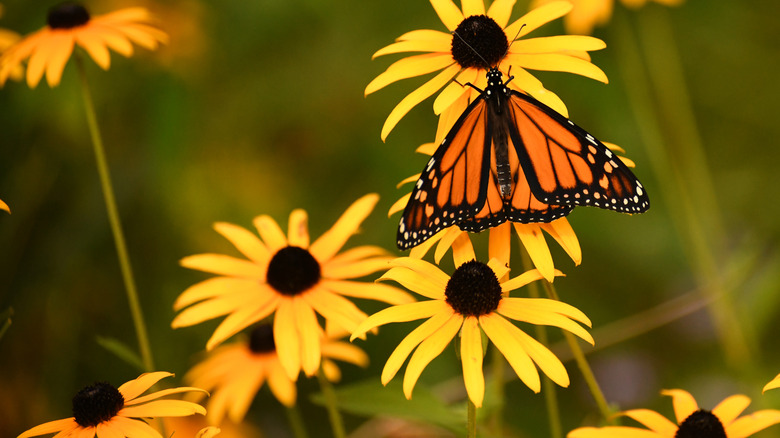
A late-season bloomer, black-eyed Susan (Rudbeckia hirta), is a good August nursery selection for a colorful display that lasts into October. They also spread and reseed, so you'll be able to divide the clumps in future years to add more pops of color around your beds. A pollinator favorite, they thrive in sunny spots in zones 3 through 7. The blooms may also attract some feathered friends as their tiny brown seeds are a favorite fall food for goldfinches.
'Autumn Joy' sedum
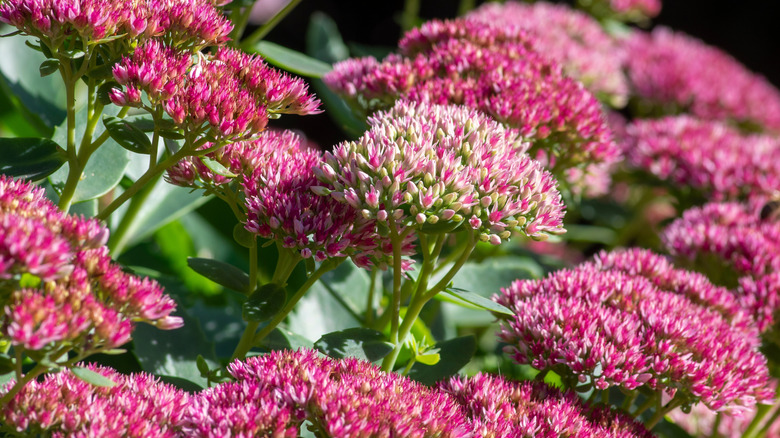
Even though you can plant most sedum plants in August, 'Autumn Joy' (Hylotelephium spectabile 'Autumn Joy') has our heart for its multi-season interest. From mid-summer through late fall, these succulent perennials are covered in pink stellate flowers that over the season blush into rosy reds and bronze hues, attracting butterflies. Retaining the last flowers helps create winter appeal and may feed the resident birds. In zones 3 to 10, where it grows perennially, fleshy, grayish green leaves emerge in spring, offering renewed interest. 'Autumn Joy' holds up well against rabbits and drought after maturity.
Goldenrod
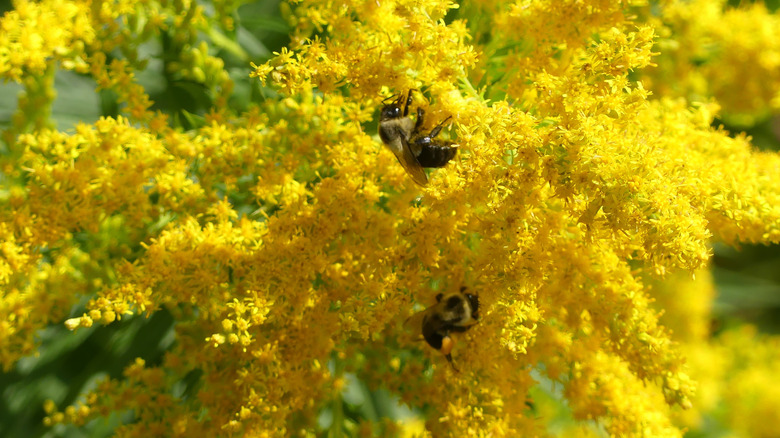
Although some gardeners dismiss goldenrod (Solidago spp.) as mere weeds. Many confuse it with the allergy-inducing ragweed that blooms around the same time. However, goldenrod is a crucial plant that helps pollinators like local bees, butterflies, and moths. August is a great time to plant some of the varieties, like tall goldenrods (S. altissima) and Drummond's goldenrod (S. drummondii), to enjoy a full season of blooms. Varieties have heights that range from about to a foot to a staggering five feet, giving you lots of options for adding their warm yellow color. And most of them overwinter in zones 3 to 9.
Sky blue aster
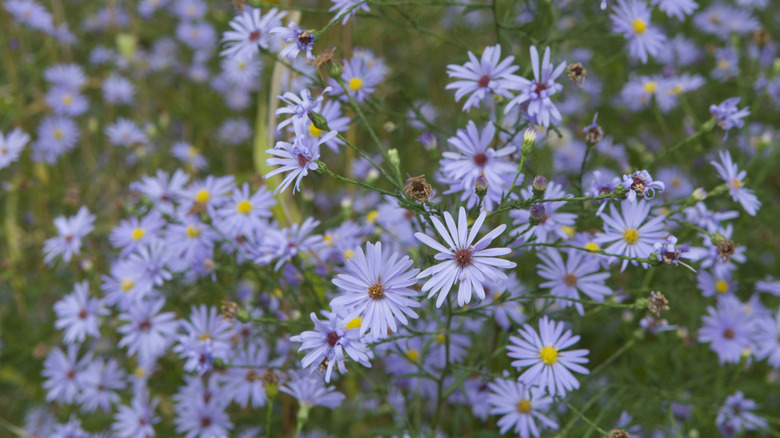
Although wildly prevalent in lean and sandy soils around roadsides, sky blue aster (Symphyotrichum oolentangiense) is a beautiful perennial that adapts well to most soil textures. When you provide it with full sun exposure and water it well, it'll regale you with bluish-purple blossoms from August through November. Like most native plants, it has established a familiar relationship with native bees and butterflies. Since it's endangered in some areas, planting it in your garden becomes even more valuable for the ecosystem. Do note that it self-seeds but is easy to manage and grows well in zones 3 through 8.
Crocosmia
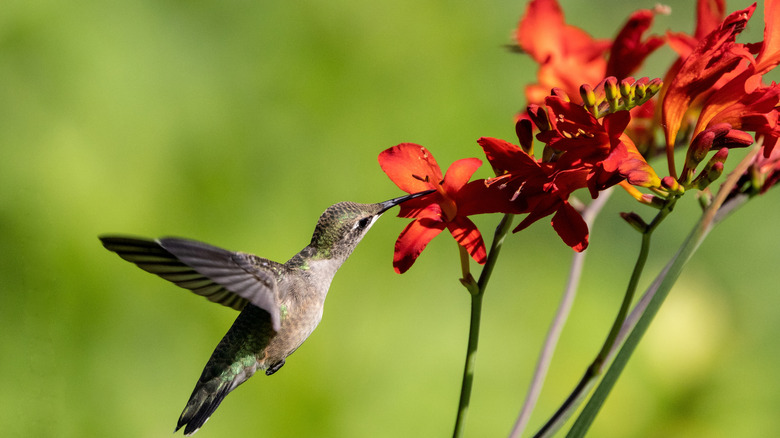
Since crocosmia initiates new flowering in mid-summer, you may still find young plants or divisions from gardening friends to put into the soil in August, for a floriferous display into fall. This is also worthwhile for those in need of an instant display because corm-grown crocosmias don't usually flower in the first year. Most varieties are perennial in zones 6 through 9, though cultivars like 'Lucifer' may overwinter in the ground in zone 5.
Autumn sneezeweed
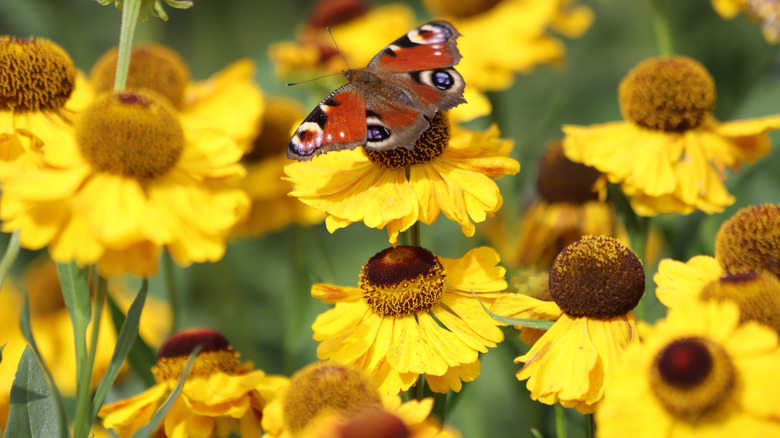
Got clay soils that drain poorly or are frequently inundated? You can turn that tricky patch downright gorgeous through masses of Autumn sneezeweed (Helenium autumnale). Starting in August,which means you'll likely find blooming plants, they freely produce streams of golden yellow or orange flowers. These often last into October and may even survive a couple of frosts, in zones 3 through 8. Unfortunately, the flowers, seeds, and foliage are toxic on consumption and may even itch the skin, so keep curious pets and children away from these plantings.
Japanese anemone
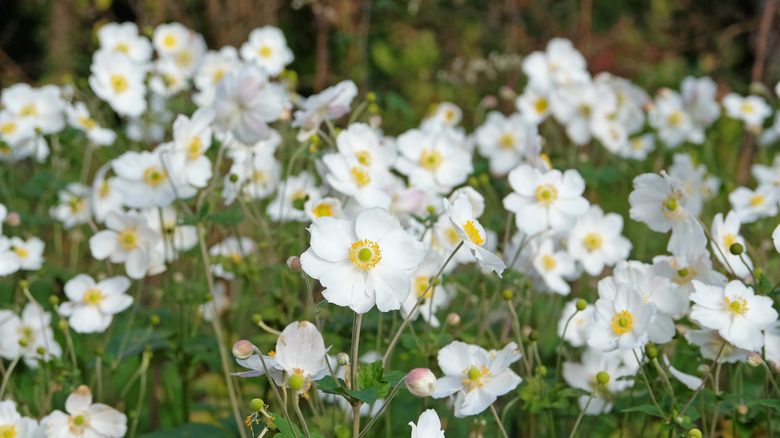
To fill out a dappled, semi- or partially shaded location in your garden during August, utilize Japanese anemone (Anemone x hybrida). Around this time, it sprouts tall, wiry stems that are topped with white, pink, or lavender flowers, adding feathery, vertical interest to the area. Since it has the tendency to spread, it's best utilized as a groundcover that you can let roam free. Although cold-hardy in zones 4 to 8, they are prone to root rot if the winter soil is too damp. They're also susceptible to Japanese beetles, so you may want to avoid them where their presence is high.
White turtlehead
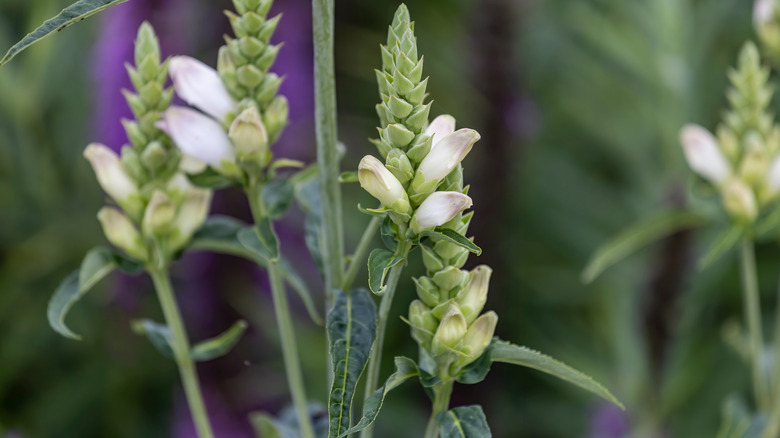
If your garden soil remains on the wetter side year-round and has full-to-part sun exposure, you may want to plant white turtlehead (Chelone glabra). From August onward to October, this 2-foot-perennial is covered in two-lipped, pink-blushed, white flowers that resemble snapdragons. These often lure in several pollinators like hummingbirds and butterflies. White turtlehead is native to the U.S. and is winter-hardy in zones 3 through 8.
New England aster
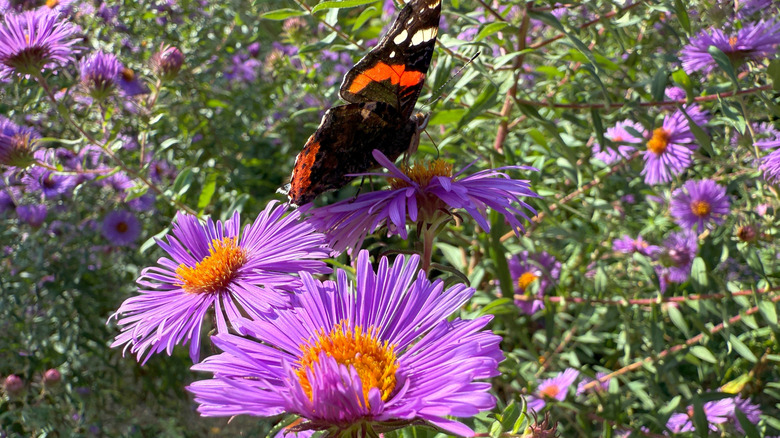
Want to forget fussy fall mums? New England aster (Symphyotrichum novae-angliae ) is a colorful perennial you can plant instead if you're in zones 4 through 8. Planted in August, when it may already be covered in spades of huge, yellow-centered, purple flowers, it'll instantly brighten your landscape. New England asters are especially valuable to fall pollinators, including migratory monarchs and birds. They even attract beneficial insects that can help with your yard's pest management. You can plant in sunny or lightly shaded sites with consistently moist, organically rich soils.