

Woman Turns Thrifted Vinyl Records Into Elegant Countertop Storage On A Budget
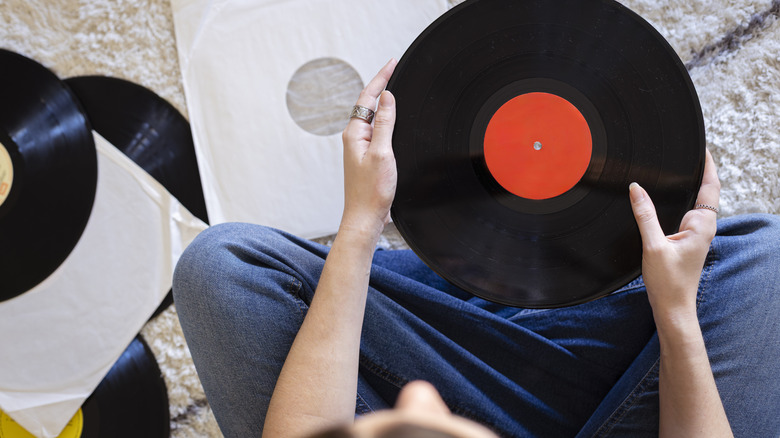
Want to stir up your TikTok followers? You could jump on one of the recent home DIY trends, like making a fake cake. Or, if that doesn't work, try melting an old Beatles record. That's what TikToker @hdl.leonie did in her "making bowls out of old vinyls" video, which subsequently went near-viral, probably because most people found her idea of melting old vinyl records into interestingly shaped bowls fun.
And it is a fun idea ... though not necessarily a good idea, and definitely not hers alone. We'll come back to the good-idea/bad-idea controversy, but plenty of online crafters and Pinterest-y types think these wavy bowls made from deformed records are brilliant. It's certainly a creative way to dispose of vinyl records. Like many others, @hdl.leonie heated her records in an oven using an oven-safe bowl. She then took them out of the oven and formed them over another bowl to create the desired shape and size.
Others use different methods to heat the vinyl, like hot or boiling water, a clothes iron, or even leaving the records out in the sun. No matter which method you use to soften them, old vinyl records can be thrifted into new items for pennies.
Make your own vinyl record bowl
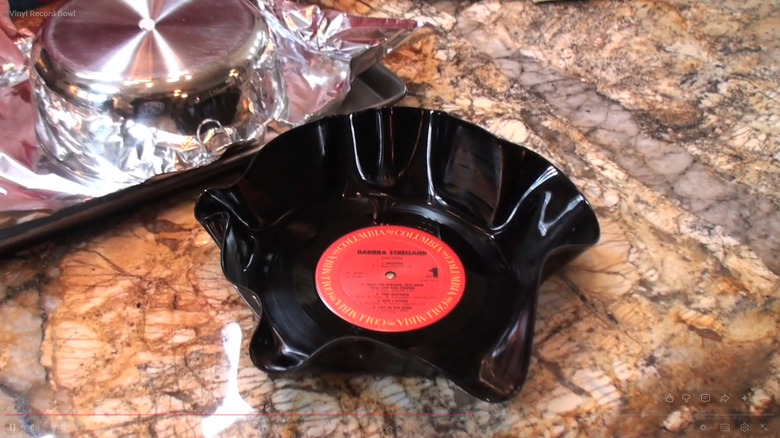
The draped shape of @hdl.leonie's bowls is by far the most common approach, but other approaches are out there: records stretched into something like a gramophone horn; combined in different vinyl colors; cut, formed, and assembled into cubes; molded into novel lamp reflector shades; and even paintings done on vinyl records. Erin Napier turns vinyl records into bookends. The kitsch factor makes this a better match for an informal space, and thematically, a melted record would seem most suited to a media room, or at least adjacent to whatever wallet-sized device you stream media on these days.
If you're worried you might be ruining an album worth a few bucks, We Buy Records' list of the 100 most valuable vinyl albums can help you identify your record before it melts down. In any event, you're not limited to the vinyl-melting approach. Consider making your bowl from papier-mâché or air-dry clay, or decoupage a thrift store bowl. Perhaps you could dip a stack of coffee filters in some bar epoxy. Or, to maintain the media theme, you could always paint your bowl to look like a record.
Should you melt your vinyl?
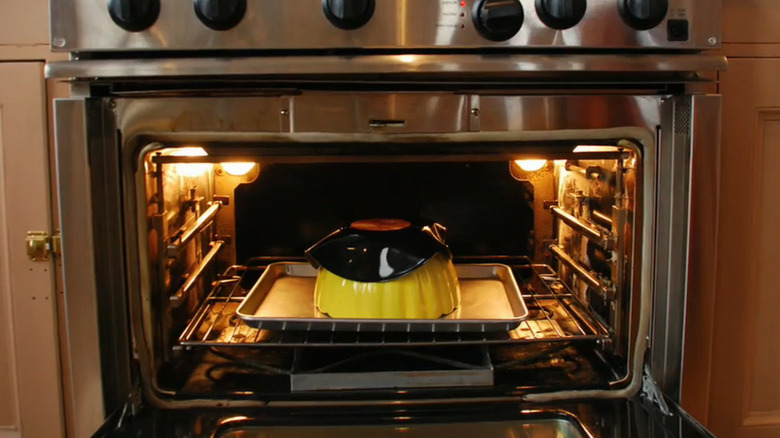
The outpouring of concern in @hdl.leonie's comments section was touching. Many pointed out that health risks are associated with heating polyvinyl chloride, which you might know as PVC and which is also called "vinyl." It's the stuff pipes are made of that carry your hot wastewater away, a common material for flooring and automobile interiors, siding, window frames, medical devices, and more. At room temperature, it's basically stable, but at 77 to 140 degrees, it becomes flexible. Between 140 and 212 degrees, vinyl becomes soft and workable, and it also begins to off-gas plasticizers and other additives as volatile organic compounds (VOCs). Above 212 degrees, it begins to melt.
While PVC offgassing typically diminishes over time, heating vinyl can still cause additional VOCs to be released. Carry out your craft outdoors or in a well-ventilated work area, and avoid using an oven that will later be used for food.