

Forget Concrete Pavers: A Timeless, More Durable Edging Material For Driveways
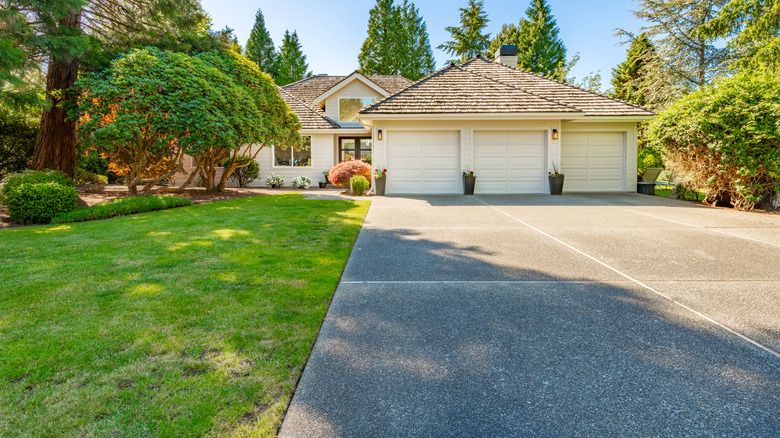
No one wants to come home after a long day at work, only to discover that their driveway edging is starting to crack and crumble. If your concrete pavers are cracking from improper sealing or sneaky weeds creeping in, it might be time to replace them with something a bit more durable. Repurpose your concrete pavers into planters and line your driveway with Belgian blocks instead. Belgian blocks are rectangular brick-like blocks of quarried stone that can be used for all sorts of things. They're often made of granite, but there are other options if you prefer. Natural stone has a timeless quality and pairs well with a variety of other styles and materials. You can use it to border gravel driveways, asphalt, or even other types of natural stone.
Belgian blocks closely resemble cobblestone, although they are generally more regular in size and shape due to how they're processed. When used as driveway edging, they have a fairly neutral look. You can also use them at the ends of your driveway, your walkway, or other nearby areas to draw attention to their charm. As natural stones, Belgian blocks are typically more durable than concrete pavers and hold up well over time. The trade-off for that is their cost. They cost $8 to $20 per foot on average for the materials alone, with professional installation bringing the price up to $25 to $45 per foot. By contrast, concrete pavers average $4 to $6 per foot, with installation costs of $13 to $30 per foot. However, since they're more durable, you may save money on repairs and replacements over time.
Installing Belgian block driveway edging
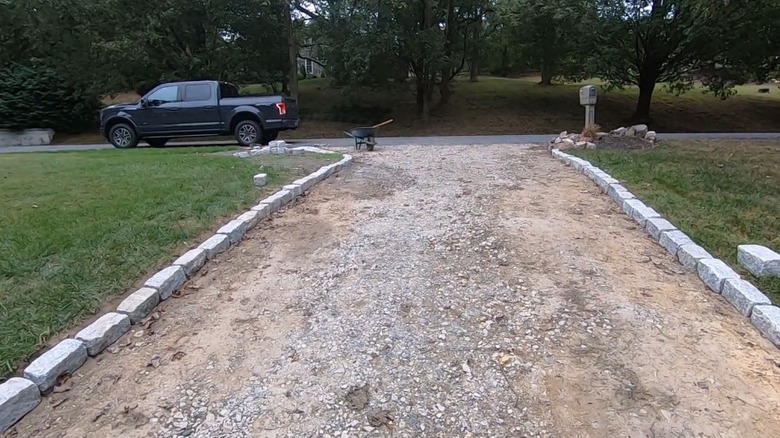
The installation process isn't complicated, but it does take time and effort. If you can, you may want to have a professional handle the process instead. While it costs more, it will save you a lot of trouble. If you're determined to do it yourself, start by deciding how to orient your driveway edging. Fitting the Belgian blocks end-to-end or side-by-side is a classic option, but some people prefer to angle them. This does require your yard to be elevated slightly above your driveway, though.
Measure the space your edging will take up, then dig a trench for it to sit in. At the very least, the trench should be deep enough for the blocks to sit in, but a deeper trench will provide more support for your edging. Likewise, you can set the blocks directly on the soil, but setting them in concrete will keep them from shifting. If you choose this option, make sure you know how to mix concrete so that it sets properly.
Depending on the material your driveway is made of, you may also need to tidy up the edges by scooping gravel out of the way or chiseling ragged asphalt edges off. Moving down your driveway, add some of your base material and place your Belgian blocks onto it. If you're using concrete, let it firm slightly first to keep everything neat. Once they're in place, let them set, then fill in gaps around or between the blocks with stone dust or mortar. Clean up your workspace and admire your beautiful new driveway edging.