

The Essential Oil More People Are Adding To Their Laundry
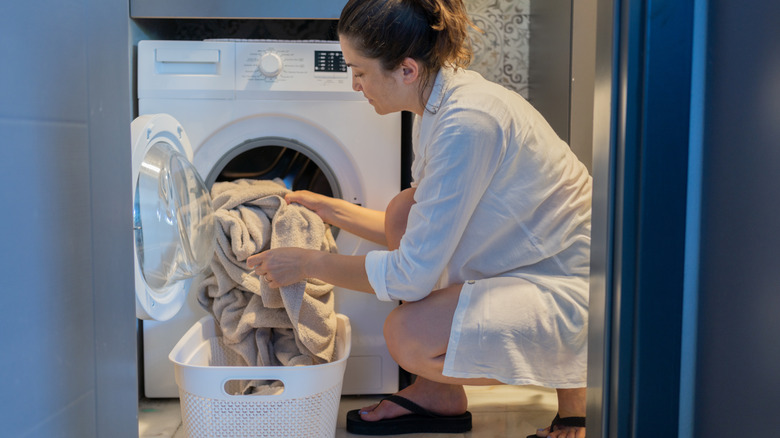
Does that dirty laundry pile have you gagging? Well, you should know that it's not just sweat that makes your dirty clothes smell — bacteria often grows in the fibers from all sorts of contaminants on the clothes, including your skin cells. If the laundry is damp in the hamper, it could also grow mildew, which adds to the funky odors. You can use scented laundry detergent and additives, but those products often use toxic chemicals to create those pleasant smells — not exactly what you want on your clothes or in your home. Some people turn to essential oils — lavender essential oil, to be specific — to add a pleasant scent to the wash.
If you're moving toward a more natural way of living, you've likely started to use essential oils at home. Lavender essential oil is a favorite for relaxation and reduced anxiety. People often use it to help with sleep, so the lavender scent could be helpful on pillow cases. Lavender also shows some potential for enhancing disinfection.
But the oils might not be as helpful as you think in the laundry. They're going into a large tub of water with lots of other ingredients that help clean your clothes, so these oils often don't make it out of the wash cycle, especially when you use hot water. There's also the potential for stains if the oils get on your clothes or skin irritation. If you use the essential oil carefully, it shouldn't hurt your clothes too much, but use it with caution.
What to know before using lavender essential oil in laundry
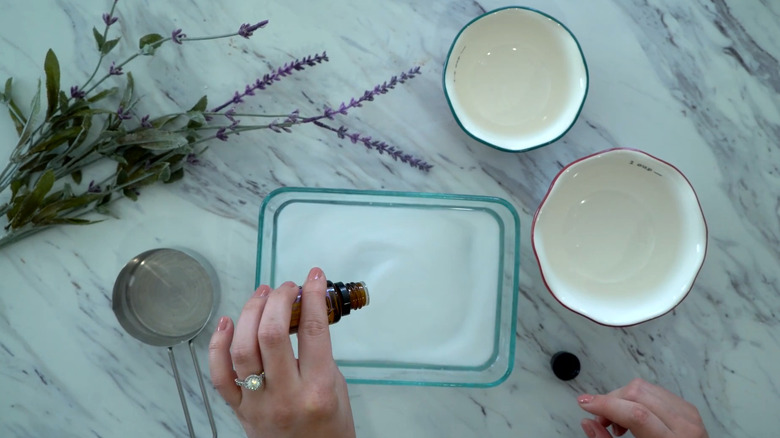
If you're looking for washing machine hacks that will make laundry less of a chore, adding lavender essential oil to the machine is something you might want to skip — they could cause stains you have to deal with later. Never put oils directly on the clothes. Even putting it in the water can lead to stains. Some oils are worse than others when it comes to staining potential, including blue tansy, jasmine, German chamomile, patchouli, vetiver, myrrh, and tangerine, which all have a dark or yellowish color to them.
Even an ENERGY STAR washer can use 14 gallons of water for a single load. When you think about a few drops of essential oil being put in that much water, it shows just how diluted they become. That means they aren't likely very effective for either scent or disinfection, and you're washing your money down the drain with the wasted oils. Despite becoming diluted, the oils could cling to the inside of your laundry appliances, creating buildup that you'll need to clean.
There's also the risk of irritation if the essential oils remain in the clothes. Some people are sensitive to essential oil, even though it's a natural product. This can happen with any laundry product — you might have a sensitive family member who requires certain detergents to avoid skin irritation. Lavender oil isn't one that commonly causes allergic reactions, but it's still possible. Just don't assume essential oils will be irritation-free. So while there are several essential oils that can help keep pests out of your home and garden, it might be best to keep these natural scents out of your laundry routine.