

What Are Concrete Donuts Used For?
We may receive a commission on purchases made from links.
A concrete donut sounds like an April Fool's Day prank or a whimsical kitchen countertop decoration. But it's neither of those things: It's actually a protective lawn accessory, particularly useful if you have a sprinkler irrigation system. These concentric, concrete items go around your sprinkler heads, protecting them from damage, such as lawn mower impacts. It might not seem like a big deal, but protecting those heads from damage can save you a lot of headaches and money.
There are lots of advantages and disadvantages of irrigation systems. One of the major potential problems is protecting the sprinkler heads. Impact or heavy weight on the head can damage not only the sprinkler but also the pipe leading to it. Broken parts and cracked pipes cause water leaks that can increase your bill and damage your lawn, especially if you don't notice the issue right away.
Sprinkler donuts, such as those from Concrete Donuts, are aptly named for their ring-like (torus) shape. They're embedded into the ground, around the sprinkler head. If a mower, vehicle, or bike gets too close, the concrete helps absorb the weight and shields the sprinkler. They also prevent people from accidentally stepping on a sprinkler head, and they're an effective shield against a weed trimmer string. In addition to the Concrete Donuts brand, you can find several concrete sprinkler protector rings from other brands, as well. Or you can DIY your own using a mold, saving quite a bit of money — store-bought versions run $10 to $30. There are also half-circle "donuts," perfect for protecting sprinkler heads that abut a sidewalk or driveway.
Using concrete sprinkler donuts to protect your system
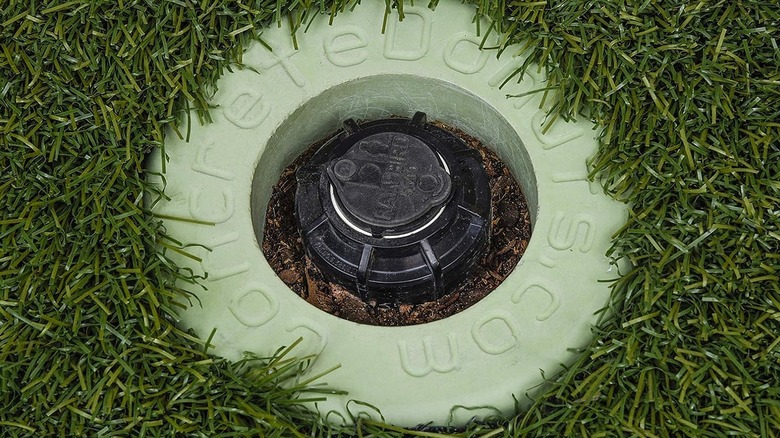
Protecting your system could help you avoid replacing a broken sprinkler head. You can try alternative DIY options, like placing a short section of a PVC pipe around the sprinkler. However, the pipe might stand out as an eyesore or even have rough edges that could be dangerous, especially for children or pets at play. Concrete sprinkler donuts have a rounded shape to eliminate sharp edges and are often green, so they blend in with the grass, at least somewhat.
To install a donut, center it over your sprinkler head. You'll need to mark the outside of the donut and remove the soil and grass in that area to a depth of 1 to 1½ inches, being careful not to damage the sprinkler head. You can then sink the donut down into the excavated soil so it's flush with the ground. Press it in firmly and clean up around the ring.
You'll still need to maintain your sprinkler heads: Keeping them clean prevents clogs and other issues that can affect proper operation. The donuts themselves may also need a little maintenance from time to time. They can sink over time, so you may need to reposition them to ensure the concrete rings are high enough to protect your system. While these products are typically designed to withstand freezing and impact, they can crack, so check them routinely and replace damaged donuts.