

4 Lawn Mower Models With A Bad Reputation

We may receive a commission on purchases made from links.
The inevitabilities of life include taxes, cutting grass, and a few other inconsequential things. If your life choices have dropped you in the middle of a turfgrass lawn of any size, dealing with your grass farm is unavoidable, and for most of us that means occasionally buying a lawn mower. It's a weird enterprise in which you can spend a lot and get a terrible cut, a little for a great cut, and whichever you choose (aside from robotic mowers) is going to require some effort. And some cash. In the midst of this complexity and struggle, the last thing you need is a bad mower, and we've found a few from Black and Decker, PowerSmart, Pulsar, and Troy-Bilt.
The demands of your lawn often dictate what you need from a mower. In a perfectly flat, postage-stamp urban lawn, you might be served well by an inexpensive corded electric mower. On an enormous exurban tract that appears to have once been farmland or a bombing range, you're going to need a proper garden tractor. And there are lawns for every mower mankind has dreamt of in its philosophy.
There are good mowers for every type of lawn, and bad ones as well. Some of the latter are poorly designed, some poorly made, and some simply aren't durable enough to stay good for very long. We've found some of each for your non-consideration. These aren't necessarily representative of the unreliable lawn mower brands you should generally avoid; these models stand on their own as models of what you should steer clear of.
How we arrived at a list of mowers to avoid
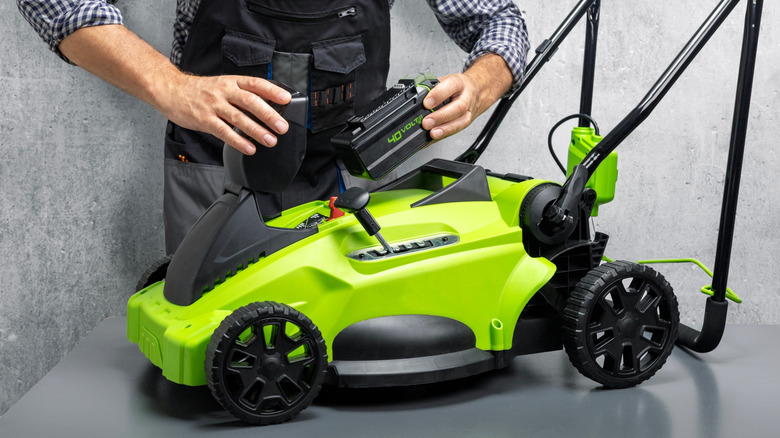
We arrived at our un-recommended mower list by reading through customer reviews of the worst-rated mowers in every category of mower. These we sourced from popular, national retailers like Home Depot, Lowes, Walmart, and Tractor Supply. We steered away from cutting remarks unless they were somehow revealing, and focused on issues that were repeatedly reported by users.
In most cases, reviewers' explanations were clear and technical enough on their own to make sense of their criticisms. In a few, we sought the perspective of professional reviewers and influencers in the lawn/garden/homestead/small engine/DIY/too-cheap-to-buy-a-new-one/maybe-the-manufacturer-will-send-me-one-for-free space to get a handle on the nature and severity of the issues in question. It occasionally worked.
But if skirting around expensive mower-buying mistakes feels too daunting, it turns out that mowing isn't inevitable at all. You can always hire a lawn care company.
Troy-Bilt Pony 42 riding lawn mower

The unusual thing about Troy-Bilt's Pony 42-inch 547cc 7-speed gas riding mower is that everyone seems to love it at first. Unfortunately, that initial reaction doesn't tend to last long. One Home Depot reviewer says they've had to take the Pony 42 for repairs four of the five years they've owned it, and have spent more on repairs than the original cost of the mower (currently over $2,000).
The most common complaint might be that the mower's battery doesn't recharge during use or dies between uses, perhaps as the result of some electrical leakage. Other repeated issues include frequently broken belts and problems with the quality and performance of the mower's oft-maligned transaxle and pulleys. Several users report that repair shops won't even work on the mower, a common complaint about less expensive mowers. Sometimes customer complaints seem to mask a blessing in disguise. One said the mower came with no steering wheel and missing seat bolts, and another complained that it was delivered in a crate that the delivery personnel wouldn't remove. There seem to be a lot of reasons to avoid using this mower, but when the universe makes it impossible for you to even try, consider taking that as a kindness.
All of this didn't seem to add up to the worst possible mower, so we checked out some pro and semi-pro reviews and came across Chris Mullis of the YouTube channel Grow and Be Fruitful, who reviewed his little Pony after two years of use. He found it fragile, cheaply made, and beset with poor design choices, which sounds about right.
Pulsar 21-inch gas self-propelled lawn mower
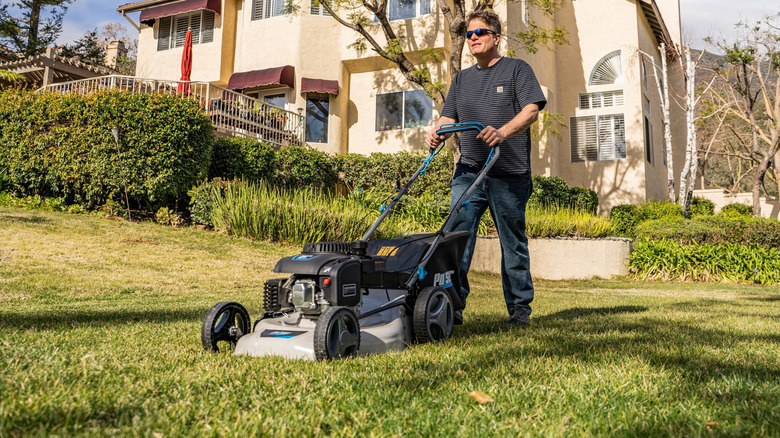
The magic number for the 200cc Pulsar self-propelled mower seems to be two. Many, many reviewers report catastrophic failure of the mower on their second mowing ... or sometimes on their second hour of use, or even the second row they mowed. There's no single defining problem with the mower, in the sense that nearly everything seems to be a problem. Reviewers at Lowes, Home Depot, and Tractor Supply generally dislike the mower, for a parade of reasons from minor parts constantly breaking, major parts constantly breaking, an inability to find replacements for broken parts, and having parts that don't break but also don't really work.
One user reports that the mower turns to the left on its own, which might be an improvement over those who find that it won't go in any direction on its own. Many plastic parts, particularly the wheels, are extremely fragile — assuming they survive shipping. It's fairly common for flimsier mowers to have issues with their bent decks interfering with blade operation, and the Pulsar suffers from this issue as well — in addition to decks outright breaking, plastic parts breaking, and everything else breaking. And all of these failures reportedly happen during common, everyday use. One user reports that the machine's crankshaft bent while mowing tall grass ... a remarkable feat.
As with other inexpensive mowers, it can apparently be difficult to find anyone willing to work on the Pulsar. Sometimes, the most understated phrasing tells the story best, as when one Home Depot purchaser explains that, after only one use, "it seems to have blown up today."
PowerSmart 21-inch, 170cc gas self-propelled lawn mower
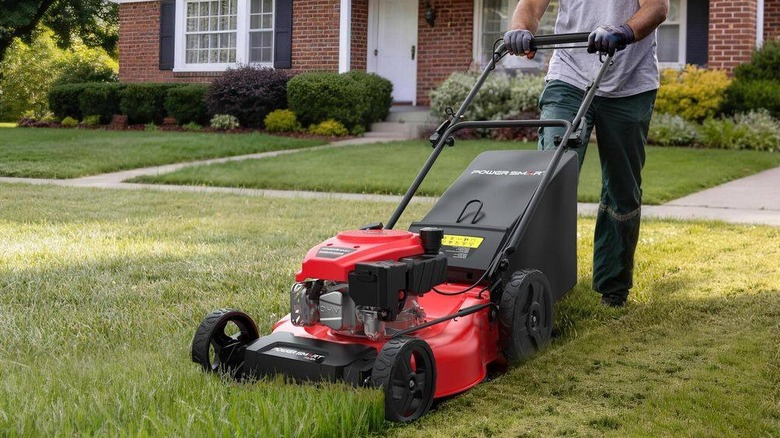
It doesn't necessarily mean anything that PowerSmart's 3-in-1 self-propelled mower has over 890 one-star ratings at Walmart (out of 3,630-plus total ratings). That's less than half the number of five-star reviews it got for an average of 3.2 stars at Walmart and Home Depot ... better than some mowers we've seen. But a read-through of those reviews soon makes it clear that there are some fundamental problems with this mower.
Some are design issues, like the fact that the belt is mounted to the underside of the deck. This is uncommon, to put it mildly, and a terrible idea, to put it accurately. It's protected only by a flimsy plastic housing that's homeopathically attached to the deck and is, according to reviews, extremely easy to damage or destroy for the exact same reasons that you wouldn't put your hand that close to a spinning mower blade. Once that cover is damaged or displaced (and it will be, judging by the number of complaints about it), practically any debris (including enough grass) can cause the mower to throw or destroy its belt.
There are other build quality and reliability issues as well, not that you need any more. Cables break, gas leaks, and plastic disintegrates in a strong wind. The self-propulsion mechanism often breaks, which might be a positive given how many people despise the way it functions. In the event that you can get it started (not a given), if it manages to run long enough to get hot (also not a given), you might have to wait for winter for it to cool down enough to start again.
Black and Decker 20-inch, 13-amp corded electric push mower
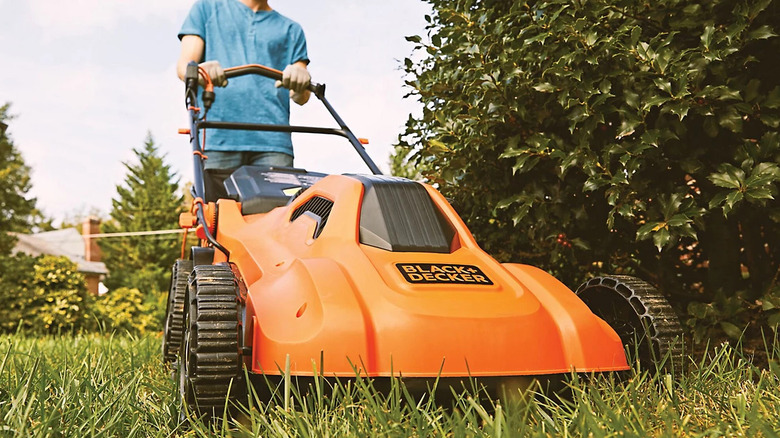
It's not every day — or almost any day — that you see a product with twice as many one-star as five-star reviews. This is the hill Black and Decker's BEMW213 corded electric push mower is trying to climb. Only 27% of Tractor Supply reviewers recommend this $249.99 budget mower. Walmart reviewers probably gave this mower the worst ratings we saw in this roundup, with 67% of reviewers posting one-star reviews and only 17% giving the mower five stars.
Most of the reviewers decry the mower's lack of power or its lack of longevity, or both. After a year or two, many found the mower just stopped working. "Dead, frozen, not working, kaput," as one reviewer put it. A couple of purchasers mentioned motor mount and torque issues, and one unusually thorough reviewer tore down his mower and investigated its demise, finding that the motor's torque jerks it out of position, leading to uneven bearing failure and the inevitable overheating, melting, seizing, and self-destruction.
Replacement parts also seem to be an issue. But the purchaser who observed that the mower stopped working while it still looked new seems to have been onto something. Most complaints are about the motor failing — possibly an engineering shortcoming — and few seem to address any very common build quality issues.