

Ditch The Pricey Tools: Aerate Your Lawn With A DIY Solution That Costs Less
We may receive a commission on purchases made from links.
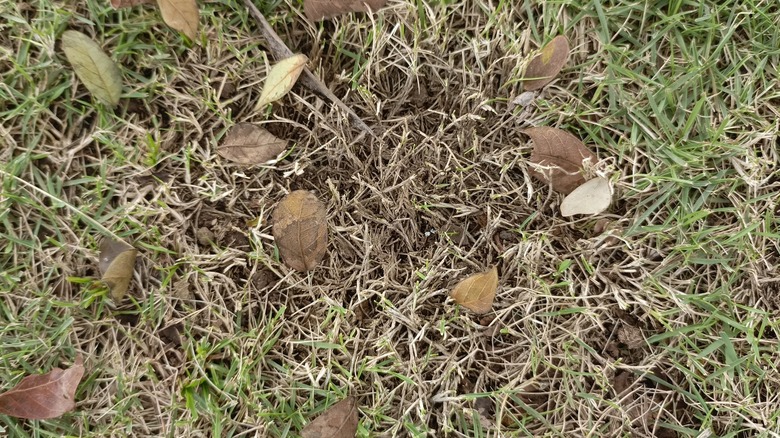
If your lawn has patches of brown or yellow and just looks unhealthy, the soil could be acidic or too dense and compacted to support healthy growth. You can correct this by punching holes in the ground with an aerator. Motorized aerators can get expensive, but for small areas, all you really need is a simple manual coring aerator like the Yard Butler Manual Lawn Coring Aerator for $48.95. Considering that other aerators can cost hundreds or even thousands of dollars, this is a pretty good deal.
Aerators come in two types: core aerators and spike aerators. Whereas a spike aerator forces its way into the ground, pushing dirt in front of it as it goes, a core aerator pulls out a plug of grass and soil, leaving a small hole. This is actually better for the grass because the holes don't compact the soil and allow water and nutrients to reach the roots.
The Yard Butler tool is a core aerator specifically designed for lawns. It features two ½- by 4-inch hollow steel tubes positioned at the ends of a bar that you press into the ground with your foot. The foot bar is attached to a 38-inch steel handle with ergonomic grips, so no bending is required. Simply push the tubes all the way into the ground with your foot, pull the tool straight up to extract the tubes, move to a new position, and repeat. On the second push, the cores extracted from the first push are automatically ejected from the tubes.
Use and drawbacks of a manual core aerator
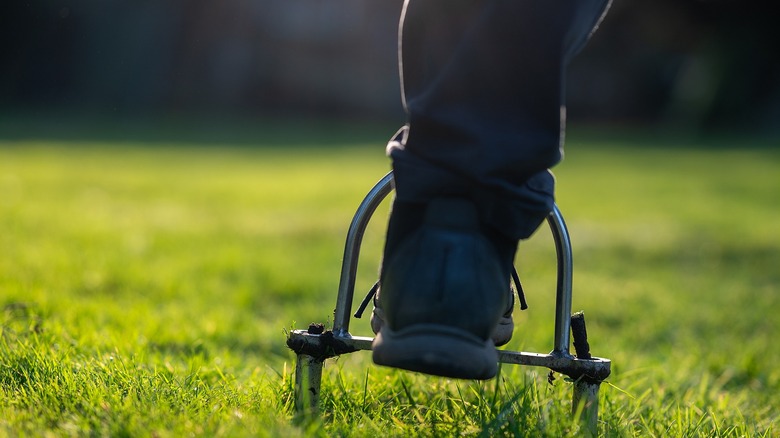
The best time to aerate the lawn is after a rain, when the soil is moist and loose. If you've been experiencing dry weather, it's a good idea to water deeply before you do this. Once the soil is wet, the aerator should sink easily when you push it with your foot, and the cores will fall out onto the lawn, where they'll break down quickly. You should aim to space the holes 2 to 4 inches apart.
The ease of use, low price, and lightweight design make the Yard Butler, or a similar tool, the only aerating tool you need for a small lawn, but it can make aerating tedious and time-consuming if you have to cover a large area. For a large lawn, you may prefer a motorized aeration tool. It's still a good idea to have a manual core aerator in the tool shed for small brown patches where weeds are growing. It's an easy tool to store along with the rest of your garden tools.
One of the main drawbacks of a manual core aerator is the possibility — probability, actually — of dirt getting stuck in the core extractors. When that happens, you pretty much have to stop and clear it, or the tool will simply push dirt out of the way, compacting it even more. To make extraction easier, immerse the tool in a bucket of water to soften the soil, then push it out with a long screwdriver.