

Make Your Landscape Stand Out By Planting This Brightly Colored Flower In July
Is your summer garden looking a little dull, with plants wilting and withering in the intense heat? Add a splash of color with a remarkably heat tolerant annual that you can plant right now. Celosia (Celosia spp.), also called cockscomb or woolflower, is a genus of fluffy-looking flowers that bloom in many vibrant colors. Not only are they delightful to look at, but pollinators enjoy them too. So, if you're trying to attract butterflies to a butterfly house or just perk up your summer garden, take a trip to your local nursery and pick up some of the plants.
There are three main flower shapes, and each adds a different texture to your summer landscape. Wheat and plumed varieties look similar, both having tapered, feathery flowers. However, plumed varieties have multiple flower stalks. Cockscomb celosia is quite different, with a rounded flower head that has ridges and dips like a piece of coral. All three are great ways to add color to your garden. They typically begin blooming in early summer, but don't let that get you down. These long-blooming annuals will continue to flower until the temperatures drop, so you can plant them in July and still enjoy months of gorgeous color.
How to plant celosia
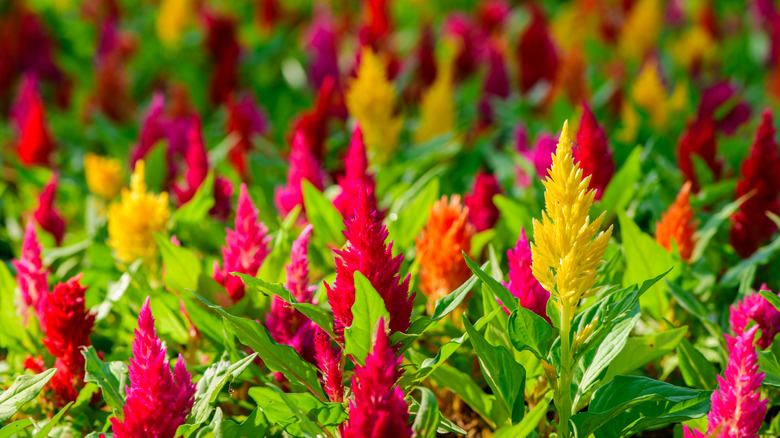
Start by finding the perfect place for your celosia. They need full sun and well-draining soil in order to thrive. Mix some compost into the soil to improve the quality and drainage before you plant them. If your garden is already full of plants, you'll be happy to know that there are a few common flowers that make great companion plants. Celosia grows well with the hummingbird-attracting flower mandevilla, as well as zinnias, marigolds, and petunias.
Dig holes for your celosia plants with roughly 1 to 2 feet of space around them so they have room to grow. Next, gently remove the celosia from the starter container it came in. Celosia plants don't like to have their roots disturbed, so don't rush. Plant them in the holes, then water them in. While established celosia plants are drought tolerant, transplants and seedlings need regular moisture in order to grow to their full height. This is particularly important in July, when the temperature is typically quite high in many places.
Before long, your landscape should be a riot of vibrant colors and unique textures. Celosia is an annual and will die back when the temperatures drop. However, it is hardy in zones 10 and 11 and can self-seed in warmer climates. In the meantime, it actually makes nice cut flowers and will be a nice addition to your summer flower arrangements!