

Move Over, DEET: Catnip Lotion Is Just As Effective At Repelling Mosquitoes, Study Finds
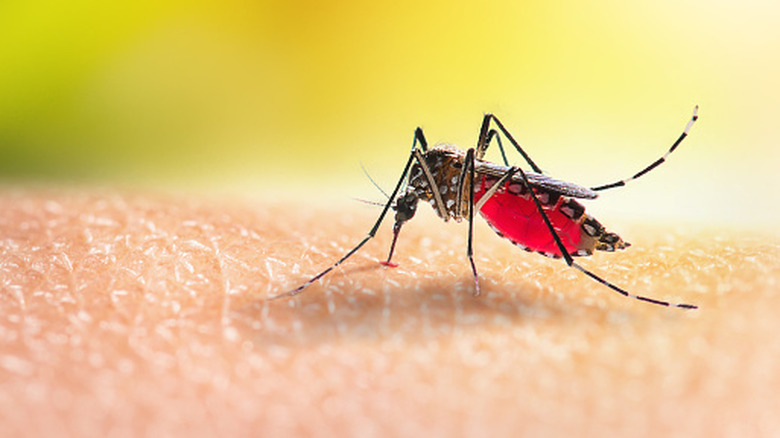
Mosquitoes are the bane of most backyards, but in some parts of the world they're downright dangerous. While encountering the tiny flying insects in the United States is usually just an itchy situation, it has life-threatening consequences for the 300 million people who contract malaria each year through bites from infected mosquitoes. According to the World Health Organization (WHO), 95% of these cases happen in Africa. Thousands are ultimately fatal. DEET-based insect repellent sprays are highly effective at reducing mosquito-borne diseases, but they aren't a readily available or affordable solution across all African regions. Determined to find a better alternative, plant scientists recently discovered that the main chemical in catnip (Nepeta cataria) is just as effective at repelling mosquitoes as DEET when incorporated into a lotion.
There are several plants that repel mosquitoes, but researchers from Uganda and the United Kingdom sought to find one that could specifically be incorporated into rural community enterprise projects to fend off regional species. "DEET is out of the price bracket for most rural Ugandan subsistence farmers, so buying commercially available mosquito repellents is just not practicable. We wanted to make a repellent, which is highly efficacious, but also allows local people to be involved in the production cycle so that it costs a minimal amount of money," Dr. Simon Scofield said at the Society for Experimental Biology Conference in Florence this week, per the Guardian.
Part of the mint family, catnip is a perennial plant that self-seeds, establishes itself quickly, and thrives even in poor soil. Researchers were after the catnip's essential oil because it contains nepetalactone, a volatile chemical known to repel insects. While your cats may go crazy for the scent, according to the recent study mosquitoes absolutely hate it.
Catnip essential oil is an effective mosquito repellent even at very low concentrations

Most of us quickly lose count of how many mosquitoes land on our arms during an evening outside, but that's precisely what the Ugandan and U.K.-based collaborative researchers wanted to measure. After carefully extracting the nepetalactone-rich catnip essential oil, they incorporated it at different dilutions into lotions containing water, stearyl alcohols, shea butter, olive oil, and other ingredients.
As many gardeners already know, mints are easy-to-grow herbs that can repel pests naturally as their pungent scent wafts in the air. It may not be a surprise, then, that even low concentrations of catnip essential oil lotions were highly effective. The study found that up to 70% of mosquitoes were repelled for between one and four hours at just a 2% concentration. According to further findings published in Scientific Reports, when the catnip lotion's concentration was increased to 6%, it proved as effective as a commercial repellent containing 15% DEET.
Because catnip is inexpensive and easy to cultivate, the findings are encouraging for communities plagued by mosquito-borne illnesses. However, if you want to keep mosquitos away you probably shouldn't ditch your favorite commercial bug spray just yet. Along with protecting yourself from West Nile, Zika, and other virus outbreaks known to occur in the United States, this is especially the case if you're planning international travel to tropical or subtropical regions anytime soon. Official guidance for travelers still includes using up to 50% DEET-based insect repellent, permethrin-treated mosquito netting, and malaria prevention medications to reduce your risk.