

What To Do With Your Basil In July To Keep It Growing Strong All Season
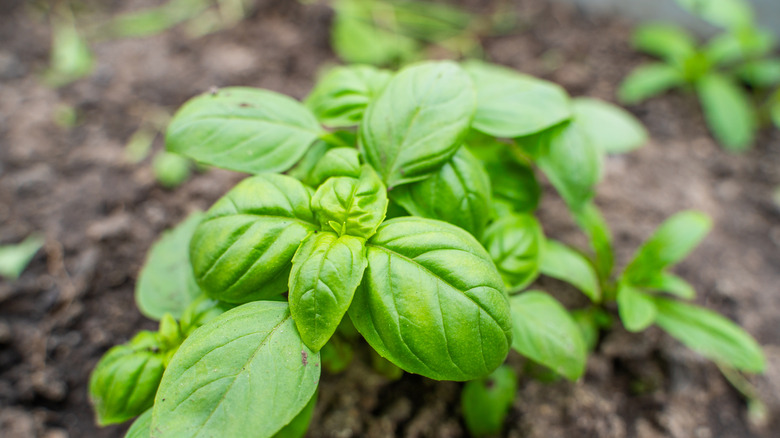
Fresh basil (Ocimum basilicum) is a fantastic summer treat, but ensuring a hearty harvest requires a healthy plant. Knowing what to do with basil in May will give you a good foundation, but July is a different beast. In many places across the United States, summer temperatures hit their peak in July. While basil is generally adapted to hot weather, it does have its limits. Temperatures around or over 100 degrees Fahrenheit can cause it to suffer. Getting your basil plant through a July heat wave means paying close attention to your watering schedule, the sunlight, and harvesting times.
Water is important, of course, since it evaporates faster in hot, dry weather. Even if your basil is indoors, running the AC constantly can lower the overall humidity, increasing evaporation. Check the soil regularly for moisture, and water it when it is dry at around an inch down. Keep an eye on your plants' stems and leaves as well. A perky basil plant is generally in good health, but if it starts to droop or wither, it may be suffering from water stress. While some parts of the country still get regular rainfall during July, there are plenty of places facing drought. If you're trying to conserve water during a drought, remember to water your garden in the morning and consider reusing any water that hasn't been contaminated with chemicals, such as water from rinsing vegetables or run through a new water filter on the fridge. When it comes to the sun, try to give basil a slight reprieve with afternoon shade. Otherwise, basil plants can develop discolored yellow or brown patches in the summer from intense sunlight.
How to harvest basil in July
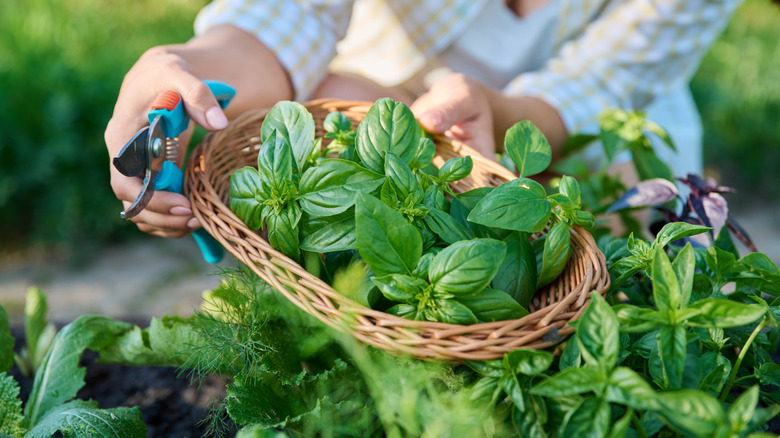
Harvesting basil isn't tricky, but there are a few things to keep in mind when temperatures spike. You can harvest basil any time after it matures, as long as the plant is healthy. For a July harvest, that means keeping the stress from heat and drought in check. If your basil plant is wilting in the sun, give it some water and shade before plucking it. Once it's recovered, you can start harvesting your delicious basil. Don't forget to manage your own heat stress as well! Harvest basil in the morning or evening when it isn't as hot, and drink plenty of water while you're out. Early morning harvesting is also better for your basil plant, as it's less stressful.
If your basil plant is healthy, regularly harvesting leaves encourages it to keep growing throughout the summer and helps delay blooming and seed production. If you aren't familiar with how to trim basil leaves, the process is pretty simple. You can take individual leaves from the plant or clip the stems. If you're picking leaves, you can use shears or your hands to remove them from the stem. To clip the stems, use sharp, clean shears to minimize damage to the plant, and gently fold back the leaves so you can see the stem clearly. Cut the stem just above a set of leaves (not at the base of the plant), taking care not to scrape or cut those leaves. You want some leaves left so the stem can regrow.