

Brick Vs. Concrete Pavers: Which Costs Less?
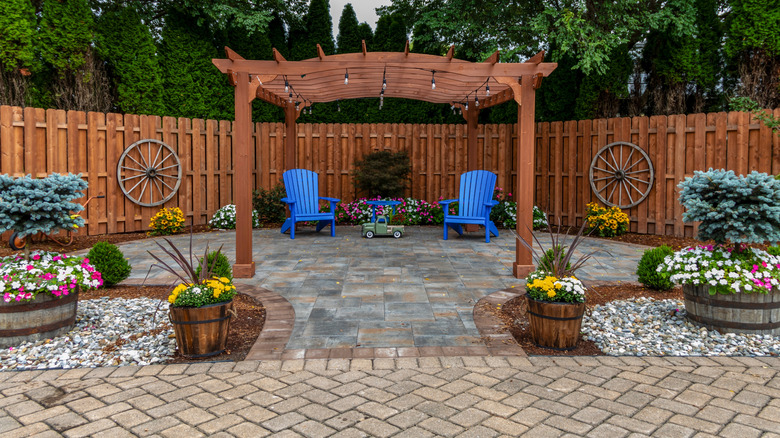
With all the choices out there for designing a stunning hardscape, it can be tough to decide what type of walkway, driveway, or patio surface material will suit your yard. Are you going for a rustic, old-world look? Or do you prefer something more modern? Pavers offer a great way to personalize your style, but they can also cost a pretty penny. If you are shopping on a budget, two of the least expensive options that work with many design styles are brick and concrete pavers. But which offer the better value?
Pavers made from clay and those manufactured from concrete are pretty close in terms of upfront material costs. Both are also generally less expensive than natural stone. According to Angi's List, brick costs between $10 and $20 a square foot, while concrete pavers can be cheaper, at around $8 to $15 per square foot. Most landscaping experts agree that concrete is the cheaper option overall, but a lot depends on the exact product. Some higher-end concrete pavers cost more than brick. So, you need to dig a bit deeper to decide which material is actually less expensive.
Likewise, consider installation costs. There's a lot that affects paver installation, from site conditions to the complexity of the pattern you want laid. Brick pavers are often less uniform than their concrete counterparts, making installation more complex and requiring skilled workers, which adds to your cost. The manufacturing process used for concrete makes these pavers more uniform and fairly straightforward to install, meaning lower labor costs.
Durability, maintenance, and design options affect pavers' long-term upkeep costs
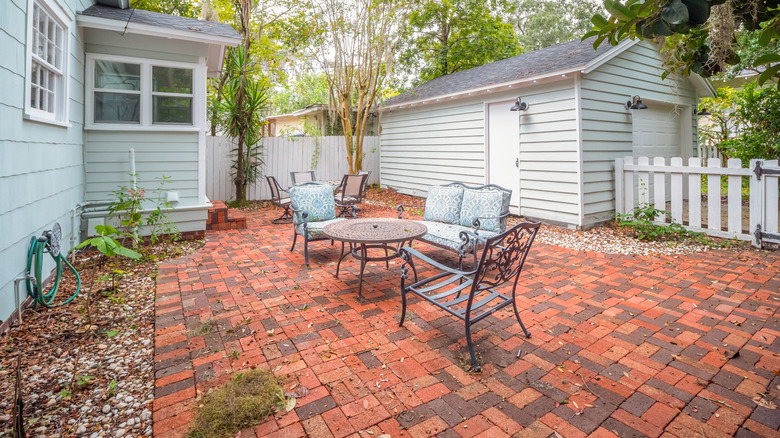
When thinking about value for money, durability matters. You may save money on concrete pavers up front, only to have them fade and crack over time. Although generally considered more durable than poured concrete, which is prone to cracking with heavy use or freeze-and-thaw cycles, concrete pavers can still chip and lose color over time. You may need to periodically reseal them to preserve their appearance. Brick pavers, on the other hand, do not need sealing, and once laid, they will last years without fading or needing much maintenance. The corners of bricks do tend to chip over time, but this can actually add to their charm when used in a cottage garden design or a similar rustic aesthetic.
Both concrete and brick are cheap and easy to keep clean through simple washing with soap and water, but light-colored concrete pavers will show stains, especially if they're not sealed. Darker brick pavers may hide stains more easily, but if you choose a lighter shade, you'll face the same staining issues as you would with concrete.
Design-wise, you may prefer concrete pavers if you're considering unique or unusual layout ideas for your patio or pathway. Concrete pavers are manufactured in an endless array of patterns, shapes and colors, while brick comes in a more limited color range of reds to browns and are typically rectangular in form. Ultimately, most concrete pavers win the day for material and installation costs, but considering long-term use and maintenance, brick might offer better value for your money.