

Skip Gravel: The Garden Edging Alternative That Adds Visual Interest To Your Yard
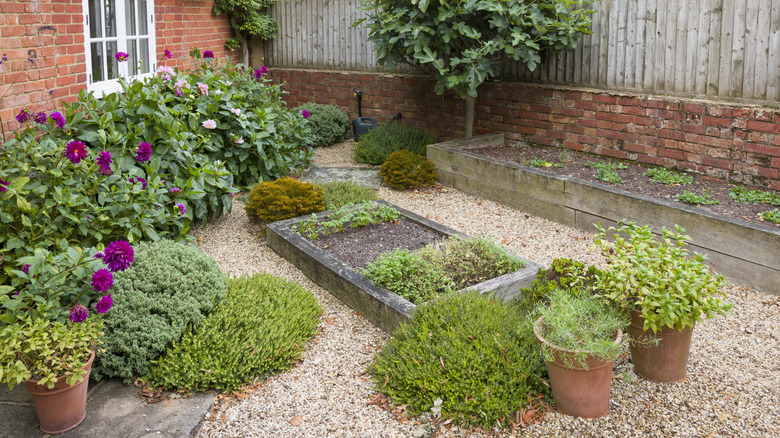
Gravel has its uses, but it can be unpleasant to deal with. When weighing the pros and cons of gravel, the cons may stand out more if you enjoy walking barefoot outside or get frustrated when your garden borders shift out of place. Plus, it can look so dull and lifeless. Why not swap it out for something softer, more lively, and more beautiful? Scotch moss (Sagina subulata), also called Scottish moss or Irish moss, is a fluffy-looking plant that resembles moss with delicate white flowers. It grows in thick, low-growing carpets that are excellent for garden borders or filling space between stepping stones. One of the more popular varieties for this is 'Aurea', which has a more yellowish color. Both 'Aurea' and classic Scotch moss are relatively resistant to foot traffic, so you can plant whichever fits your garden better.
Since it stays fairly small, you can plant Scotch moss along your flower beds without worrying about blocking your view of the other plants. Plus, it's absolutely gorgeous and will look inviting and lovely next to the rest of your plants. Something that should be noted about Scotch moss, however, is that it isn't native to the U.S. While it generally isn't considered invasive across the entire country, there are some places where it may be more problematic. Check your state's invasive plant listings to see if it's safe for you to plant, and keep an eye on your moss as it grows to ensure it doesn't spread outside of your garden. If you'd rather stick to native plants, consider the flowering ground cover golden groundsel (Packera aurea) instead.
Growing Scotch moss as garden edging
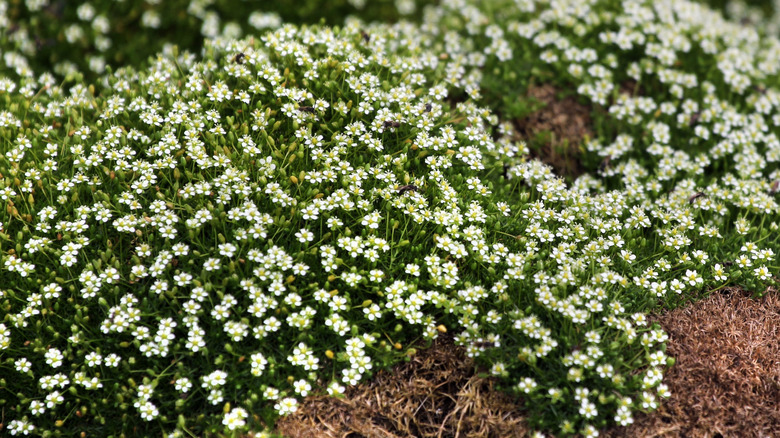
Scotch moss is hardy in zones 4 through 8, which means you won't be able to use it for outdoor gardens outside of those zones. However, it can be grown in containers. Depending on the size of your container garden, Scotch moss may still make a nice border or accent plant. It will look particularly nice in DIY container gardens, since its moss-like shape has a rustic charm to it. Whether indoors or out, you'll want to plant it in rich, well-draining soil. To create your edging, plant a Scotch moss plant every 6 inches along the border of your garden bed. They will spread out over time to fill in the gaps, so you don't want to pack them in too tightly.
Scotch moss thrives in full sun to partial shade, but there are a few caveats. It can struggle in intense heat and drought, so if you're growing it at the southern end of its hardiness zone range, you may want to provide extra shade and water during heatwaves. Additionally, Scotch moss does tolerate more shade, but it can grow a bit taller and more scraggly. This may make it less attractive as a garden border, so it might not be the best fit for a shade garden. Water it regularly to keep the soil moist, but not so often that it becomes soggy or muddy. Too much water can cause its pretty yellow-green foliage to turn brown. You don't need to prune your Scotch moss, but a light trimming can keep the edges neat and prevent it from spreading beyond where you want it to grow.