

Avoid Storing Your Extension Cords Here — They Could Crack And Wear Out Faster
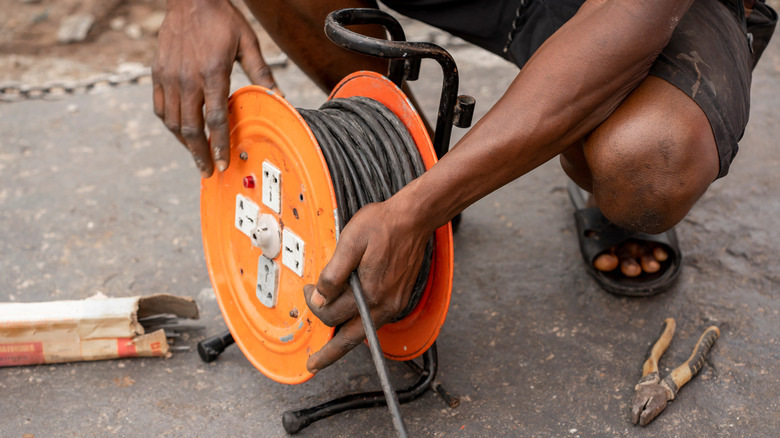
Extension cords can be useful, but not if they are stored incorrectly. Poor storage can cause cracked insulation or damaged prongs, posing electrocution risks and other electrical hazards. To help you avoid these problems, we spoke with Carl Murawski, a licensed electrician who offers blue collar wisdom at his popular YouTube channel. In this Hunker exclusive, Murawski revealed the places around the house you shouldn't store extension cords if you want them to last. Namely, avoid keeping them in the basement, attic, or garage — without taking a few extra precautions first, that is.
Murawski explained that whether your basement is suitable largely depends on its condition. "While there is nothing dangerous about having an extension cord kept in the basement, it can lead to problems if the basement is humid, musty, or subject to flooding," he said. "Water is harsh on wires over time. It can damage the outer layer and corrode the prongs and render the wire unusable in the future. Provided the basement is dry and the wires are kept off the ground, everything should be okay." The ideal humidity for a finished basement is about 30 to 50%. However, unfinished basements often have much higher humidity levels, putting your extension cords at a greater risk of corrosion. If that's the case, you'll need to find a better storage spot.
Both attics and garages are also dicey options
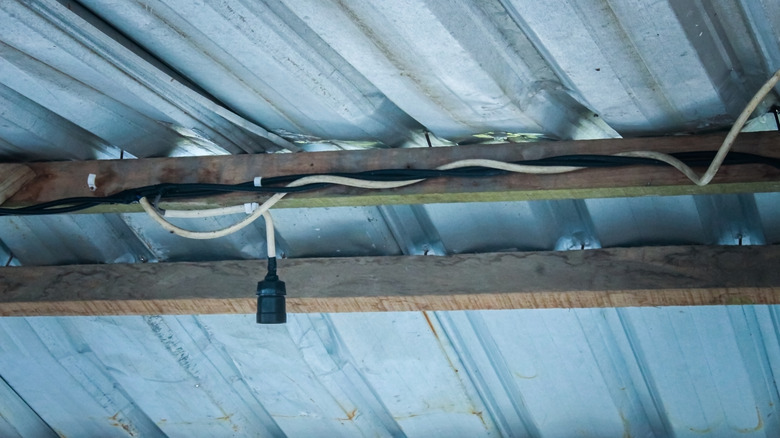
If your unfinished basement is too humid, you might consider other utility spaces, such as the attic. However, Carl Murawski exclusively told Hunker that these locations present their own problems. "It is harder to store the cords in the attics and garages due to frequent temperature changes in both places," he said. "Heat, cold, humidity, dust, and pests are the main factors that reduce the lifespan of the wire. In particular, attics can be extremely hot, making the outer jacket brittle over time."
Of the two options, Murawski said attics come out on top, if only by a little bit. Even so, you can still damage your cords if you don't store them properly. "I would suggest keeping the wires off the floor and away from the chemicals, sharp objects, and other potential sources of the damage," he noted. Otherwise, the risk of damage increases. "Sometimes people just put several extension cords in one pile, put something heavy on top of them, or store the cords in a moist area for many months without paying attention and then take the wires out without even checking them," he said. So when they use them again, the cords are more likely to cause electric shock or overheat.
No matter where you store your cords, keep them safe and dry
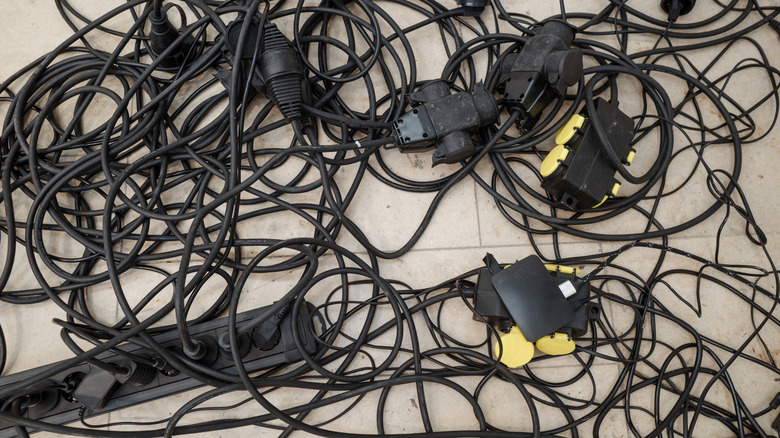
Whether you choose a dry basement, garage, or utility room, there are key steps you can take to prevent damage. "The optimal conditions for storing the extension cord include a dry location that is not subject to significant temperature changes and where the wire will not be easily kinked, crushed, or subjected to moisture," Carl Murawski told Hunker exclusively. In fact, he recommends having a designated spot for each cord, so it is never compromised. You can hang cords on hooks, place them in a storage container, or get creative — there's an easy DIY solution for a tangled garden hose that could work on an extension cord, too. Whatever you do, don't coil it tightly. "I would not recommend wrapping the wire around the elbow as the twisting can harm the inner conductor," he said.
That said, before storing your cords, always inspect them for damage. "Check whether it is clean and not damaged by cracks or cuts, melting, or anything else," Murawski continued. If you see anything wrong with one, it's better to just toss the cord rather than try to repair it. "I would recommend not trying to 'fix' any damages. Instead, I would replace the wire as they are relatively cheap compared to the problems they may cause." And one of the problems with long extension cords is using them in one spot long-term. If you routinely rely on one in the same location, it's safer to have a properly installed outlet added instead.