

How Cold Water Laundry Detergent Is Changing The Way People Wash Their Clothes
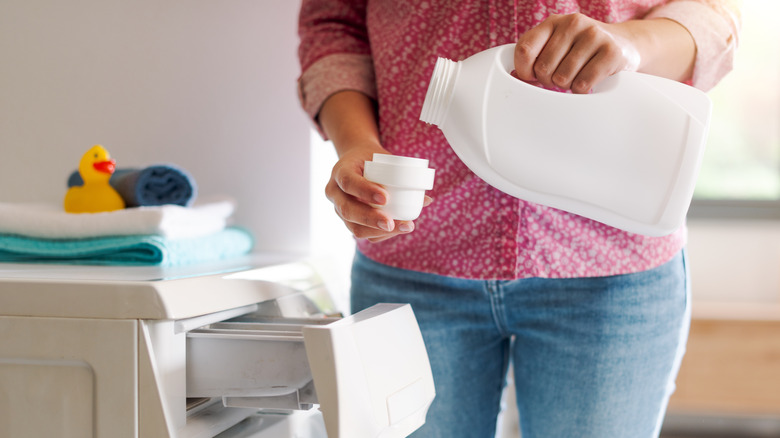
You may have been told that washing your clothes in warm or hot water is the only way to get them truly clean, but that's not the case with today's laundering practices. In the early 2000s, cold water detergent started popping up in stores, and since then the modified soap has been reshaping people's laundry habits. Cold water detergent contains additional active ingredients that help it to tackle dirt and grime without hot water. Because of this detergent upgrade, people are shifting to washing more items in cold water. This simple change ends up leading to benefits for your wallet, your clothes, and the environment.
Switching to cold water for most of your laundry is an easy way to make your home more sustainable. The majority of energy used when you run the washing machine is dedicated to heating the water. By opting for a cold cycle instead, you'll save on energy, making this chore more eco-friendly and less expensive. Todd Cline, the head of sustainability for Procter & Gamble's North American fabric care division, told Chemical and Engineering News about the amount of energy this practice can save. "If you move from hot to cold, it's about a 90% reduction in the energy. If you move from warm to cold, it's still about a 70% reduction," he said. Not only will this help to lower your electricity usage and bill, but it will decrease your home's greenhouse gas emissions as well.
Benefits of doing laundry with cold water detergent

From laundry detergent brands like Tide to foundations like the American Cleaning Institute and even the World Wildlife Fund, businesses and organizations have been encouraging consumers to switch to cold water for their laundry for years. The prevalence of these campaigns is primarily due to the environmental benefits of changing from hot to cold, but there will be big impacts for your own clothing as well. While hot water puts stress on fabrics, cold water could be the best wash cycle for long-lasting clothes and vibrant colors. Over time, washing laundry in hot water can cause the material to shrink and the colors to fade or bleed. In many cases, using cold water instead will help to protect your fabrics while still getting your laundry clean and fresh.
The more gentle nature of this laundry practice is also why items made of more delicate fabrics often suggest cold water in their cleaning instructions. By putting less strain on your clothes, sheets, and towels, your fabrics will last longer while still looking nice. This saves you money on buying replacements for your worn-out and faded clothes, in addition to the energy savings of skipping heating the water. Though cold water detergents and cycles clean well, you may need to pre-treat stains before washing. Greasy stains in particular can sometimes be tough for cold water soap formulas.
How cold water detergent is able to clean clothes properly
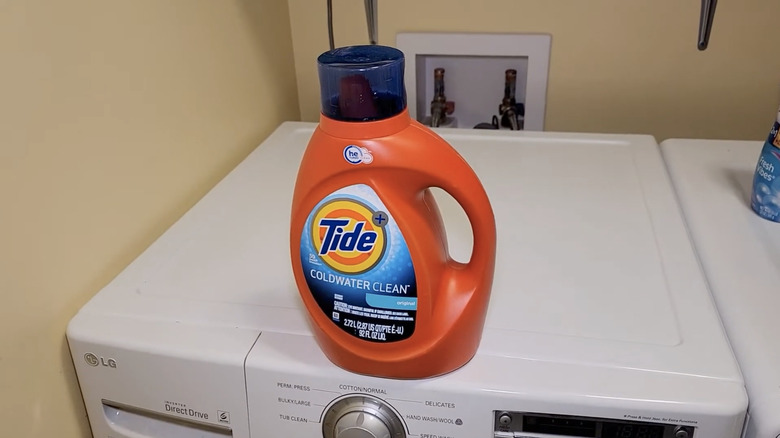
Regular laundry detergents typically contain a combination of surfactants and builders to help fight dirt, grease, and stains in order to get your clothes clean. On the other hand, cold water formulated soaps contain surfactants that tend to be more hydrophobic compared to other soaps. This helps with removing oils and greasy stains without the hot water to soften them. Moreover, they contain enzymes, which are proteins that work to eat away at stains and grime without the help of hot water. Because cold water detergents have more active ingredients, they can be pricier than other soaps.
While many loads of laundry can be washed efficiently in cold water and you may want to start washing your clothes on this setting, there are instances when warmer temperatures are necessary. Jerry Pozniak, co-owner of the luxury dry-cleaning company Jeeves New York, explained to Real Simple when clothes will need hotter water. "We recommend the use of hot water when sanitizing laundry, re-cleaning heavily soiled garments, or removing mold," he said. It's also important to keep in mind the temperature of the water when treating fabric for infestations like bed bugs or lice, as higher temperatures are necessary to kill the insects. A study conducted by Tide found that cold water detergents could eliminate some viruses and germs, including E. coli, but the cold cycle didn't remove the stomach flu virus.