

Ditch Expensive Duvets: The Sizing Trick Behind Every Luxury Catalog Bedroom
Designer-Coded is where real interior designers detail tricks of the trade to style homes for less. If you're looking to craft a high-end aesthetic on a real-world budget, you've come to the right place.
Have you ever brought home a new duvet or comforter, made the bed, and felt a wave of disappointment discovering it looks nothing like the plush, luxe photos on the packaging? Instead, it barely covers the top surface of the mattress, with a few pathetic inches of overhang sticking out on the sides. Worse yet, if you share a bed with a significant other, you know you'll be playing tug of war with the barely sufficient comforter all night long.
Sound familiar? Well, I'm here to let you in on a little secret used by bedding companies for their pretty marketing photos, as well as by some luxury hotels, home stagers, and interior designers like myself. You don't have to buy the most expensive bedding to make your sleep space look like it was styled by a pro. The trick to picture-perfect, full-looking beds is to actually shop for standard duvets, comforters, coverlets, and quilts in a size up from the bed you're working with. That means putting a king-sized duvet on a queen-sized bed, a queen on a full, and a full on a twin.
Think about the last time you looked at a gorgeous bedding advertisement, a professionally photographed interior, or a well-staged home. Odds are pretty decent that they used a queen bed with king-sized bedding. Besides the fact that nicely proportioned queen beds tend to photograph better than sprawling king options, this setup also allows the styling team to use a standard king-sized comforter to beautifully drape further over each side of the bed without having to go the expensive custom bedding route. This is a huge advantage when it comes to aesthetics and providing plenty of duvet to comfortably wrap around.
Why sizing up the bedding helps create a plush, high-end look
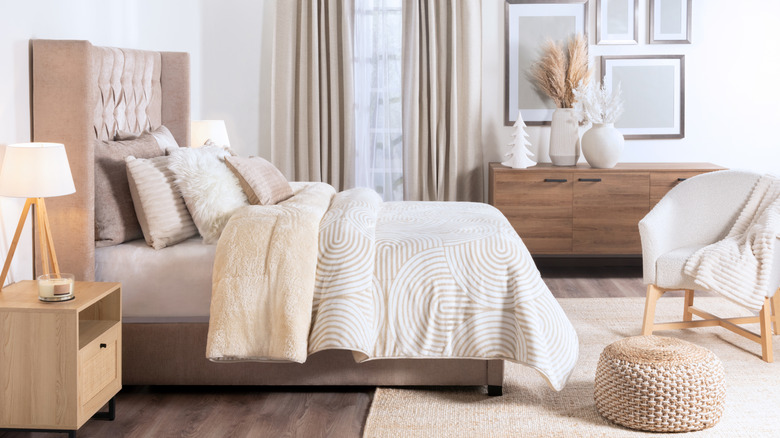
Let's talk dimensions for a minute, as this is the easiest way to illustrate the issue with buying top layers of bedding in the same size as the bed. For example, a queen mattress is 60 inches wide by 80 inches long. Most mainstream retailers offer queen comforters and duvets in standard-ish sizes around 86 to 92 inches wide by 90 inches long (give or take), meaning it'd theoretically hang over the sides of the bed by about 13 to 16 inches. This may sound like plenty, but you also have to consider the plush puff caused by the batting or duvet insert, which expands the overall dimensions of the bed by several inches on all sides, as well as the fact that 12 inches is considered a very modest mattress thickness in today's world of 20-inch mattresses and 6-inch toppers. Very quickly, your duvet ends up looking like the bedding equivalent of high-water pants, barely able (or completely unable) to even cover the sides of the mattress, let alone provide the elegant drape you're hoping for.
Alternatively, a king-sized comforter or duvet will have a similar length (sometimes longer for California king beds) but feature a standard width that runs closer to 102 to 110 inches wide. This extra overhang makes all the difference in making your bedding look expensive, luxe, and actually properly sized. For those of you with king beds at home, look for options labeled "oversized king," which offer sizing near the 120-inch range so you can use the same trick. While you're unlikely to find these in-store and will have to order them online for a slightly higher price tag, the few extra bucks are so worth it for looks and functionality.
Assembling the luxe, layered bed: when to size up the bedding
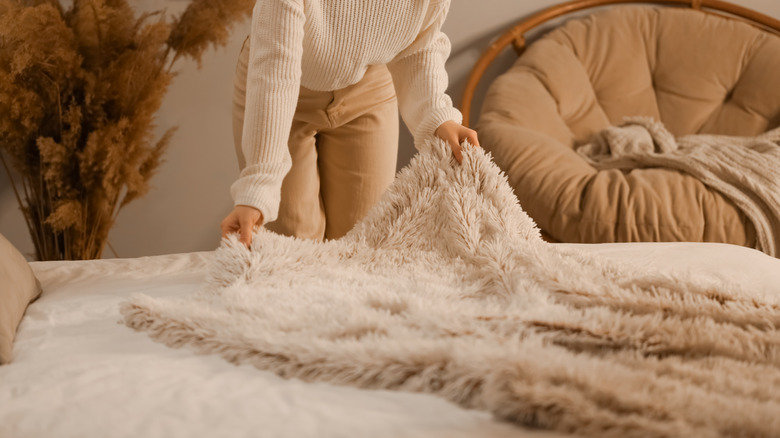
Now that we've tackled the advantage of sizing up, let's walk step-by-step through a full, layered setup of bedding to get that photo-ready bedroom. Beginning with the innermost layers, it goes without saying that you need to buy fitted and flat sheets (as well as currently trending bed skirts) in the actual bed size to ensure compatibility, so the size-up rule doesn't apply. Your sheet set will likely come with two pillow shams to match the size of the bed (standard, queen, or king). However, two bed pillows alone will look flat and empty, so it's worth stocking up on additional inserts and matching or complementary shams for that cushy luxury hotel vibe. There are seemingly endless options for styling decorative pillows — an art form and another long-winded article in and of itself — but I generally like three to four tiers of various sleeping, Euro, throw, and/or lumbar pillows to elevate the bedding arrangement.
When it comes to the outer layers of bedding, this is where the size-up rule comes in. Depending on your climate and natural sleeping temperature, mix and match various combinations and weights to achieve your perfect comfort zone. Begin with a sized-up plush duvet (you can also further double up the inserts if desired for extra fluffiness) or a comforter as the base for that cozy, high-end look. Next, for added color, texture, and visual interest, cover the bottom half of the bed with a sized-up coverlet, quilt, or thin bedspread. Finally, add a throw or bed blanket as the final layer, though sizing up is optional depending on blanket dimensions and your desired look.