

Give This Herb A Prune In July For Continuous Blooms
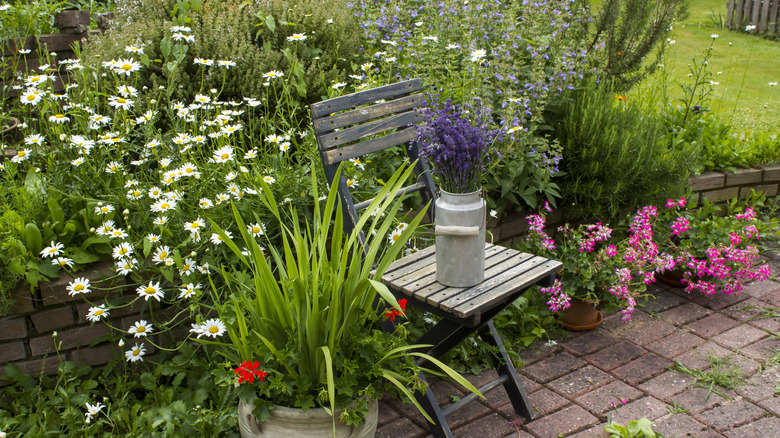
By the time July rolls around, the heat of summer has kicked in and your garden may be looking a little tired. Even drought-tolerant plants, like salvia (Salvia spp.) may be looking a little worse for wear and on the decline for the season. Fortunately, there's a trick you can use when growing salvia plants so they keep blooming all season long and continue to attract birds and butterflies to your garden: Prune them to remove the spent flowers and tidy up the look, discouraging seed production and instead promoting fresh growth.
How you prune salvia depends on the variety. With woody salvia plants, you want to be particularly careful not to prune too much. Woody varieties include Salvia greggii and S. microphylla, as well as Salvia officinalis, the salvia (or sage) commonly used in cooking. If you have a soft-stemmed herbaceous plant, such as Salvia elegans, S. ulignosa, and S. leucantha, you can cut off as much as half of the plant's foliage and flower stems and see substantial regrowth.
After pruning, your salvia plants will look significantly smaller. But, don't panic. After a few days or weeks, they'll grow back fuller than before and continue to produce more flowers. Pruning salvia is just one task to complete in July to keep your garden in full bloom. It's also a great time to plant calendula and other fall-blooming flowers so your garden remains beautiful up until the first frost.
How to prune salvia to keep it blooming through July
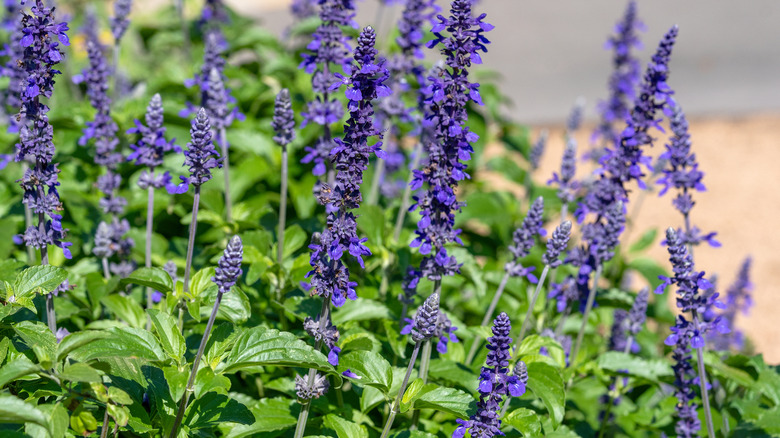
If you're working with a woody type of salvia, prune from the new, soft growth. Cutting back too far (into old wood) risks killing off new growth, as salvia blooms from new wood. Focus on trimming away spent flowers and cutting off any scraggly, overgrown stems. Save the hard prune for the fall or early spring when you're cleaning up your garden.
Soft-stemmed varieties are a bit more forgiving in the pruning department, meaning there's a wider margin of error. To make pruning relatively quick and easy, cut back the plant by about a third or even half of its height, removing the spent blooms and the forming seed heads, after the flowers have finished blooming. Trimming above sets of nodes will encourage more branching and more flushes of flowers. The plant will start to grow back after a few days, and new flowers should appear within a few weeks. While July is the ideal time to deadhead salvia initially, it's not the only time to prune back the plant. To keep the plant blooming, continue to remove spent flowers as the season goes on.