

Help Keep Ticks Away With A Natural Extract

Unlike ants, flies, and other nuisance pests that find their way into your house in the summer, ticks are legitimately dangerous. You might even find ticks in your bed, not just in the house, and depending on the species, they can infect you with Lyme disease, babesiosis, and many other serious ailments. They hide out in the garden and jump onto passersby who inadvertently bring them into the house. Ticks love to jump on cats, but research shows that the one herb that cats are most likely to be attracted to may be one that actually keeps ticks away. That one herb is, of course, catnip.
Catnip (Nepeta cataria) is a member of the mint family (Lamiaceae), and it grows in USDA hardiness zones 3 through 9. Mints like spearmint and peppermint can repel insects, and possibly also rodents, and so can catnip, but it has that special ability — owing to an essential oil it produces called nepetalactone — to send cats (most of them, anyway) into fits of ecstasy. It turns out extracts derived from these oils repel two species of ticks as effectively as DEET, according to a 2022 study published by the National Library of Medicine.
The two tick species that the study covered were black-legged or deer ticks (Ixodes scapularis) and Asian longhorned ticks (Haemaphysalis longicornis). Both species are common in the eastern United States, and both can carry a number of diseases. Deer ticks, in particular, are important vectors of Lyme disease.
How to use catnip to repel ticks
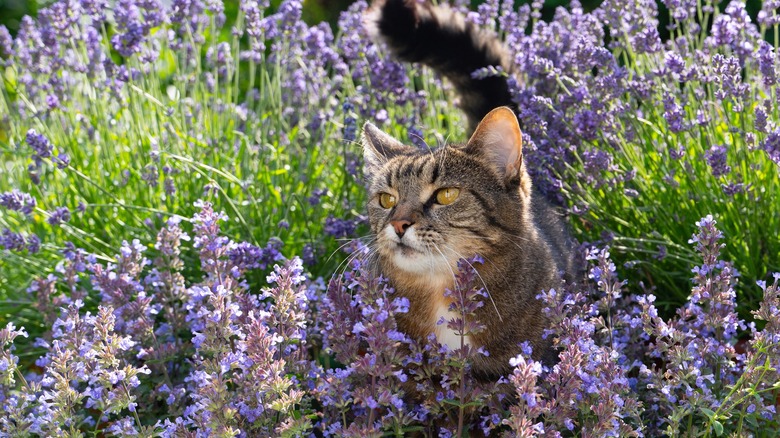
Perhaps the easiest way to take advantage of catnip's tick-repellent properties is to plant it in the garden, but be careful. It grows aggressively and is generally considered invasive, so it can quickly take over. You might want to control it by growing it in containers to keep it away from your other flowers, herbs, and veggies. Catnip isn't a particularly showy plant, but it does bloom with purple and white flowers that attract bees and help pollinators do their job, while repelling deer as well as ticks.
Dried catnip leaves, stems, and flowers are good sources of nepetalactone, and if you grow catnip yourself, you'll have a ready supply. Otherwise, you can buy dried leaves at the market or online. Spread them around the house or crush them with your hands and rub the oils on your body and clothes for short-term protection from ticks as well as other insects. Mosquitoes, for one, can't stand the fragrance of catnip.
You can make your own tick repellent spray by mixing leaves with alcohol in a blender, but you can also buy catnip essential oil and make a spray by mixing it with water. Either way, store the spray in an airtight container, because nepetalactone is volatile, and the mixture will lose its potency if exposed to the air. Be aware that, while catnip oil is considered of low toxicity and generally safe, high concentrations may cause moderate skin irritation.