

Move Over, Mulch: The Cheaper Alternative That Supports Pollinators In Your Yard
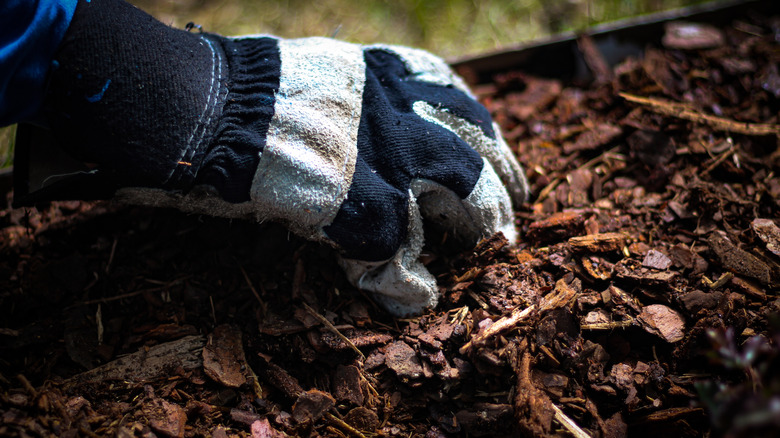
Mulch is good for your garden, but it isn't always good for your wallet. Less expensive options, such as straw or plastic mulch, can cost around $30 to $40 per cubic yard, and that cost can add up quickly if you're covering a larger space. On the higher end, materials like cypress mulch or lava rock can cost over $100 per cubic yard. If you're thinking twice about buying mulch, there's another option that you may be able to make yourself for little to no extra cost. Compost is easy to make at home, works well as a mulch alternative, and can even support pollinators by improving your garden's health.
Compost is made from broken-down organic matter, such as leaves and vegetable peels. It's full of nutrients that gradually make their way into the soil when mixed in or applied as a top dressing. This means that while compost offers some of the same benefits as traditional mulch, it also nourishes your garden and helps your plants thrive. Healthy plants often produce more nectar, a major food source and attractant for pollinators. If you're creating a garden to attract bees, using compost as mulch can help you achieve your goals.
You can create compost at home from leftover kitchen scraps, lawn clippings, and fallen leaves without any extra cost. Buying premade compost is also an option. The price varies depending on how much you need and whether you're buying it in bags or as a bulk delivery, but you can generally expect to pay around $20 to $50 per cubic yard. You can also save money by making some of your own compost and supplementing with store-bought compost as needed.
How to use compost as mulch
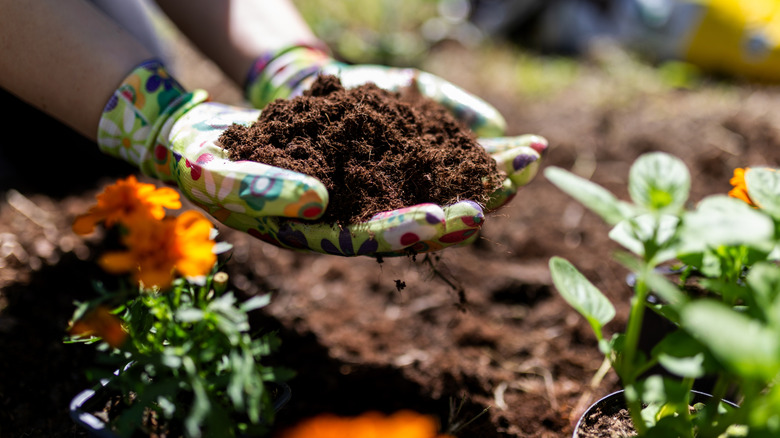
Using compost as mulch isn't too different from using wood chips or gravel, except for one key difference. Compost is generally best applied at the start of the growing season, typically in late winter to early spring. You can apply it during fall and early winter, but it may not be as effective. Some nutrients from the compost are lost, as the rain and snow cause them to leach into the soil before plants can take advantage of them. Applying compost as plants emerge from dormancy helps ensure more of those nutrients are available when plants can use them. It also makes it easy to incorporate into your gardening routine. Start the year off by adding some plants that help pollinators to your garden, then spread compost around them to help them get established.
Your layer of compost should be at least one inch thick, but can be as thick as 3 inches. Don't stress about measuring it exactly, but avoid piling it more than 3 inches deep. If it's deeper than that, you risk preventing water from reaching the soil. Spread it out evenly over your garden bed, leaving space around the stems and trunks of your plants. Since plants may be just starting to emerge in spring, take care not to bury any sprouts that are smaller than the compost layer. Once you're finished, you can start your next batch of compost so it'll be ready for the following growing season.