

How To Repel Wasps Using An Essential Oil They Can't Stand
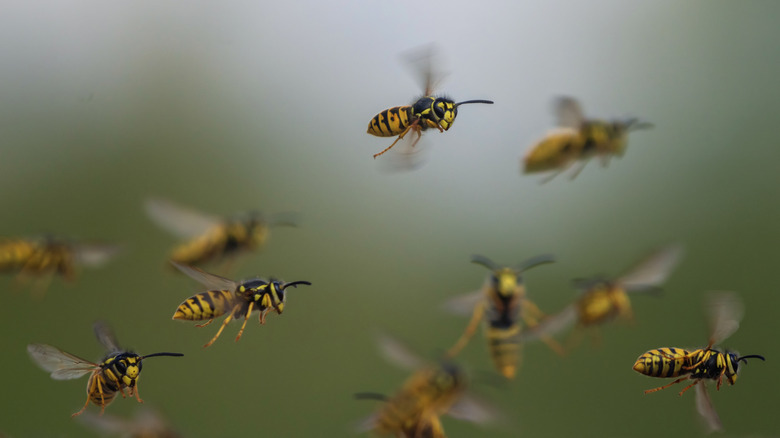
There are some types of insects we don't mind coexisting with, but wasps are a dealbreaker for nearly everyone. While bees usually mind their own business unless bothered, hornets and other wasps tend to be much more aggressive. Additionally, wasp stings are almost always more painful than bee stings. If you're allergic to their venom, it's even more important to do what you can to keep them away from your property. One way to repel wasps is to use essential oils, such as those derived from plants in the Artemisia genus. Essential oils like wormwood, mugwort, and sagebrush have strong chemical compounds and an intense odor that's unappealing to wasps and some other insects.
One 2014 study published in the journal Insects tested 66 samples and found that oils in the Artemisia genus were among the most effective at repelling vespid wasps. These oils contain compounds like 1,8-cineole (eucalyptol), which gives the oils that distinctive, minty fragrance. Wasps rely on their sense of smell for finding food or detecting pheromones, and strong odors can make it harder for them to follow scent cues. Because of this, some pest management companies recommend deterring wasps with DIY essential oil sprays or fragrant plants that double as wasp-repellents. Although more research needs to be done on Artemisia-derived oils specifically, it may be worth giving a try if you already have some on hand.
How to repel wasps using Artemisia essential oils
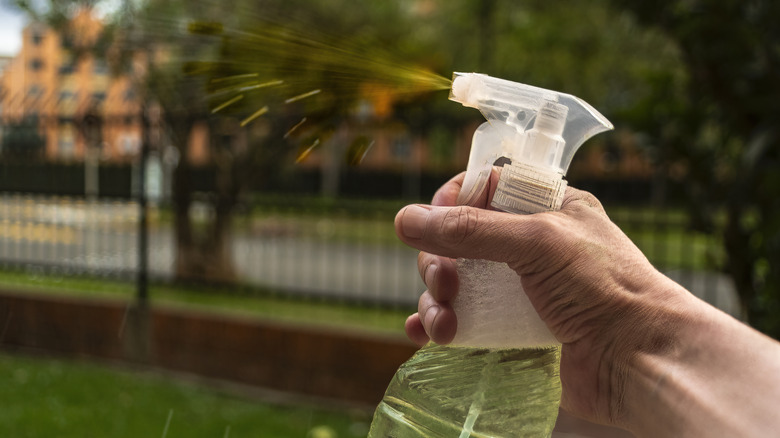
If you have wormwood, mugwort, sagebrush, or another essential oil derived from plants in the Artemisia genus, you can use one or a combination of them to make a DIY spray. To make this natural pest control remedy, fill a small spray bottle with distilled water and add your essential oils. All you need is five to 15 drops of your oils to make a fragrant, wasp-repelling spray. Give it a good shake and spray it on your clothing before heading outside. However, make sure to test out the mixture on a small patch of skin before applying more liberally. It's generally safe, though some people may have allergic reactions to certain oils. You can also spray your DIY repellent on porch railings and other surfaces, though you'll want to add a couple drops of dish soap to help it stick.
The main downside to using essential oils as wasp repellents is that the scent often doesn't last for long. So, you'll need to keep the spray bottle on hand to refresh the fragrance. If you're planning on staying in one area, you could opt for a diffuser that allows the scent to linger in the air for a longer period of time. It's important to note that essential oils may not completely get rid of wasps, especially if they have a nest nearby. In that case, it's safest to let a pest management company handle it.