

Skip Gravel: This Weed-Resistant Landscaping Alternative Is Better For Plants
If you're looking for a way to add curb appeal to your flower beds while keeping maintenance to a minimum, pine bark mulch is easily one of the best choices available today. Many homeowners prefer landscaping with gravel, but it can create more problems than it solves by trapping heat and offering no biological value (it doesn't decompose or contribute nutrients). On the other hand, pine bark provides a clean appearance while benefiting your plants. It's the perfect addition for those looking for a high-end aesthetic without the downsides of stone.
Most pine bark mulch is made from southern pines, such as loblolly or slash pine. When harvesting the logs for lumber, companies strip the outer bark off before processing the wood. It's then shredded and screened for size before use as mulch. By choosing pine bark over gravel, you're actually focusing on the long-term health of your landscape. Instead of struggling with weeds, you'll have a dense layer over the soil that blocks light and stops unwanted growth in its tracks. And if you've ever spent a weekend hauling bags of gravel around your yard, you know how backbreaking that can be. Pine bark is lightweight, retains moisture, and helps put nutrients into the soil.
The superior performance of pine bark over gravel is unmatched
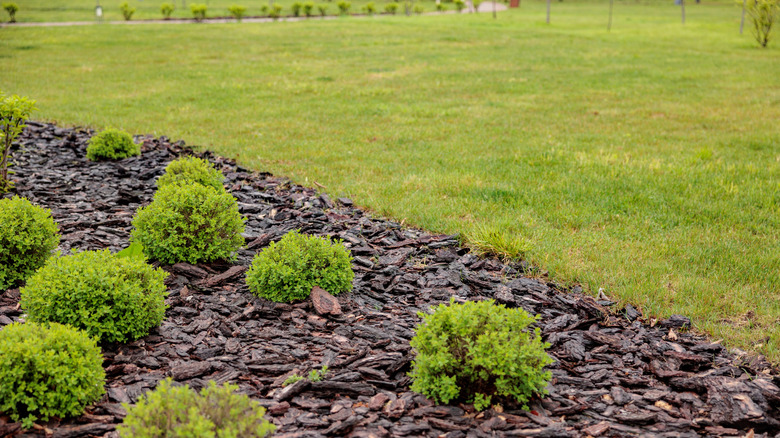
When choosing the best type of mulch for your project, some home landscapers prefer gravel because it essentially lasts forever along pathways and in garden beds. And it has a clean, bright, uniform look. However, pine bark is better for your plants, because it actively transforms your soil. As pine bark ages and starts to decompose, it releases organic matter back into the soil, which lowers pH (great for plants that love slightly acidic soils). When compared to mixed hardwood mulches, pine bark tends to settle slower, which means it won't require replenishing as often.
Water management is another highly valuable benefit of pine bark mulch. Gravel doesn't absorb moisture, but can prevent water from pooling after heavy rains. Pine bark mulch soaks up water and releases it slowly, keeping the ground cool and hydrated during the hottest days of the summer. Other organic mulches, like cedar mulch, work well in garden beds, but pine bark mulch remains a cost-effective choice for general landscaping, often at nearly a dollar less per cubic foot. By choosing pine bark mulch for your next landscaping project, you'll spend less time watering and fewer dollars on fertilizer each year.