

Forget Pavers: The Landscaping Material That Cuts Down On Mowing And Weeding
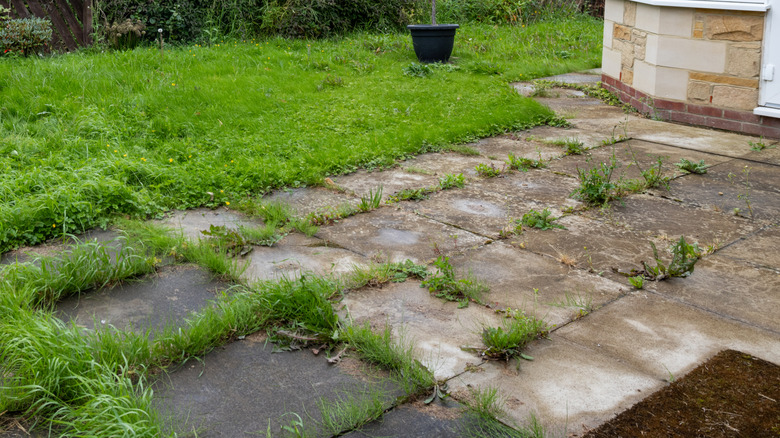
Mowing the lawn and weeding — two activities I find tedious and often dread. I understand that, in a world of serious challenges, these are "First World problems." But even so, if there is a beautiful and practical way to limit the time I spend mowing and weeding, why would I not take it? Of course, pavers are a go-to choice for creating grass- and weed-free areas, but as I am a professional woodworker, the practice of woodscaping has a strong appeal. What is woodscaping? It is a type of hardscaping, a landscaping technique that makes use of constructed features: paths, planters, decks, pergolas, raised garden beds ... the list goes on. Logically, any place you build something, you don't need to grow grass there, nor mow. And while hardscaping ideas can be made of many types of material — concrete, stone, metal, gravel — woodscaping is made of wood. Hence my attraction.
Wood, with its various species and types, offer a huge variety of options to suit your imagination. One big advantage of woodscaping is that it is often perfect for DIYers (even if you aren't a professional woodworker). Many construction projects only require basic skills and tools that most homeowners and DIY folks already own (or want a reason to buy!). You could build a simple raised garden bed to add style and purpose to any area of the lawn that gets weedy or is a pain to mow. Wood walkways, decks, and patios can cover larger areas. These will supply more functional spaces that cut down the need to mow or weed while still maintaining the all-natural outdoor aesthetic. Even simpler tasks like spreading wood chip mulch for paths or garden beds don't need tools at all but provide a weed-resistant plot you'll only have to manage on occasion.
Professional advice for adding woodscaping
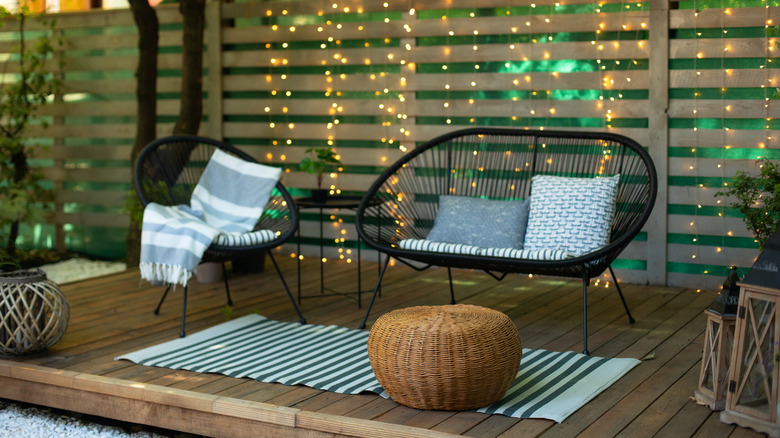
Woodscaping like decks, contemporary pergolas, or boardwalks, while durable, do require regular upkeep. Additionally, when building those types of projects, it is important to use lumber suited to the task. Wood components touching the ground should be chemically treated lumber (pressure treated).
The parts of outdoor projects that are not in contact with the ground should be made from species that do well when exposed to the elements. Cedar is one that commonly comes to mind, but modern supplies of Western red cedar tend to be of lower quality. Hardwoods like white oak, mahogany, and teak have superior weather-resistance qualities, but they are not inexpensive. Locally common and reasonably priced where you can find them are long leaf pine and cypress — both have excellent characteristics for outdoor projects. Regular cleaning and reapplying outdoor stain every few years will extend the life of your woodscaping. Water is the biggest enemy of outdoor wood. If you take the time to seal the end grain of your wood effectively, you'll reap the benefits.
A couple of warnings: Despite what I mentioned above, do not use pressure-treated lumber to make raised garden beds. There are chemicals in the treated wood that are best not leached into garden soil. Second, especially if you live in warmer climes, inspect your woodscaping for insect damage. Insect infestations can erode the viability of outdoor wooden structures surprisingly quickly. Better safe than sorry. And my final piece of advice: If you decide to build your own projects, which I encourage, do your best to find existing plans from which to build. Not all of us are designers, nor do we all know how design safe structures, so leave that to the professionals.