

Help Keep Carpenter Bees Away With A Fragrant Plant They Despise
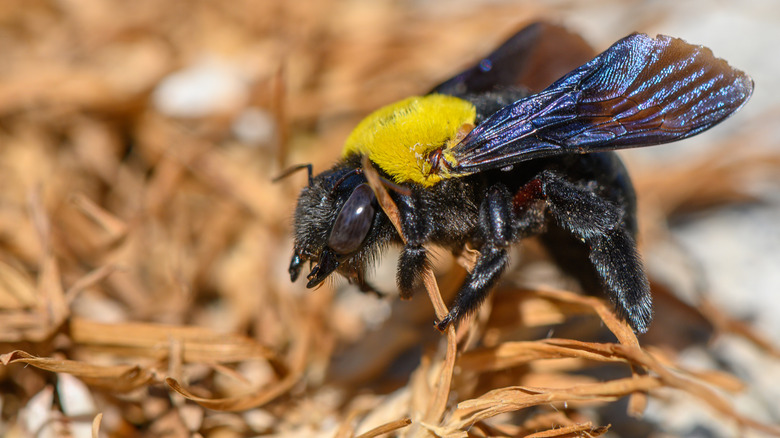
Usually, you come across articles encouraging you to attract pollinators to your yard. After all, they're beneficial insects that help plants reproduce by spreading pollen from flower to flower. But there's one type of pollinator you may want to keep away from your yard and property: the carpenter bee. As their name suggests, carpenter bees drill or tunnel into untreated wood, building nests for their offspring. Their nests can weaken wooden furniture or property, plus make it look unattractive.
Just as there are plenty of plants you can grow to help pollinators do their job, there are also plants you can grow to deter the insects you don't want. One example is lemon balm (Melissa officinalis), a bushy herb with lemon-scented leaves. It's the citrusy aroma of those leaves that can keep the carpenter bees at bay. The bees rely on their sense of smell to find wood to build their nests in, and the strong aroma of lemon balm disorients them.
However, don't expect lemon balm to keep all unwanted visitors away from your garden or house. It's often planted as a pollinator magnet thanks to its tiny white flowers, so it's likely to attract other insects — including other types of bees – to your garden. But if your only aim is to keep the burrowing bees at bay, you might as well grow lemon balm and enjoy its looks and scent in your yard.
How to grow lemon balm
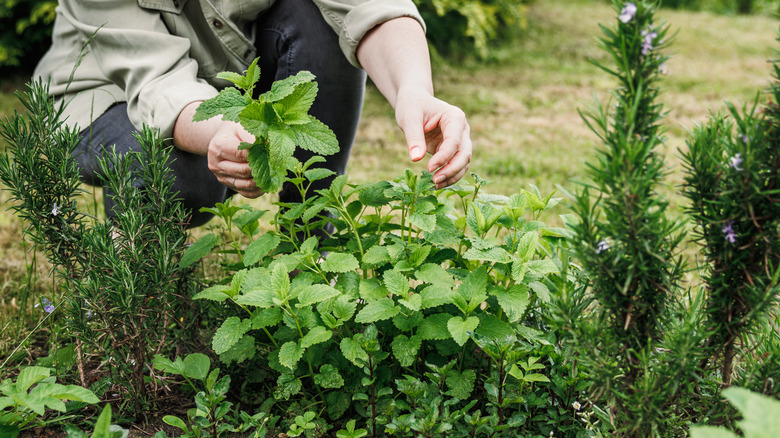
Lemon balm is a relatively easy plant to grow, with minimal maintenance needs. You can grow it from seed or start with a cutting or seedling. It's not picky when it comes to sun or shade and does well with either full sun or part shade. What matters most is the soil quality — it should be moist but well draining.
As a member of the mint family, lemon balm has a tendency to take over, spreading underground by rhizomes. It also self-seeds, meaning little lemon balm seedlings are likely to pop up in your garden year after year. To keep it somewhat under control, your best bet is to plant it in a container or a raised bed, rather than directly in the ground. Pruning the flowers before they go to seed is another way to keep its growth in check. To keep carpenter bees away, it may be worthwhile to trim lemon balm before its flowers have a chance to bloom.
While lemon balm is a nice addition to your garden, a better way to minimize the damage caused by carpenter bees is to seal any soft wood structures in your garden or property. Or try one of the most obvious yet overlooked solutions to a carpenter bee problem: Swap out wooden furniture or structures for those made of other materials, like metal or plastic. Also, remember that their damage is largely cosmetic, rather than structural, and their benefits as pollinators may outweigh any damage they cause, depending on the size and duration of the infestation.