

Ditch Traditional Landscape Fabric: Here's A Better, More Eco-Friendly Alternative
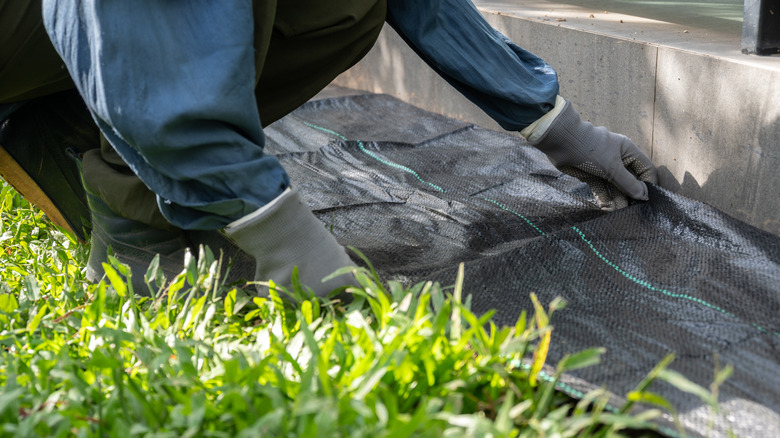
Weeds are a total pain, which is why many gardeners turn to landscape fabric to keep unwanted invaders out of their landscape borders and pathways. And while this barrier can be very effective, landscape fabric has its cons. It is made of unsustainable plastic material that breaks down quickly and needs constant, labor-intensive replacing. Luckily, wood chips are more natural solution that are simple to add to your garden, cheap and easy to find, and effective.
Wood chips work to keep weeds out by blocking light and reducing the nitrogen that seeds need to germinate. But unlike plastic landscape fabric, wood chips don't completely starve the soil underneath, and established flora whose roots grow under a layer of wood chips will benefit from the nutrients added to the soil as the chips slowly decompose. Wood chips also keep the earth cool, unlike plastic fabric. They retain water and are not easily washed away, which is why they are an excellent choice for areas subject to erosion problems. Wood chips also make a pleasing, soft surface for garden pathways, which is why they are popular landscape cover in many parks and playgrounds.
This type of coverage has an advantage over other natural alternatives to landscape fabric like bark mulch, which breaks down more quickly, or pine needles, which become matted down and lose effectiveness in very wet environments. Wood chips do need to be refreshed every year or two, but you can simply add a new layer on top of the old, unlike the digging and prep work needed to properly lay landscape fabric year after year.
Where to find and use wood chips
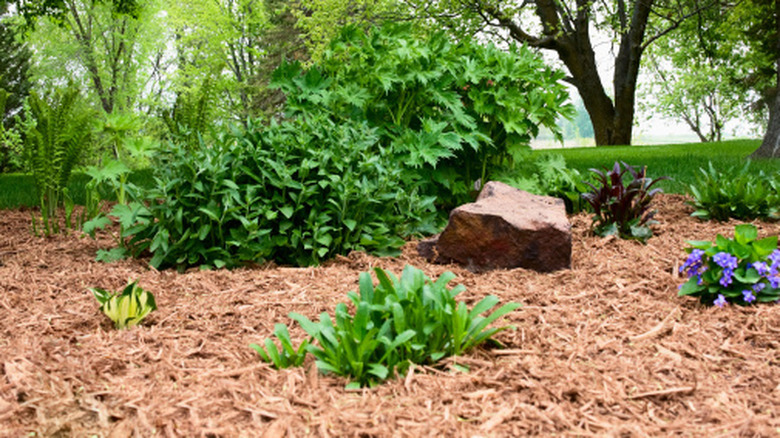
Wood chips are cheap and easy to find. Your local city or county parks or maintenance departments will often give wood chips away for free, and if you can borrow or rent a wood chipper and you have some slash to clean up, you can easily DIY your own supply of wood chip mulch. Local sawmills or arborists will have bulk wood chips at bargain prices, and utility companies that must maintain their power lines from encroaching trees are often a free source. With all these free or cheap options, there is no need to buy pre-bagged wood chips from a garden supply store. And by sourcing wood chips locally over buying rolls of landscape cloth, you are re-using a natural byproduct that might otherwise go to a landfill instead of creating new waste.
There are a few downsides to using wood chips used as weed control. If you get a lot of rainfall, be careful how close you lay them next to trees and other vegetation that don't like a lot of moisture around their roots. Wood chips may also harbor pests like insects and slugs that you don't want living near your garden, but this often depends on the type of wood involved. Cedar chips, for example, repel many pests. Aesthetically, you may or may not love the look of chunky wood pieces in your yard, and may prefer bagged mulch that comes in a uniform color, or tidy looking gravel. But you can't really beat the weed suppressing power of natural wood chips, and you can feel good about using this sustainable product in your garden.