

Why Some People Are Putting Gravel On Their Roof
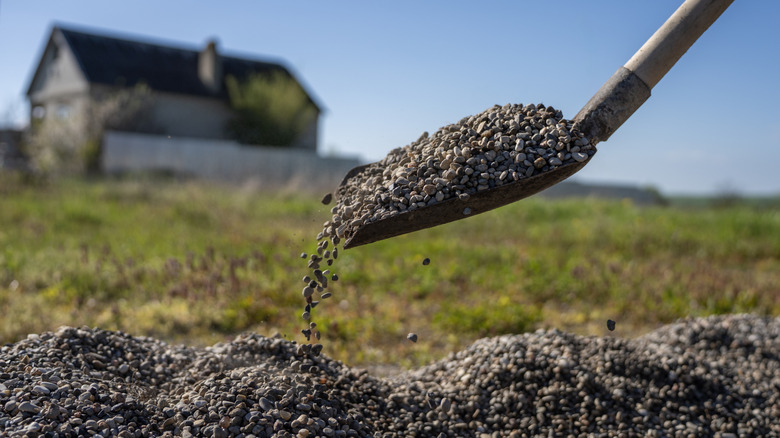
The idea of putting rocks on your roof seems odd, maybe even silly. So, why is gravel put on roofs? Gravel driveways, patios, garden paths ... totally cool. But a gravel roof, what the what? It may surprise you that gravel on roofs is not only common but has been around for over a century. If you are thinking of our common residential gable ended or pitched roofs, your confusion is totally justified (there are so many types of roofs). But on flat roofs, the type typically seen on commercial buildings, a final application of gravel over built-up asphalt and membranes is the perfect protective layer, offering many benefits that will extend the roof's lifespan by several years. Yes, a rock-covered roof.
The term "flat" is not a true representation of what is happening on the roofing systems commonly called flat roofs. They are actually constructed with a well-considered and intentional pitch that directs rainwater to a system of scuppers and gutters. The pitch is hidden from our view but critical for effective water removal. The protective layer, consisting of some type of aggregate (such as crushed stone or pea gravel), is usually about 2 to 3 inches thick on top of the roofing materials. It evens out and enhances the look of the roof while providing a grippy walking surface and protecting the underlying layers from UV exposure, heat, harsh winds, and other damaging outdoor elements.
What is the gravel's job on a flat roof?
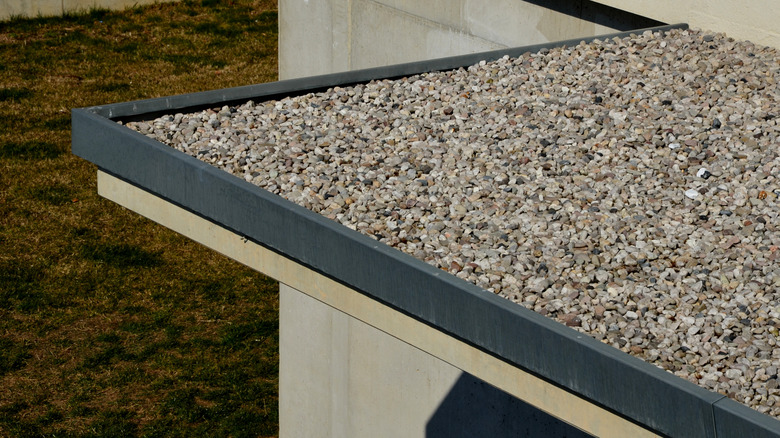
Just as the granules on typical shingles offer vital protection for pitched roofs, the gravel layered over the expanse of flat roofs does many important things. First and foremost, it shields the built-up tar and membrane surface. (This type of roof is often called BUR — built up roofing.) Despite literally being "up in the air," roofs receive a surprising amount of punishment. Rain, hail and snow can pack quite a punch, and a proper layer of gravel will absorb and distribute those blows. And speaking of blowing, the weight of the gravel protects the surface from high winds and objects like tree limbs that get caught up in the fury. Purposely, the types of gravel selected for use on roofs are usually of a light color that reflects the summer sunlight, keeping its solar energy and resultant heat at bay. The gravel layer also enhances fire-resistance, helping to limit the spread of flames across a roof. Importantly, gravel lets water flow smoothly through its granular shapes without impeding water removal from the roof.
In addition to all the important protective features that gravel brings to a flat roof, its uniform texture and color options provide an attractive look. When seen from above, a well-laid gravel layer looks great. Finally, the easy maintenance of a gravel roof is another benefit it provides. Although lifting gravel up to a roof can be tricky (it's heavy!), once it's there, spreading the gravel is not a difficult task. For homeowners, there are lots of roofs and roofing materials to consider for looks and durability, but if you have a typical pitched roof, don't start tossing rocks up there. It's only for flat roofs.