

Not Hostas Or Ferns: The Colorful Perennial That Brightens Shaded Flower Beds
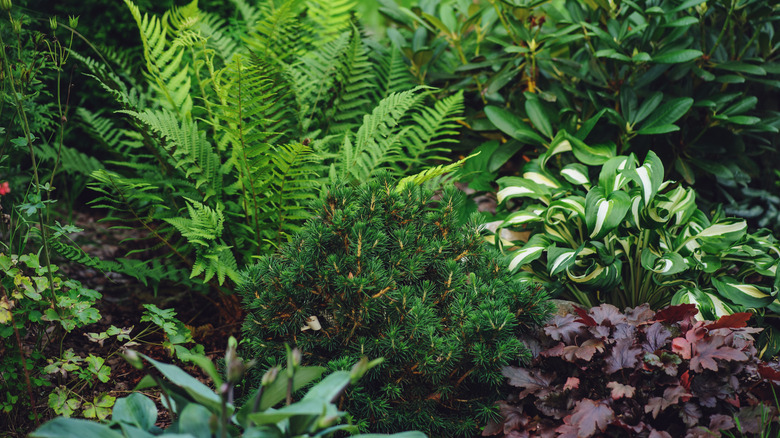
For shady garden spots, plants like hostas, ferns, and heucheras are usually a gardener's go-tos. While those plants have their perks, they can get a little same-old, same-old. To add a pop of color and a bit of visual interest to a flower bed in the shade, skip the hostas and plant primrose instead.
Not to be confused with evening primrose (Oenothera biennis) — a biannual that does well in full sun — primrose (Primula spp) is a perennial that's hardy in zones 4 to 8, depending on variety, and one that thrives in shady spots. It's one of the first flowers to bloom come springtime, which is reflected in its name, which comes from the Latin, prima rosa, or first rose.
With more than 250 cultivated species available, you have plenty of options should you decide to landscape a shady area with primrose or plant it in containers destined for shady corners of your patio or balcony. It blooms in a rainbow of colors depending on the variety, including red, yellow, blue, and purple. The number of flowers is also variety dependent — some produce a single bloom per stem while others have clusters of blooms. One common feature of primrose flowers is the yellow eye at the center of each bloom, a cheery way to welcome spring into your shade garden.
Growing primrose in the shade
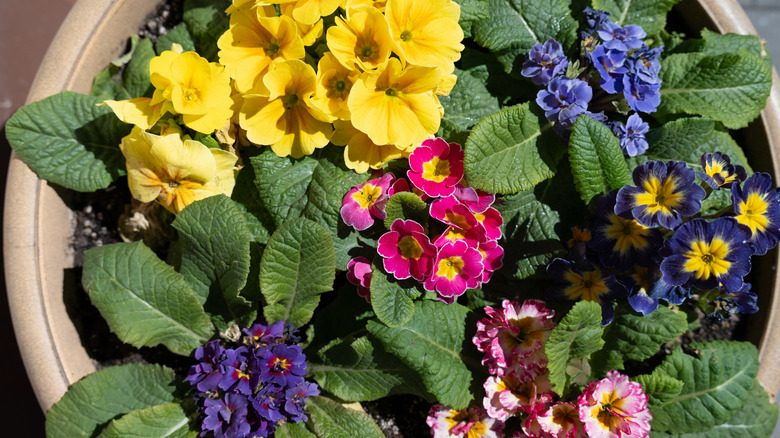
The first thing to do if you want to grow primrose is choose a variety. Common primrose (Primula vulgaris) is on the smaller side, making it perfect for containers or for tucking into tight spots in a garden bed. It has light yellow flowers and crinkly, dark green leaves that can spread up to 8 inches. Japanese primrose (Primula japonica) produces flowers on 12 to 18-inch tall spikes, as does the drumstick primrose (Primula denticulata). The leaves of Japanese primrose can reach up to a foot in length. It's also a good one for damper sections of the garden, while P. denticulata could be the earliest blooming primrose you see each spring.
Whichever variety you choose to grow, choose a shady spot with well-draining, moist soil and wait until after the last frost in your area to plant primroses. Mix some compost into the soil to improve drainage and provide a bit of food for the primrose. While the plants can tolerate a bit of sun in the spring, once summer rolls around, they need the cool of the shade, especially in places that experience a lot of heat in the summer. Add a few inches of mulch to keep the soil cool and retain some moisture.
While the plant is in bloom, deadhead primrose regularly to remove spent flowers and encourage ongoing flowering. Once winter rolls around, add a thick layer of mulch around the plants, especially if you live in an area that doesn't get a lot of snow. The mulch will act as insulation, protecting your primroses until spring rolls around again.