

Skip Hostas: There's Another Shade Plant That Adds Color & Beauty To Landscapes
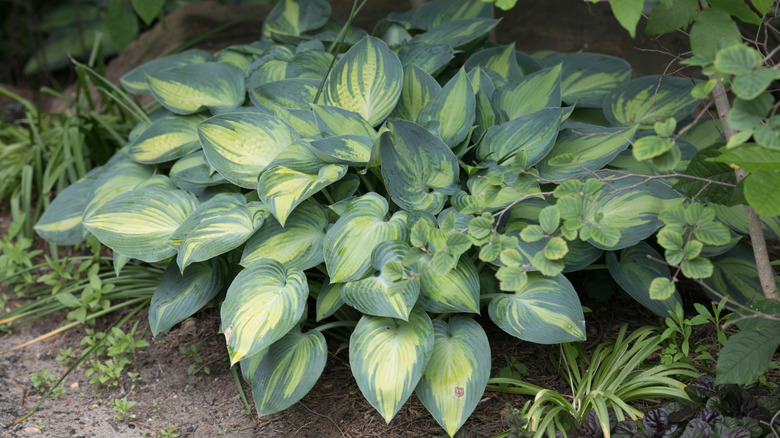
Hostas are typically the go-to landscape solution for shady areas. They're generally easy to care for, with some varieties even tolerating deep shade. Their broad, pigmented leaves are no doubt attractive, but there's a plant that's often considered even more colorful and valuable than the beloved Hosta.
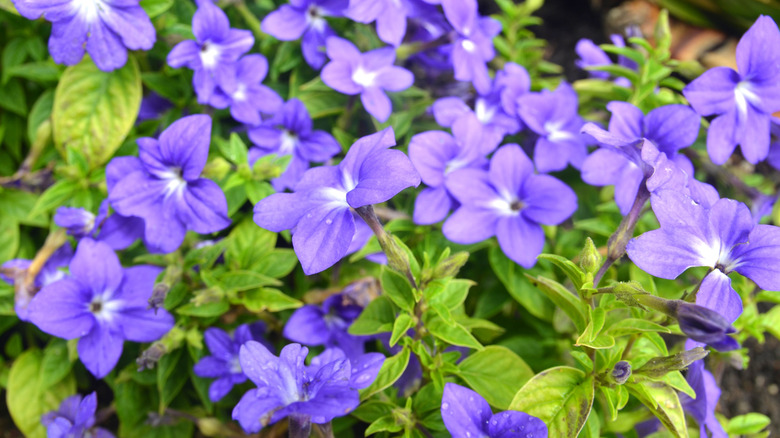
Like Hostas, Browallia (Browallia speciosa) grows well in shade. It's an herbaceous perennial that produces pretty, star-shaped flowers that last all the way from spring to frost. Although it's not grown for its foliage, the dense green leaves add some extra color that contrasts beautifully against the vibrant blossoms. The violet, blue, or white flowers attract hummingbirds to your garden for nearly an entire growing season, whereas Hostas only flower throughout the summer. While Hostas are notorious for being ravaged by deer, Browallia is considered to be relatively deer-resistant. Plus, Hostas are susceptible to a few diseases, such as tobacco rattle virus, which causes serious damage. Browallia is generally pest- and disease-resistant, though you'll still need to keep an eye out for common garden pests, like spider mites or aphids.
There are a few notable Browallia varieties to choose from, depending on what your landscaping goals are. 'Endless Illumination', with violet blooms, and 'Endless Flirtation', with white flowers, have exceptional shade and heat tolerance. 'Starlight' is a great option if you want more compact growth, while 'Troll' is a gorgeous, dense variety that excels in containers.
How to grow Browallia in a shade garden
Among the many benefits of growing Browallia is how easy it is to care for. In addition to growing well in shade, it thrives in a variety of soil textures as long as the soil is well-drained. Make sure to water regularly to maintain even soil moisture. You can either purchase young nursery plants or start seeds about eight to 10 weeks before your area's final spring frost. If growing in a bed, space plants at least 6 to 8 inches apart.
Native to parts of South America, Browallia feels most at home in warm climates, so it's only hardy in USDA Hardiness Zones 9 to 11. If you're growing your flowers in containers, you can move them indoors once the temperatures begin to drop. It's important to note that Browallia is extremely toxic to pets when ingested. So, make sure to keep it out of reach of curious cats and dogs, whether it's grown as a houseplant or garden plant.
With so many varieties to choose from, Browallia has nearly endless garden uses. The 'Bell' series is a trailing variety that cascades beautifully over window boxes or hanging baskets on shaded balconies. Most varieties work well to liven up a garden bed; just make sure to choose one with a mature height that fits the spot you have in mind. Mix Browallia with other shade-loving annuals, like impatiens (Impatiens walleriana), wax begonias (Begonia x semperflorens-cultorum), or wishbone flower (Torenia fournieri).