

13 Best Flowers And Herbs You Should Be Planting In Pots Right Now In June
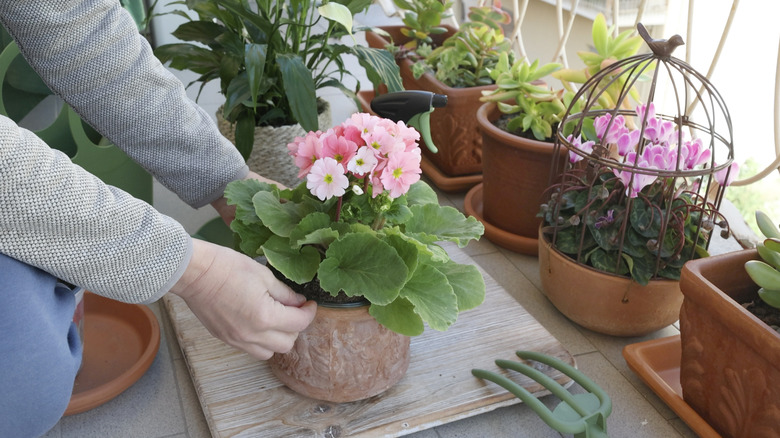
Not having a formal garden is no reason to deprive yourself of the joys of beautiful flowers and appetizing herbs. As long as you've got a patio, a deck, a balcony, or a stoop outside your kitchen, you can carve out the area for container gardening and enjoy the fruits of your labor. And if you think you've missed the planting window because it's no longer early spring, know that June is the perfect time to grow plants if you're willing to put in a little extra effort.
Fortunately, many heat-tolerant flowers and herbs — like New Guinea impatiens, Snow Princess sweet alyssum, basil, and oregano — thrive when they're planted out in early summer. Even tropical plants like canna lilies and begonias that would scrunch their metaphorical noses (or roots?) at the idea of touching cool soils — which is the case in May for many temperate states — might produce a spectacular show once planted in June. Besides, some of these June plantings, like zinnias and pot marigolds, can also help fill gaps left by fading spring flowers and bring in pollinators, as they're already blooming around this time.
For the best performance, use pots that are deeper than wider, so their roots have ample room to grow. Moreover, invest in a decent potting mix, which will help retain moisture and is the right density for root growth in containers. Since soils dry faster in containers, and even more so in summer, check your pots for moisture daily and water them accordingly.
New Guinea impatiens
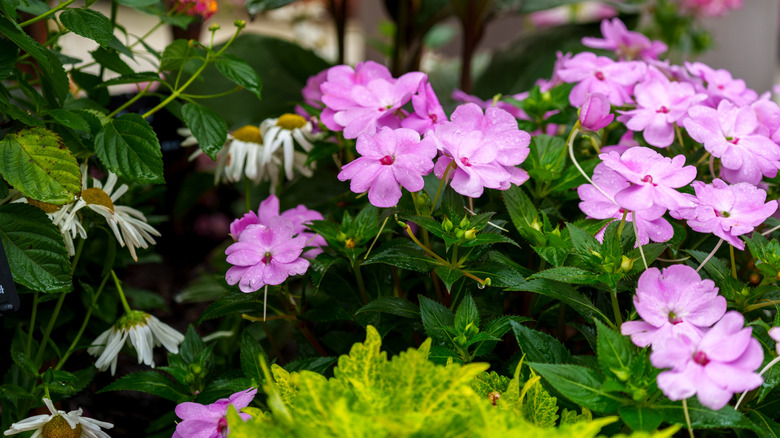
To give your yard a tropical feel, line it with planters filled with New Guinea impatiens (Impatiens hawkeri). From the initial planting all the way through fall, saturated, colorful petals cover the bronze or violet-tinged foliage, luring in a bevy of butterflies. Directly sow the seeds when the temperature averages 75 degrees Fahrenheit, or get a jump with nursery starts that will fill out planters in about a month. Use these drought-resistant specimens to deck out a shaded patio, pool hardscape, or a walkway. They're grown as annuals, except for USDA hardiness zones 10 to 12.
Solenia® begonias
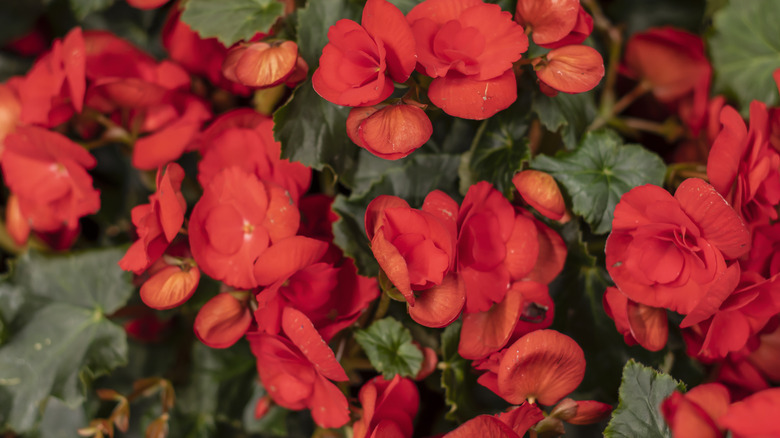
For a flower that handles drought better than New Guinea impatiens, try Solenia® begonias (Begonia x hiemalis). Available in an array of sunset colors, including apricot, scarlet, and chocolate orange, these annuals promise a non-stop parade of flowers until frost, without spurring the need for deadheading. The cultivar is perfect for tricky spots where sunlight changes drastically across seasons, as they tolerate partial and full sun. However, if it gets too hot during the day, it's best to stick them in semi-shade. Stems withstand wind without much breakage. Water them early in the morning, so they dry before rot sets in.
Canna lilies
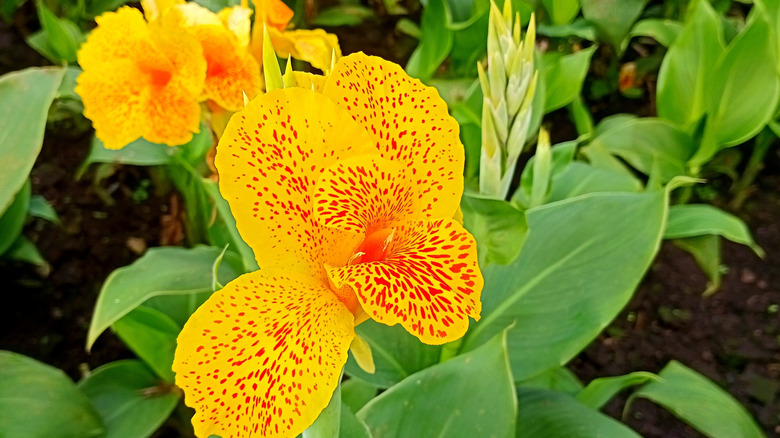
Their tropical genes make canna lilies (Canna spp.) leading contenders for June plantings, as they thrive in heat. But keep in mind that they may require about 10 weeks to begin blooming, delaying the show to late August or September. Fret not — they're outstanding when not in bloom, thanks to bold, arrow-shaped foliage that may be striped in shades of pink and gold. To accommodate their mature size, you'll need 15-inch-wide containers or larger if you're looking to mix up several plants. If you live beyond zones 6 to 10, just move the pots inside for overwintering.
Zinnia
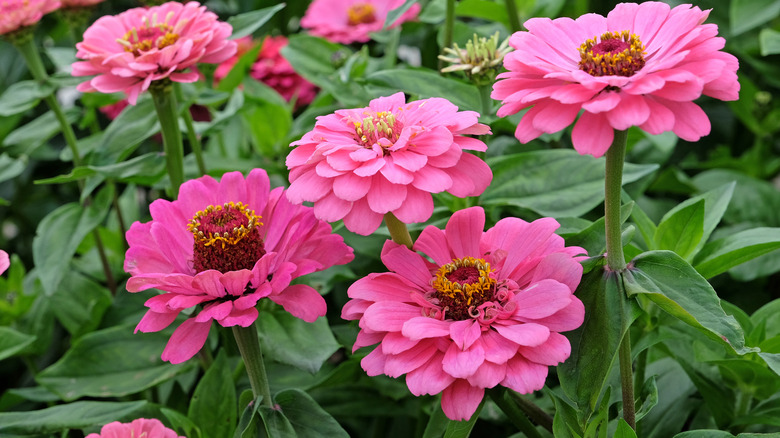
Although zinnias (Zinnias spp.) are at their best in a garden bed, they make wonderful additions to containers, too. Luckily, June isn't too late to get them into the pot as they bloom until they're frost-killed, while drawing in a horde of butterflies, hummingbirds, and other pollinators. Unless you're looking to plant up a large planter, look for compact cultivars like 'Thumbelina' or 'Red Spider.' Disease-resistant, low-growing varieties such as creeping zinnia (Z. angustifolia) also look spectacular trailing down vessels or hanging baskets. Offer full sun exposure and an enriched, well-draining potting medium so you won't need to fertilize as often.
'Black and Blue' salvia
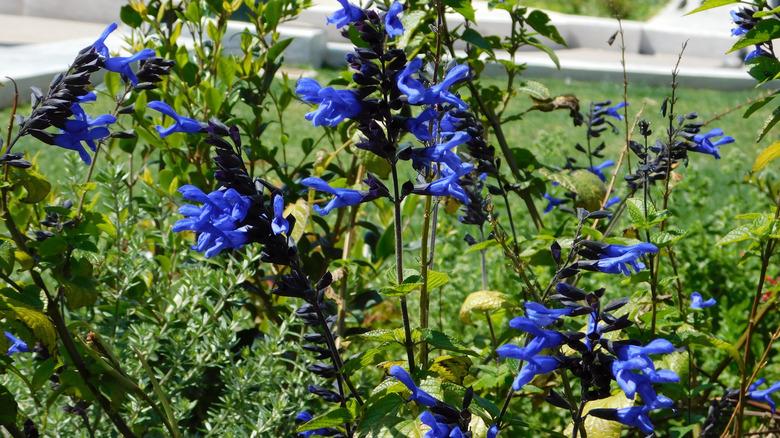
Unless you're a novice gardener, you'll know the real way to charm hummingbirds into your yard and garden is to plant salvia, including 'Black and Blue' salvia (Salvia guaranitica 'Black and Blue'). Despite not featuring bright reds, it grabs the attention of nectar seekers, including large butterflies, with its cobalt blue, tubular flowers. While it's slow to flower when planted in June, you'll see some signs in summer, then peaking in fall. Popped in semi-shade, they can handle heat and drought. Outside of zones 7 to 10, they're annuals but can be overwintered inside.
Milkweeds
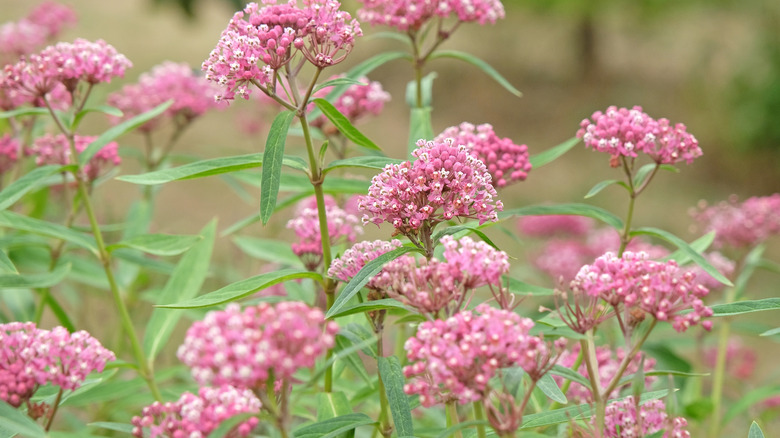
Milkweeds (Asclepias spp.) are stunning plants that attract butterflies, especially monarchs, and can be planted in June in zones 3 to 10. Note that some varieties may already be in bloom, though the flowery display lasts through August. Choose multiple varieties native to your area (tap your state extension for recommendations) so you can cater to butterflies throughout their lifecycle, but avoid varieties with long taproots, like A. tuberosa, as they won't transplant well. You'll need a 14-inch container to house a single specimen and must remove spent flowers to prevent self-seeding (milkweed can spread quickly).
Snow Princess® sweet alyssum
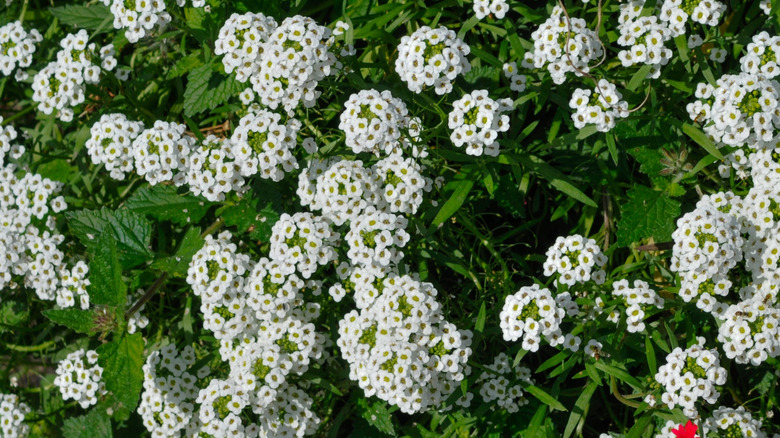
If you've sworn off sweet alyssums because they grow sad mid-summer, try out Snow Princess® (Lobularia 'Inlbusnopr'). This sweet-smelling cultivar is laden with masses of white blooms, no matter the heat, and keeps the show up until a hard frost. Since it doesn't develop seeds, the display is truly prolific, with stems spilling nearly 2 feet down over the container's edges. The downside? It requires lots of water. To keep the soil consistently moist, you may have to water it twice a day to prevent wilting — popping it in a large container may also help retain moisture longer.
Calendula (pot marigold)
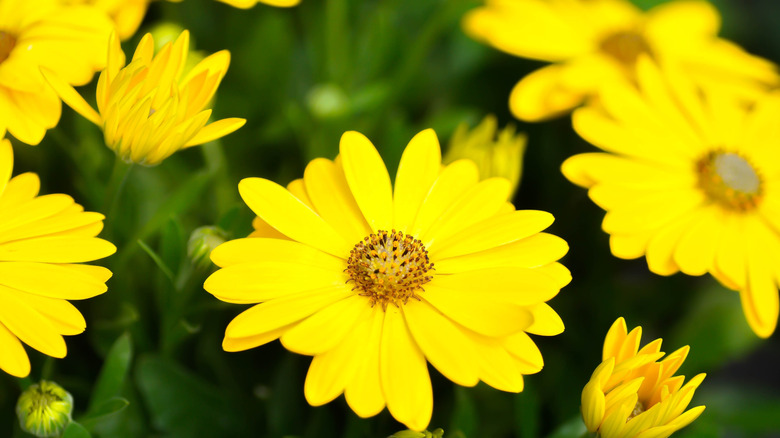
Named for its ability to grow easily in pots, calendula or pot marigold (Calendula officinalis) is another plant you can grow in pots during June. If you have the patience, you can start them as seeds. In under two months, they'll produce a wave of yellow or orange flowers that continue into October, weather permitting. But for an immediate display that fills out June gaps, creates a pollinator magnet, or helps trap pests targeting your vegetable garden, purchase them as blooming nursery plants. Cut their blooms every few days for floral arrangements or to color rice and soups.
Lemon balm
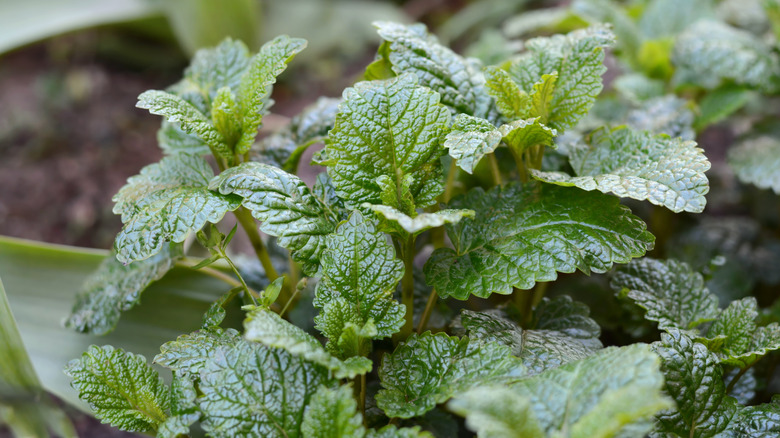
If you're looking to jazz up stews and soups, or love a citrusy aroma wafting about your patio, consider lemon balm (Melissa officinalis), a perennial herb in zones 3 to 7 with edible leaves. In containers, you can keep its self-seeding tendencies in check, ensuring it doesn't spread elsewhere. Usually, the best time to sow seeds is in late spring, but you can still grab nursery starts in June to be planted in a rich potting mix and supplemented with slow-release fertilizer. Avoid this plant if you're in Oregon, where it's classified as invasive.
Basil
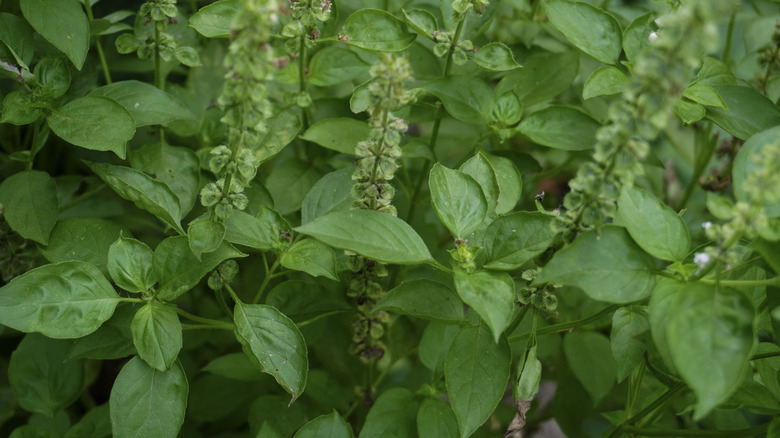
Care for a Caprese salad with tomatoes, mozzarella, and a sprinkle of basil (Ocimum basilicum)? You're in luck, as you can get this heat-loving, summer herb into a potting medium as late as June, even in hot climes. In five weeks or less, you'll have delicious leaves for garnishes. By removing flowering buds all summer, you can extend the harvest into fall without the leaves turning bitter. But if you're growing an ornamental variety, you may want to create space for flowers and the pollinators they attract. Place containers where they receive over six hours of direct light.
Lavender
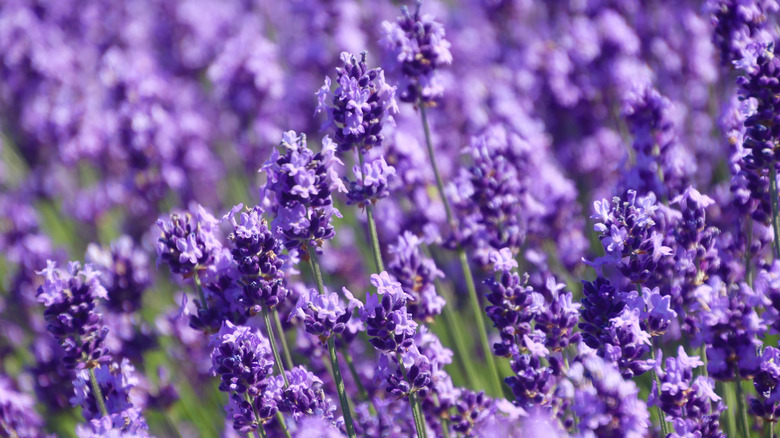
June isn't too late to pot up lavender (Lavandula spp.), provided you can offer it ample sunshine (upwards of six hours) and a fast-draining medium. To successfully grow lavender in a pot, start with potted plants rather than seeds. You can choose any variety if the aim is to establish a flowering hedge or sculptural plant, as long as the pot can accommodate its full size and is made from porous terracotta. In smaller vessels — 12 inches or so — try small cultivars like 'Hidcote,' 'Bandera Pink,' 'Mini Blue,' or 'Blue Imp.' Most varieties thrive in zones 8 to 11.
Oregano
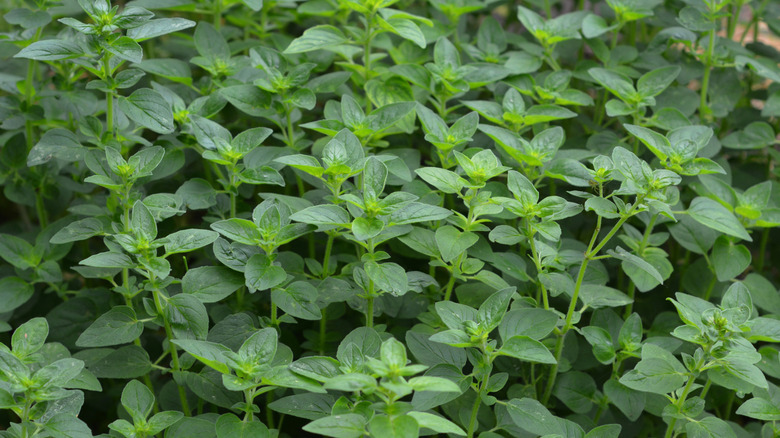
Apart from upping your pizza game with its flavorful leaves, oregano (Origanum spp.) can take your summer containers from meh to wow with its sprays of pink and purple flowers. Not one to shy away from heat, oregano puts out vigorous growth when temperatures warm to 70 degrees Fahrenheit, making it an excellent planting option for June. It's also quite drought-tolerant, so you only need to water when the soil feels dry to the touch down to a couple of inches — overwatering may rot the herb. You may grow it perennially in zones 4 to 9 with full sun exposure.
Thyme
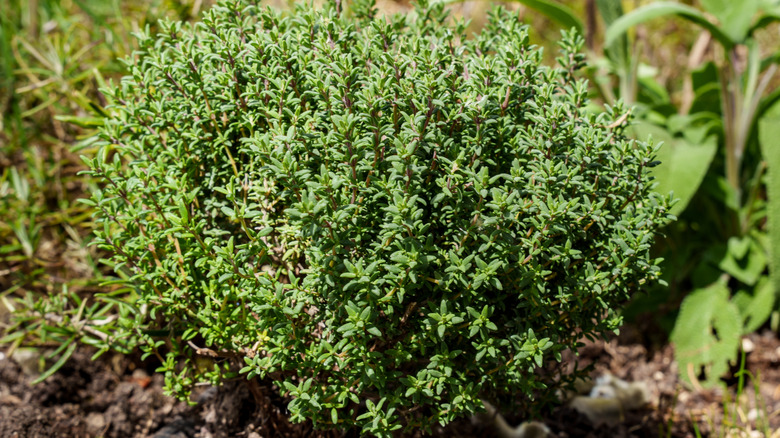
Another culinary favorite that you may still have time to pot up in June is thyme (Thymus spp.). The best part, though? It doesn't require much space, as you can grow it in a 6-inch pot. Just make sure it's at least 4 inches deep to contain the root system. Since seeds germinate poorly and may take nearly a year to mature fully, it's best to start with nursery plugs. Use a well-draining potting mix, as thyme doesn't tolerate wet conditions. To propagate new plants for free, you can take semi-hardwood cuttings later in the summer. It thrives in zones 5 to 9.