

How To Deadhead Roses For Nonstop Blooms
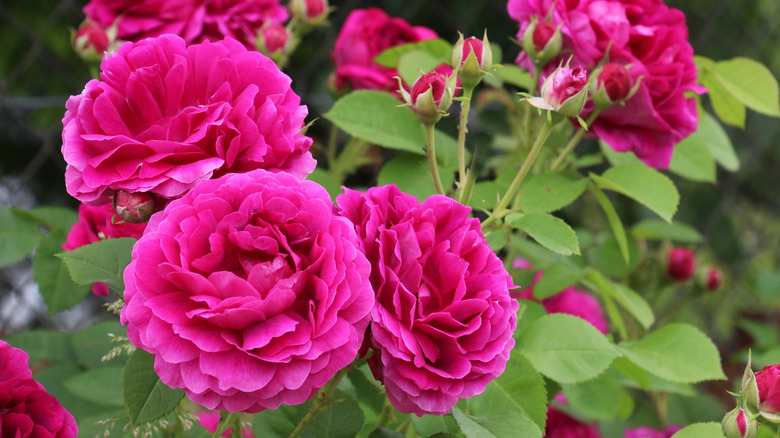
Nothing matches the drama and color that a rose brings to any flower garden, and if you know how to properly care for roses, you'll have stunning blooms all season long. Deadheading, the practice of removing a spent bloom from a flowering plant as soon as it begins to fade, is a fairly simple gardening practice that, for many rose species, will result in more flowers than you ever thought possible throughout the growing season.
Deadheading isn't pruning, which is what you do in the winter to your rose garden to maintain the shape of your plant and remove any dead or diseased branches. Instead, deadheading is a gardening practice done throughout the blooming season to remove old blooms and encourage new ones. As demonstrated by YouTuber @Gardenninja, deadheading involves cutting below the spent bloom of a rose, down to the next set of leaves. It is a practice performed throughout the blooming season, and it allows your rose plant to put more energy into producing more roses. If you don't deadhead, once a bloom finishes, the petals will dry up and fall off, and the plant will put its energy into creating rose hips for reproduction, instead of sending up more flowers. Consistent deadheading of many, but not all, rose types will encourage frequent new blooms.
Tools and tips for proper deadheading
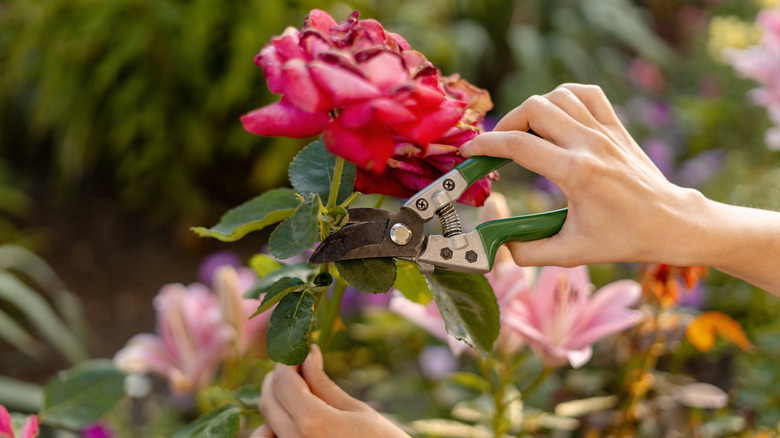
While deadheading some types of flowers, like mums or marigolds, means pinching the flower at its base, for roses, the process is different. You'll want to focus your cut below the spent bloom all the way down to the first set of five leaflets. This allows a new stem hearty enough to support a new rose bloom to develop. Tools you'll need for proper deadheading include sharp shears like these Fiskars Bypass shears, recommended by rose-gardening Redditors. Keeping your shears sharp and good as new is important for making clean cuts on your rose stems; dull blades can crush the stem and prevent new growth. You also want to use clean shears to avoid spreading disease from other plants you may have cut with them. Invest in some quality rose gloves that extend well up your arms to protect yourself from thorns.
There are many types of roses, and not all require or even benefit from deadheading. This practice works best for repeat-flowering shrub roses, which will cycle through many different flushes of blooms through spring and summer. Climbing roses also benefit from deadheading after their first flush of blooms to keep them looking neat and tidy and preserve their structure. Some low-maintenance varieties, like "knock-out" rose bushes, are self-cleaning and will keep producing new blooms without the need for deadheading. Other varieties only bloom once and are best left alone after they finish flowering to develop rose hips, which provide food for wildlife in fall and winter.