

The Japanese Garden Secret That Can Make Your Own Backyard Feel Twice As Big
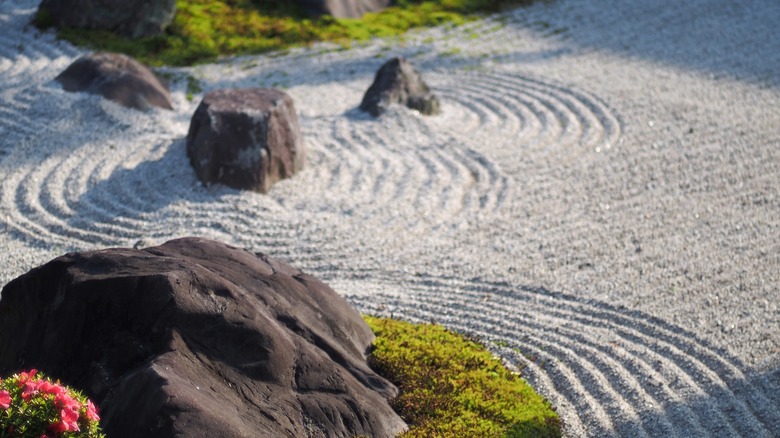
How do you make space in a garden that doesn't have much to offer? The Japanese people, living on a small, densely populated island, have mastered this art over the centuries using a variety of techniques, and one of the most prominent is illusion. The idea is something like this: When you don't have much space to work with, you work with viewers' perceptions to create space in the mind. Visual, tactile, and auditory techniques contribute to a space of relaxation, contemplation, and especially silence, because silence is space.
During the 10 years I spent with my wife living in Kyoto and studying Japanese gardening techniques, I saw them employed equally in famous gardens, like the ones at Ryoanji and Ginkakuji, as well as gardens at smaller temples and private homes. One of the more interesting illusions is "miegakure," which roughly translates to "hide and reveal." The gardener strategically places features in such a way that some partially hide key parts of others. The anticipation people experience as they approach features to view them from various angles instills interest and makes the garden seem twice as big as it actually is.
Japanese gardeners also use perspective to create the illusion of space. For instance, placing a large rock in front of a smaller one fools the mind into thinking the smaller rock is farther away than it actually is. They also do this with plants or by making pathways or streams that taper off into the distance.
Japanese space-creating techniques for Western gardens
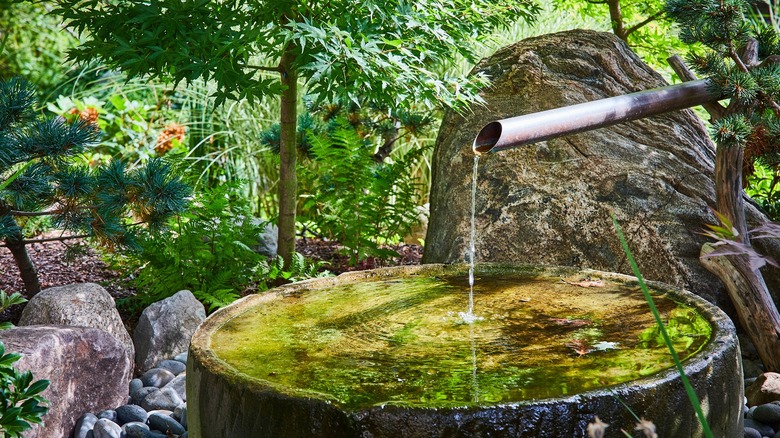
Japanese gardening techniques have their origins in Chinese art, which uses water features like ponds and lakes to signify void space and tranquility. The Japanese word for this design element is "ma," and besides using water and gravel, they create it with the placement of plants. They also use borders to separate the peaceful garden from the chaotic world outside. One of the most notable features of the Ryoanji Zen garden is the solid wall that separates it from the busy road just on the other side.
Ma is essentially another illusion, and you don't have to live in Japan to incorporate it as a design feature. Instead of filling your garden with a riot of different colors, hop on the calming garden trend by using plants with monochromatic and calming colors, and space them far enough apart to allow air to circulate. Place stepping stones irregularly to encourage visitors to slow down and appreciate the scenery. And yes, use privacy fences and screens to separate the garden from the outside world.
Water has a special place in Japanese gardens. You can use still water features to create void space or flowing water features, such as traditional bamboo tsukubai fountains, to symbolize movement and the passage of time. (You don't have to use bamboo — a plastic or metal pipe also works). Where water isn't available, an alternative is a prominently placed Zen rock garden (karesansui), which by its abstract design inspires contemplation and helps create the illusion of space.