

The Chic '80s Kitchen Feature That Should've Never Gone Out Of Style
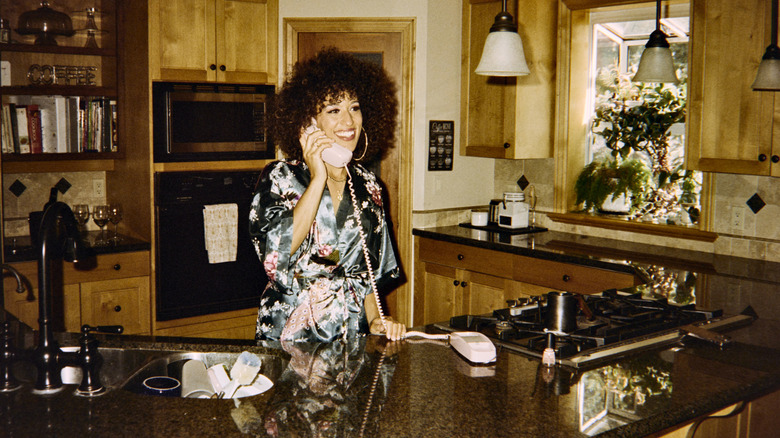
From checkered linoleum floors to tin ceilings, there are plenty of bad 1980s kitchen trends that belong in the past. Yet, the decade of big hair and blockbuster movies also ushered in countless decor ideas that still work today, like kitchen skylights. Skylights saw a surge in popularity around the 1980s, offering homeowners a simple way to let in more natural light, but they fell out of vogue in the following years due to their limited energy efficiency and laborious upkeep, not to mention occasional water leaking in through the windows.
However, skylights have been regaining ground, partially because of the vast improvements in quality. Today's skylights are more energy-efficient, less prone to leaking, and some even have advanced features which allow them to open and close automatically and sense the indoor air environment. Skylights are an easy and eye-catching fix to dark or cramped environments, from kitchens to living rooms — even attics can have skylights.
How a skylight can revamp your kitchen
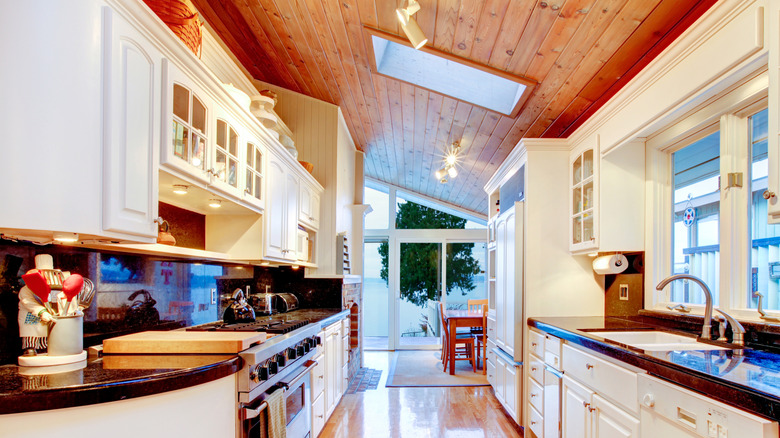
Not only does a kitchen skylight allow more natural light, but they offer extra ventilation if they can open. Windows of any kind make spaces feel larger, so a skylight can help a small kitchen feel more expansive. A TikTok posted by @nikolettaskitchen shows the difference a kitchen skylight can make. "The whole kitchen feels bigger, brighter, and it's completely transformed the space," the creator said after installing a four-paneled skylight above the kitchen sink. The before and after is striking, and multiple comments compliment the new look.
A few details to consider when installing your own kitchen skylights are the overall size, the number of panes, and the direction in which they face. Just like standard windows, skylights that face west will receive more heat and glare in the afternoon, while east-facing skylights will see the most light in the morning. Regarding skylight size, there's a general rule of thumb which suggests skylights should be equivalent to roughly 5% of the room's square footage if the space already has several windows or around 15% of the square footage in a room with few windows. There are many advantages to integrating natural light in various rooms of the house, and the kitchen is no different. It's a pleasant feeling to be eating breakfast or cooking a meal and looking up to see blue skies and sunshine.