

Don't Mistake This Harmless Pollinator For Carpenter Bees: How To Spot The Difference
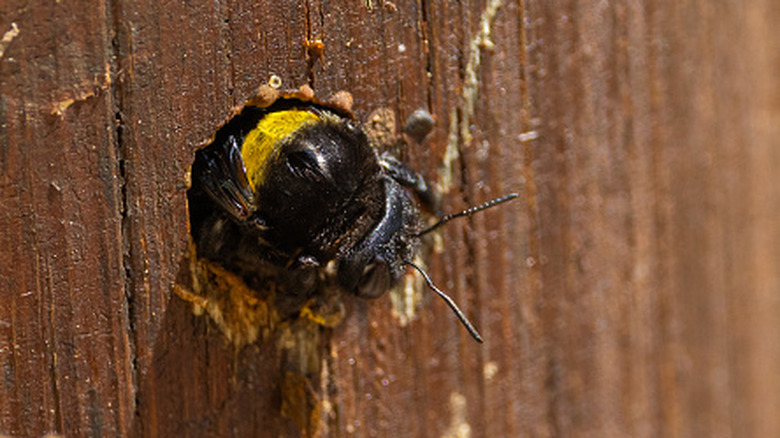
You may want to think twice before driving away those buzzing bees in your yard. Seeing a bee emerging from a small hole in the side of your deck might make you assume the insect is a potentially harmful carpenter bee. However, it might be a different native bee that you'd actually want in your yard alongside other beneficial insects. Mason bees, also referred to as orchard bees or gentle bees, are prolific pollinators. These native bees build their nests in holes that have been drilled by other insects or in tube-like structures, such as the inside of plant stems. Because of this, some mistake the helpful pollinators for carpenter bees, but you won't want to drive mason bees out of your garden. From fruit trees to vegetables and flowers, mason bees will pollinate just about anything they come across. One mason bee will visit thousands of flowers every day, making these bees even better pollinators than honeybees.
Taking a moment to look at the colors and markings of the insects will help you determine whether you're dealing with mason bees or carpenter bees. Though both bees tend to emerge in the spring, they have distinct physical differences that help to tell them apart. Carpenter bees look more like traditional bees, with black and yellow coloring. They are also larger insects. Mason bees are small or medium in size and have a blue or greenish metallic color that may make them appear more like flies.
Differences between carpenter and mason bees
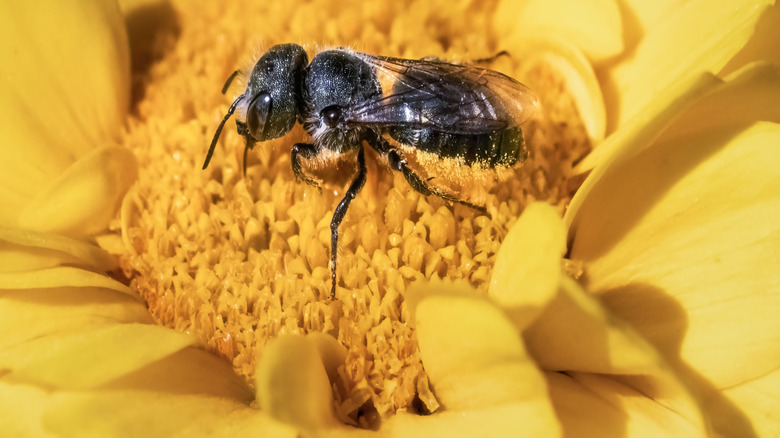
Carpenter bees don't always threaten the integrity of a wooden structure, but the holes they create are ugly and can cause larger issues over time if the bees continue drilling. Though these wood-loving bees are also pollinators, they are not the most efficient, and they don't pollinate every flower they drink nectar from. On the other hand, mason bees won't cause any damage to your property. Encouraging mason bees and helping them thrive is a great way to support your garden and local environment.
Outside of physical differences, another way to spot the difference between these two bees is by behavior. Carpenter bees can sometimes be territorial and have a loud buzz that seems aggressive or scary. Mason bees tend to be less obtrusive. Additionally, mason bees won't create new holes in your deck. But neither type of bee is especially harmful to humans; they don't typically sting unless threatened.
If you've determined that the insects are drilling into your wood, there are simple ways to repel carpenter bees. Applying varnish or paint to the wood could help to deter them, or you could try to plug the holes they've drilled with steel wool or a metal mesh. For those who have mason bees instead, even if you you don't like them nesting in holes in your wood, you can help support these native pollinators by making dedicated bee houses. Ensure your space has bee-friendly plants and mud for the mason bees' nests so they can thrive and pollinate your garden.