

How To Get Rid Of Carpenter Bees With The Help Of A Simple Kitchen Staple
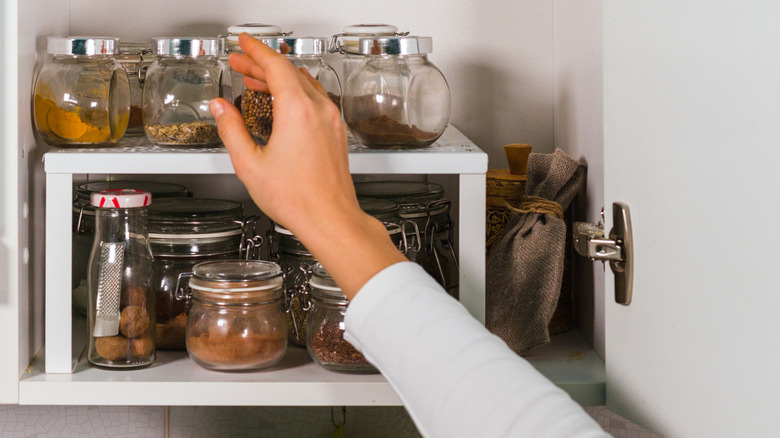
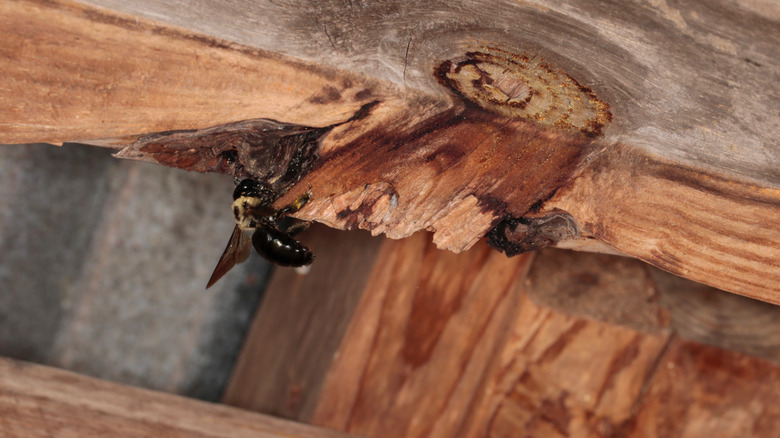
Seeing a carpenter bee (Xylocopa virginica) disappear into a hole in your unsealed or unpainted wooden structure on your property can quickly fill you with dread. As these types of bees dig intricate cavities through wood, they are probably working to build their nests (which of course can lead to even more carpenter bees around). Carpenter bees can undoubtedly be destructive and annoying to deal with every spring and summer. Yet due to the important roles these pollinators play in the natural environment, not everyone is so eager to use chemicals that will harm them and other species. At the same time, you don't want to deal with their potential to wreak extensive damage around your home. It turns out there may be a middle ground here to limit carpenter bee destruction without taking drastic measures. You'll need the help of a common kitchen spice: Garlic powder.
Garlic is undoubtedly popular among many humans, but not all species are quite so fond of it. The reason all has to do with its notorious scent, which has garnered garlic a reputation as one of many types of organic pest control in the garden. Carpenter bees are particularly averse to strong fragrances, which is where garlic powder may become a powerful ally in your efforts to prevent their destructive effects around your property. Unlike chemical pesticide treatments, garlic powder will also not cause any harm to humans — just be sure to keep any dogs and cats away from the substance, as garlic is considered highly toxic to them.
When and how to use garlic powder for unwanted carpenter bees
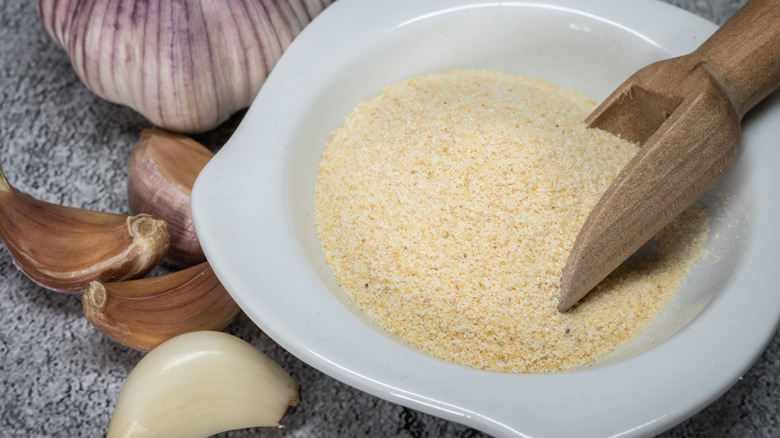
Unlike other DIY methods of pest control that might require a bit more preparation, garlic powder is pretty straightforward to use as a carpenter bee deterrent. All you need to do is sprinkle a small amount of the spice directly into any suspected carpenter bee holes, or around the entrances. While some people might try this out in the evening when the bees will most likely be hanging out in these nesting cavities, you don't want to inadvertently harm them. For this reason, it might be best to sprinkle the powder during the day as more of a preventive measure. In theory, the garlic powder may become so off-putting to the bees that they will leave and build nesting tunnels elsewhere (hopefully away from your property!).
Also, while the garlic may certainly deter them, carpenter bees might only be affected temporarily. Unlike chemical control methods, garlic powder is unlikely to prevent carpenter bees in the long-term. It may instead work best as a sort of follow-up treatment to other forms of carpenter bee eradication you've already set in place to prevent a recurrence of an infestation.
You should also prepare to have enough garlic powder on hand for repeat treatments as necessary. Since even chemical controls for carpenter bees require applications about every 30 days to remain effective, homeopathic solutions like garlic powder are unlikely to control the issue with one-time treatments. You might also use a multi-pronged approach to pest control by using garlic powder along with a stylish solution that carpenter bees can't stand.
Is garlic powder really worth trying for carpenter bee control?
If you're wondering whether garlic powder might possibly work just as well as chemical controls or easy DIY wooden traps, chances are this is not the case. Nevertheless, the spice may work well enough with diligence and repeated applications to make sure that carpenter bee spaces maintain their garlicky scent. Also, despite people reporting success with garlic powder for carpenter bee management, know that this method is not widely supported with scientific evidence. Yet it's still a relatively low-risk and inexpensive approach that could be worth trying out for the occasional carpenter bee hole — especially if you want to get a handle on the situation at the first sight of these bees.
Finally, if you're faced with a deck or fence full of carpenter bees, chances are that the problem is much too large to be solved with a jar of garlic powder from your kitchen. The situation might also be at point where the bees have caused so much damage that the wooden structure is dangerous to use. In this case, it's best to speak with a pest control expert to help assess the situation, and to make sure you properly seal and paint wood structures for better long-term control before these get damaged beyond repair.