

New Mexico Popularized It: The Stylish Ceiling Feature You Need To Know About
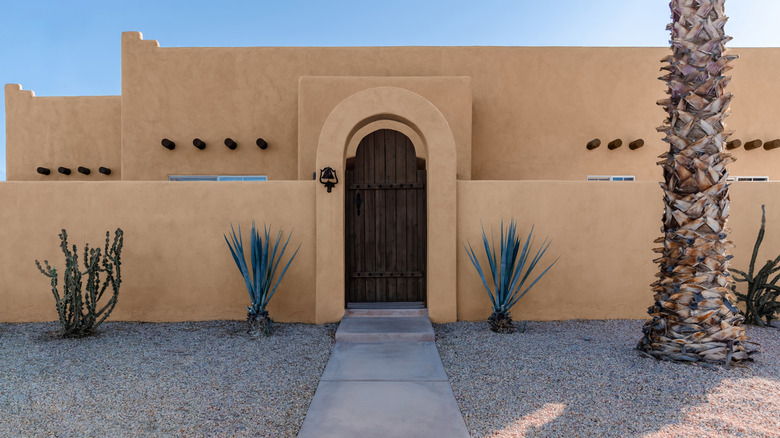
The southwestern United States is known for its distinct architecture, like adobe homes, which blend perfectly with the local desert landscapes. Versions of these dwellings have been around for generations in the area, based on techniques originally used by the Pueblo peoples. Adobe homes have a very distinct visual profile, including two stylish ceiling features called vigas and latillas. These wooden beams are both aesthetic and functional, making them integral to the style. You are likely already familiar with these ceiling features, especially if you have ever visited Santa Fe, New Mexico, where the Pueblo Revival style that heavily features them has major roots.
Vigas is a Spanish word that means "beams." These wooden beams stretch across the ceiling from wall to wall, providing support to the houses with flat roofs that are so popular in the area. They are anchored through the walls. So, you'll often see their tips poking out on adobe-style homes, which is a hallmark of this type of desert house aesthetic. Inside, the vigas are left exposed to add a touch of rustic style. Traditionally, they are made from ponderosa pine trees, a native tree that is abundant in New Mexico. Latillas do provide a little bit of load-bearing as well, but their main role is to visually support vigas. These smaller strips of wood are usually made from aspen or spruce and finish off the ceiling, so it isn't bare between the vigas beams.
Incorporating and styling vigas and latillas
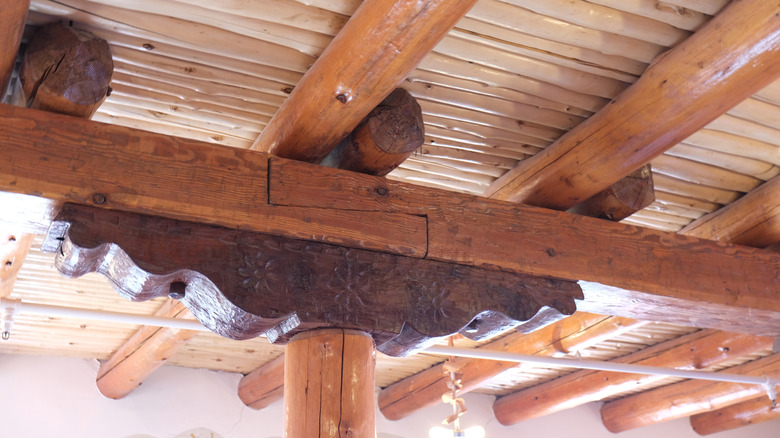
Ceiling features like vigas and latillas are so desirable in places like New Mexico because they perfectly fit the desert aesthetic. In some southwestern homes, the interior vigas are also occasionally continued outside and used as a porch cover. However, the basic principles of these interior wooden beams can also fit in other home styles across the country, too. Properties that are rustic farmhouses, or even homes with Mediterranean or Spanish-style interiors, can easily incorporate these features as well.
While vigas and latillas can technically be used anywhere within the home, they look best in larger rooms with higher ceilings, so things don't begin to feel cramped. As they are quite a heavy visual feature, a smaller room can easily be overwhelmed by them. This is why you often see them in entryways, where they can make a dramatic first impression or to anchor living areas in open plan homes. However, many designers run the beams parallel to the longest walls of the space. This helps remove some of the visual weight, making the room feel less boxed in.