

What Is The Average Lifespan Of IKEA Furniture?

Getting new furniture is exciting, whether you're trying to make your newly bought house feel like home or just trying to revitalize a boring space. You don't want to be buying new furniture too often, though — while there are always new finds at IKEA, anything you put your money into should ideally last a while. IKEA furniture is known for being affordable, but that doesn't mean it's okay for it to fall apart. So, at what point should you expect your IKEA furniture to need replacing? On average, IKEA furniture tends to last 10 to 15 years, and the brand even includes a 10-year limited warranty with many of its pieces. Of course, items that see heavier use may start to show wear and tear before they reach the end of their lifespan, such as scuffs, scratches, peeling vinyl, or flattened cushions. The furniture is still usable and "alive" but might not look or feel its best. The result is that you may end up replacing it before it's technically necessary.
What your furniture is made from will also impact its lifespan. IKEA uses a variety of materials, including solid wood, MDF, plastic, polyester, and cotton, each of which has a different expected lifespan. While wood furniture tends to last a while, the type of wood can impact its longevity. The majority of IKEA's wood-based furniture is made from particleboard, which has a lifespan of 5 to 15 years, whereas solid wood may last upwards of 25 years. If you want to choose the IKEA furniture with the longest lifespans, look for solid wood and metal. However, don't panic if you already own some IKEA furniture made of less sturdy materials like MDF or particleboard. They can still last for years if you're careful.
Extending your IKEA furniture's lifespan
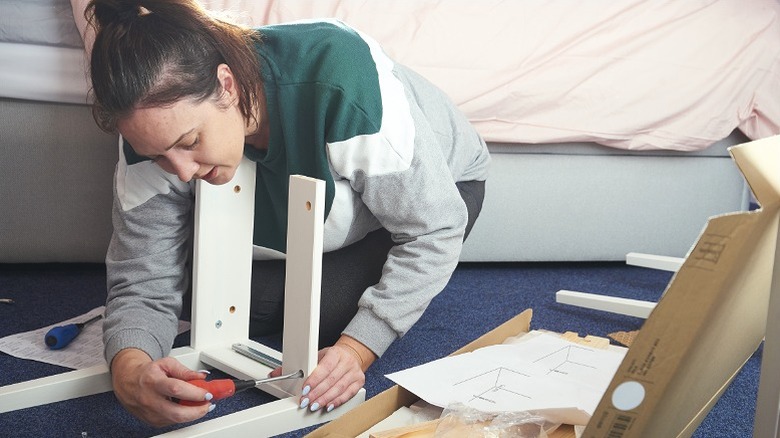
Taking care of your IKEA furniture is the best way to extend its lifespan. Specific care instructions for your IKEA furniture can typically be found in the warranty information or owner's manual, but the IKEA website also has basic guidance. Proper cleaning and being vigilant about spills is important, as particleboard and MDF are more sensitive to moisture than solid wood. Additionally, while IKEA furniture can be moved, disassembled, and reassembled, avoid doing so too often, as it increases the risk of breaks, stripped screw holes, and other damage. If you must take it apart, make sure you're using the correct tools to avoid damaging the hardware. On the other hand, if you're committed to keeping it in one piece, you could reinforce your IKEA furniture by permanently gluing the components in place. Otherwise, the assembly may shift over time, causing damage.
No matter how careful you are, damage is almost unavoidable. While IKEA does sell replacement parts for some pieces (and supplies spare small parts for free), they also have repair guides to help you fix certain types of damage. For example, you may be able to fix a tear in sofa fabric by lining up the sides of the tear and stitching them. If the edges don't line up, or it's in a spot where stitching is difficult, you could also patch it with extra fabric. Dents in wooden furniture, meanwhile, can be repaired with wood filler and a fresh coat of paint. This will sometimes work for particleboard and MDF as well, but they are often trickier to repair if the damage is structural. You may be better off ordering a replacement piece in that case.