

The Collectible Antique Vase You Should Always Keep An Eye Out For At The Thrift Store

There's a charm to thrifting. You walk through aisles of chaotically laid-out things in search of that unique item that would speak to your soul — without emptying your bank account. And if you're especially lucky in your treasure hunt, you can sometimes snag bespoke collectibles of valuable vintage origin that would take your space from "meh" to "wow" in a heartbeat. One such collectible antique vase that Virginia Chamlee, author of Big Thrift Energy and the Substack newsletter What's Left, advises looking out for at thrift stores is faience.
Going deeper into this valuable vintage treasure in her exclusive interview with Hunker, Chamlee elaborates, "Faience is a type of tin-glazed, enamel, earthenware pottery that was meant to be a more affordable alternative to porcelain." It first appeared on the French scene in the 16th century. As the "Sun King," Louis XIV, and influential households used it, it enjoyed steady popularity through most of the 17th and 18th centuries. Today, it's considered a prized collectible. "It's known for its opaque white glaze, which contrasts with vibrant, hand-painted decorations — often blue — over top (it looks similar to Chinese pottery in this way)," adds Chamlee. To achieve this characteristic milky glaze color, artisans and factory makers would mix tin oxide into the coating before firing the earthenware in the kiln.
Spotting faience vases at thrift stores
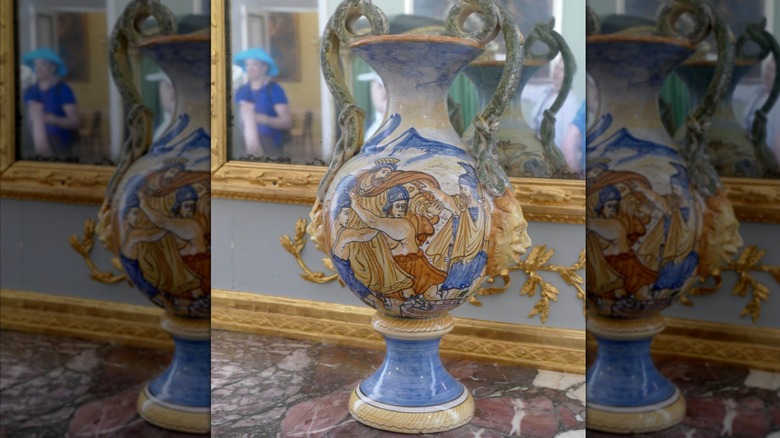
While it's all nice and dandy to be keyed in on the valuable vintage vase you should never overlook at an estate sale or thrift store, it's equally important to know how to spot it and ensure that it is the real deal. After all, there's no dearth of imitations trying to pass off as expensive originals. Elaborating on how you can tell if a vase is antique during her exclusive interview with Hunker, Virginia Chamlee says, "The easiest way to check if a ceramic object is made of porcelain or faience is to examine it for a chip." For reasons of age, normal wear, exposure to temporal fluctuations, clay quality, or accidental impact, earthenware usually develops scratches or chips at its rims or beyond, revealing the underlying layer. "If the ceramic within the chip is brown or beige, then it is a faience object," clarifies Chamlee. "A chip from porcelain would be white."
In addition, she recommends looking for maker's marks, like those from Quimper, Limoges, and Saint Amand. But be prepared for a challenge. Faience makers changed their marks through the centuries, depending on who was at the helm. And because, for a few years in between, some even sold their rights to other factories, you can find precious objects stamped or printed with their marks but sans their role in the making. So, keep a copy of their different marks through the years on your phone for easy reference while thrifting.
Faience pieces you're more likely to find at thrift stores
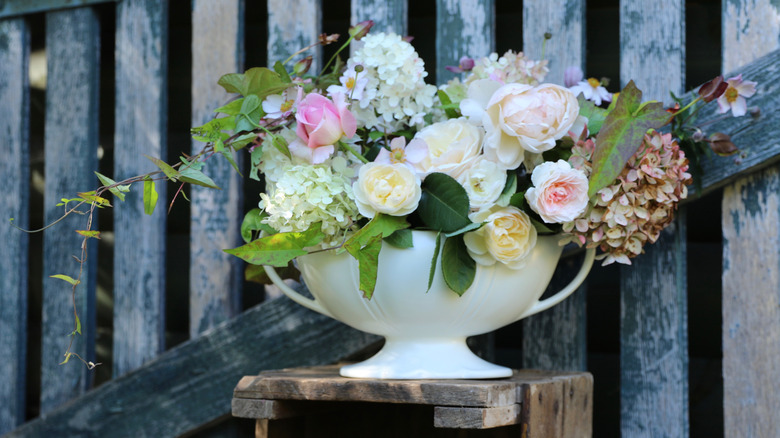
Without taking you through the deeply profound rabbit hole of faience, here's one thing you should know: It has gone through several iterations ever since its initial emergence. Even though their ownership has swapped hands plenty of times (looking at you, Quimper), several of these original establishments continue to produce faience and porcelain pieces to this day. In other words, not every faience vase you find at a store or sale has a vintage heritage. As Virginia Chamlee puts it in her exclusive Hunker interview, "Modern faience-inspired pieces and 20th-century European faience are not uncommon in thrift stores, but genuine 18th- and early 19th-century French faience is considerably less common."
However, if your heart is set on thrifting an antique piece and you want to give your interiors an interesting character by mixing modern and antique furniture, Chamlee suggests, "You'd be more likely to find that at estate sales, regional auctions, or antique dealers specializing in ceramics." In short, the faience pieces that land at thrift stores are usually "decorative mid-century or later imports rather than museum-quality French Faience," says our expert.
Prices for these pieces can be highly variable, with rare antiques — justifiably — commanding extra. "Decorative 20th-century faience vases might be worth anywhere from $25 to $150, while rare antique examples from known factories could be worth anywhere from $500 to over $2,500," she says, concluding her interview with us. Here's hoping you can find one that best fits your budget.