

These Are The Worst Home Decorating Trends Of The 1980s
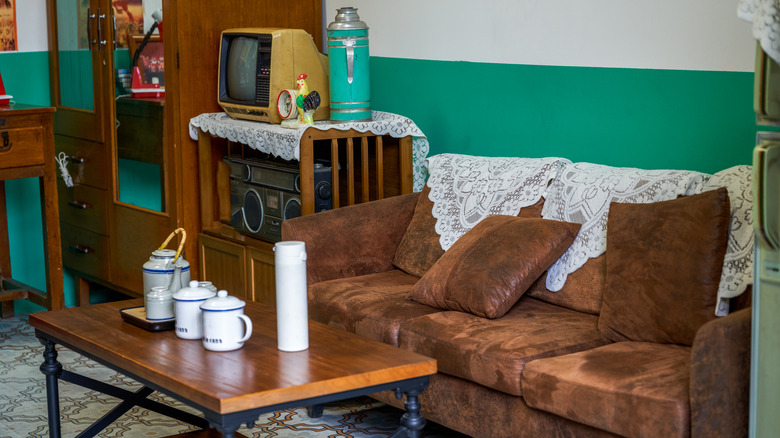
Arguably, no other decade has inspired as much division, aversion, disdain, and mockery as the 1980s. It was an era of maximalism and excess, of going all out, splurging on things that seemed extravagant, dramatic, bold, luxurious, and opulent, enabled in part by tax cuts that raised disposable incomes. People wished to express their personality, let loose their aesthetic, and experiment with styles.
On the one hand, they were reaching for Hollywood with their bulbous lights, neon accents, and mirrored walls. Yet, on the other hand, they were going rustic with choices like country geese, floral chintz, and pastel shades. Some took a leaf from the theater, choosing sad clowns for décor, while others opted for faux paint stains and popcorn ceilings. The stylish choices varied wildly, and remain contentious to this date. Although trends always cycle back in, with newer takes, updates, and styles (looking at you curved silhouettes and brass finishes), below are some of the worst trends that will require a lot more work to make them palatable to homeowners again, or so we believe. After all, beauty lies in the eyes of the beholder, and if the design works for you, it just does, no matter what trend reports say.
Sad clown décor
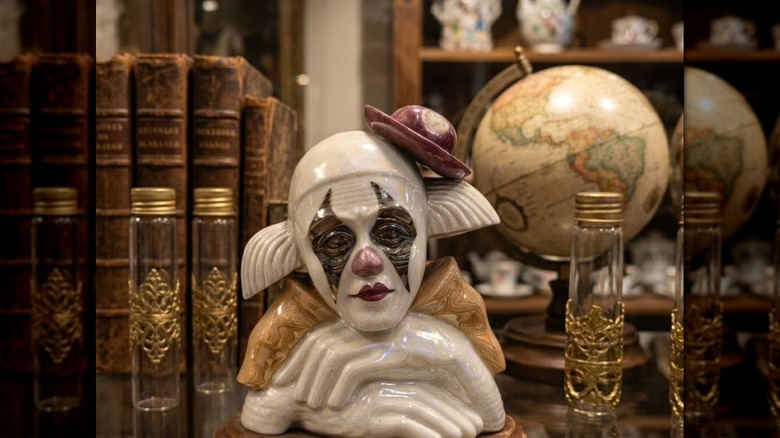
Every era seems to draw its own stars. Surely, the recent craze for Kaws figurines and Labubu dolls isn't yet lost to memory. But the 1980s were all about sad clowns — Pierrot, in particular. Dressed in ruffled white with a history of unrequited love, this pantomime character made it to every décor option you can think of, including dolls, posters, beddings, tins, lamps, thermometers, wallpapers, mugs, vases, and curtains. What's so charming about gawking at a teary-eyed clown as you go to sleep? We couldn't guess, but apparently it was highly sought-after until it wasn't.
Waterbeds
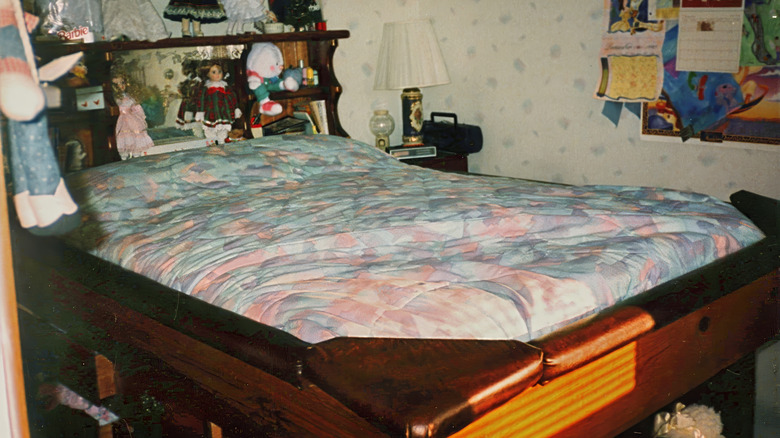
A bed filled with water and sealed in with vinyl, making sloshing noises every time you moved, somehow gained favor with homeowners in the 1970s, peaking fully in 1987. And one can't help but commend marketers because that sure doesn't promise a good night's sleep. You had to bring in a garden hose to refill it, which sounds inconvenient enough, on top of dealing with leaks, next to ginormous wooden headboards. And if you ever changed your mind about the bed's location, you had to pump out the water first before moving it. Today, dairy cows use waterbeds, and we hope they don't return for human backs.
Popcorn ceilings
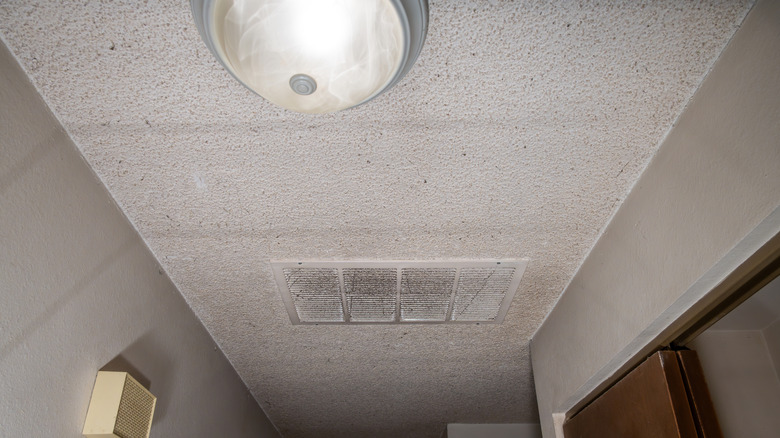
Popcorn ceilings were not new to the 1980s. They had their first moment in the aftermath of WWII, when builders were looking for ways to cut down on construction time to meet the burgeoning demand for new homes. Since it required a single coat and helped mask a poor drywall job, they clad the fifth wall in this slurry, cheesy mixture that added texture and softened echoes. Concerns over lung-damaging asbestos, which these ceilings included, dented their popularity, though it took a few more years until a complete phaseout. Still have them? You can cover your dated popcorn ceilings with this gorgeous DIY design.
Wall-to-wall carpeting, everywhere
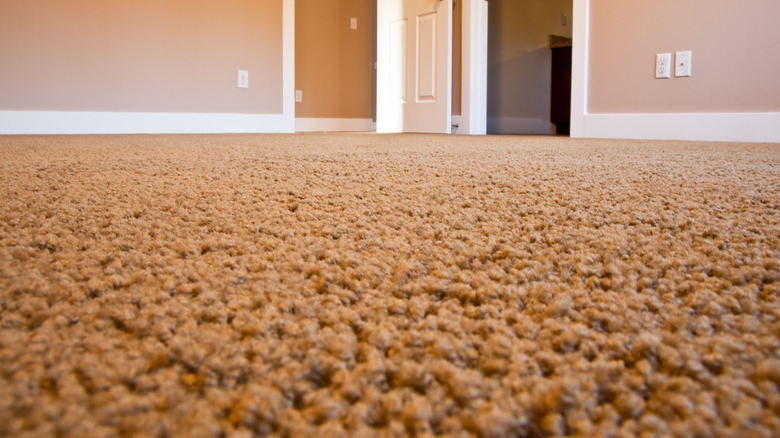
During the 1980s, wall-to-wall carpeting was no longer an entryway feature. Instead, homeowners used it across all rooms, including kitchens and bathrooms. Showering next to a mauve or blue shag carpet sounds awful from a sanitary perspective, given all the moisture, dust, and odor it can collect. Plus, it would date fast, especially in busy areas, and would show marks of furniture (as it would compact the fibers), so updating your room's appearance by simply moving around or changing up furnishings would be a no-go. We're glad designers found a way around it, with rugs to instill warmth and luxury into homes.
Glass blocks and bricks
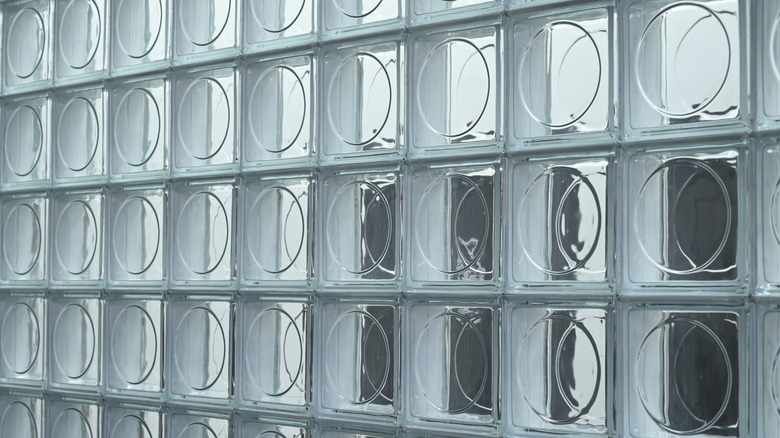
First created in the 1880s, glass blocks (and glass bricks, which were heavier and went up on a wall) had a resurgence in the 1980s because someone thought they made the perfect background for "cool cops." Yes, we're referencing the show "Miami Vice." They seemed ethereal and functional as they improved natural light transmission while still retaining a semblance of privacy. Yet, paired with brass fixtures and pastel hues, they couldn't scream louder that the look is dated. It turns out there are folks keen on giving it a modern spin, as small accents for rooms styled in Art Deco.
Heart-shaped bathtubs
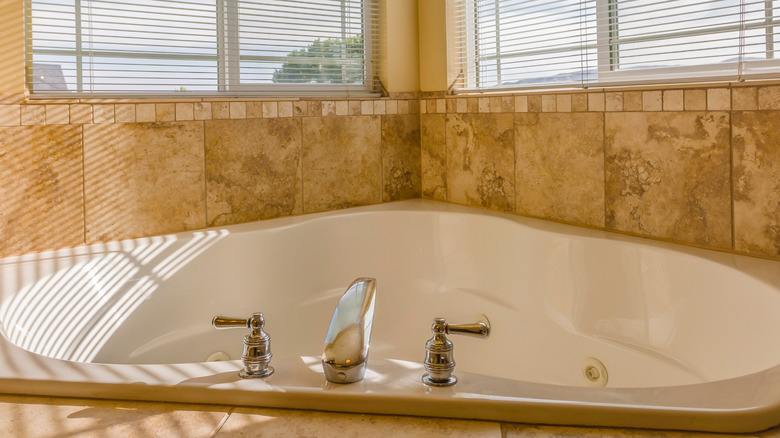
Loaded on top of tiled surrounds, with mirrored walls for company, heart-shaped bathtubs in bold blues, mauve, or cream, became this ubiquitous feature in every rich 1980s household. Frankly, lacking this context, we would probably expect them to feature in love motels (which they certainly did) since they could be romantic — for a day or two. But on an everyday basis? That's debatable. Plus, cleaning those mucked-up corners or even designing around this awkward monstrosity was challenging. The trend finally waned in the 1990s, when people woke up to its tackiness, though they maintain a scant presence in honeymoon hotels.
Wallpaper borders
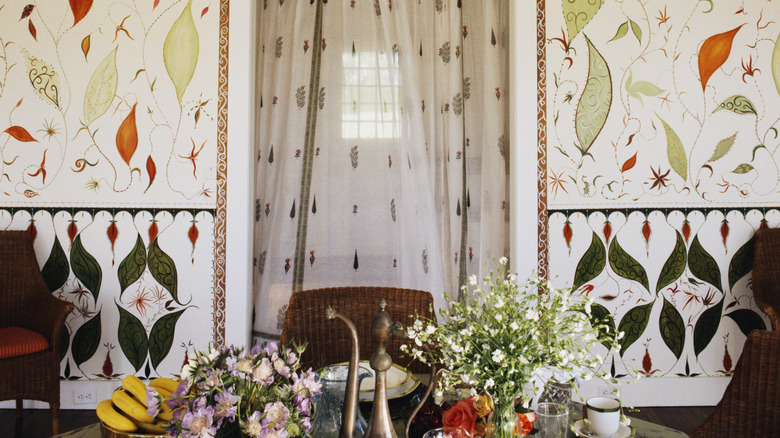
Wallpapers may be back in favor, but wallpaper borders are a 1980s remnant of living room trends that have lost their luster, and we hope it stays that way. Since crown moldings were expensive, folks embraced decorative strips, featuring kitschy floral motifs or seaside designs (think seashells). They were so unflinchingly capricious and so liberally used across all rooms, which were mostly papered over rather than painted, that it's a surprise this even made aesthetic sense. But then again, "Miami Vice" and Laura Ashley set the tone of that decade, so...
Floral chintz
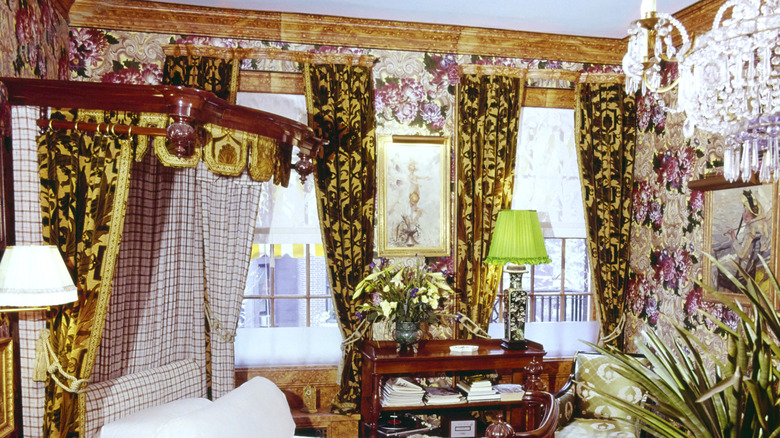
Fairly popular in the 17th century, when European colonists freely imported chintz from India to put their oh-so-expensive tastes on an outrageous display, floral patterns and chintz materials found a loving revival in the 1980s. They made it to linen, bed skirts, curtains, sofas, wallpapers, and ottomans, to name a few things. Frankly, to a modern, clean space with neutral palettes, they can bring a fresh splash of color. But in the 1980s, where homes were stained in cute pastels, brass finishes, oversized curtains, and colorful, asymmetrical, Memphis furniture, they just read chaotic and overdone.
Hollywood vanity lighting

The 1980s were all about glam, and people increasingly took their design inspiration from movies and movie sets. Back then, it was quite common for Hollywood stars to have a string of incandescent bulbs encompassing their vanity mirrors for better makeup applications. The idea caught on, and suddenly, '80s bathrooms had these exposed white lights, affixed on faux metals or wood, framing their mirrors. Granted, it would be cool if you're hoping to land the role of a lifetime soon, but working with that glare and ambient heat in a tiny room doesn't sound fun.
Mauve? Green? Oh, the colors and accents
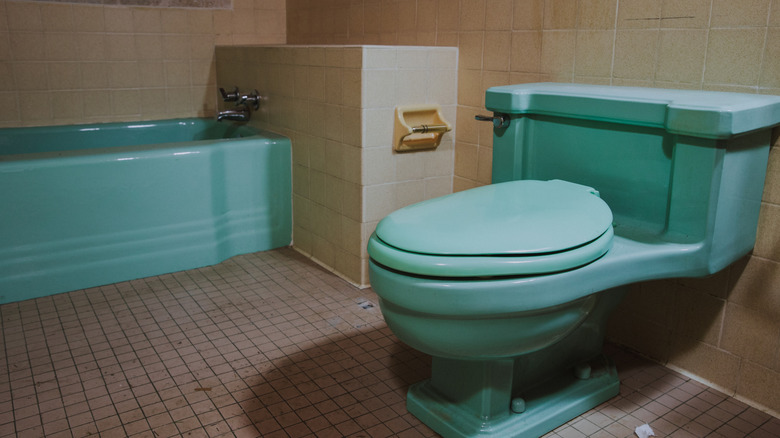
While you may have thoughts about Memphis design's colorful history, it is obvious that its take on primary colors was fresh and revolutionary for that era. If anything, they helped wean people off neon tones and pastel colors. An avocado green sofa, a green bathroom (including sinks and toilet), lights shining electric blues and hot pinks that you needed shades to maneuver, and blue and pink bathroom laminates were all the rage. And don't even get us started on the 1980s-defining mauve or dusty rose. From window treatments, upholstery, and carpets to walls, it was inescapable; its stay is mind-boggling.
Puffy, billowy window treatments
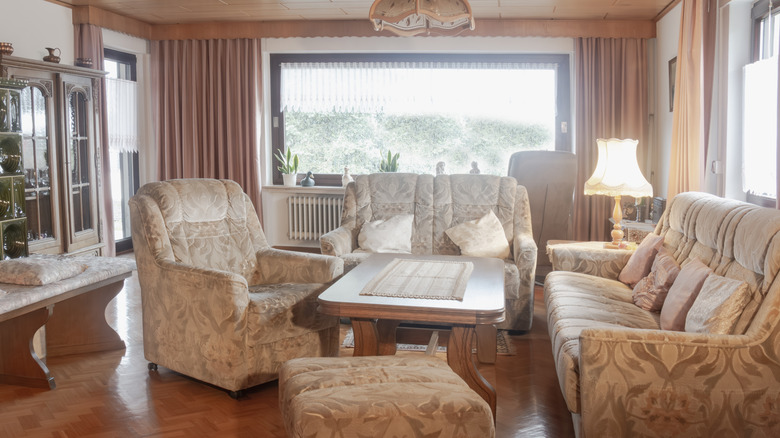
With their gathered fabric, oversized tiebacks, and poufy valances which matched the color of those voluminous drapes, 1980s window treatments were supposed to read opulent and luxurious — perhaps in a callback to the show "Dynasty"? Though, on the flip side, "Pretty in Pink" brought grandma curtains with their busy patterns back in style. Either way, they just read busy and extra, especially when paired with oversized, chintzy furniture or hued in that time's characteristic seafoam greens and dusty pinks. The extra fabric may have helped block out the cold, but it wasn't doing the interiors any favors.
Pine furniture
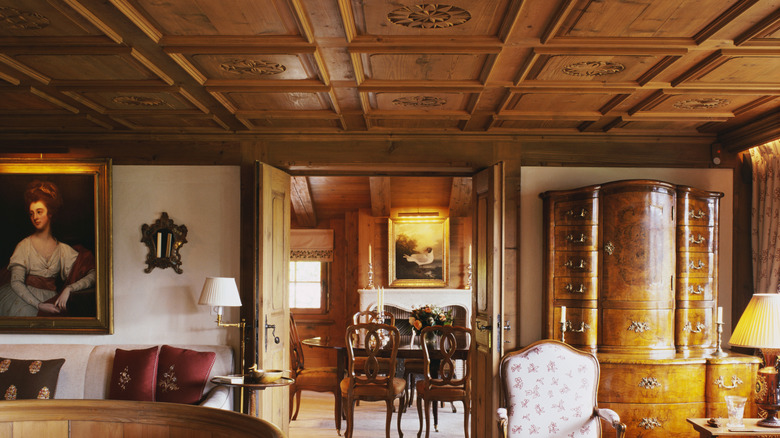
Pine in sauna bathrooms is great since it retains an organic feel and isn't as quick to shrink from the heat and humidity. Pine wood as accents is fine, too — the yellowish or orangish undertone can feel fresh amidst darker cabinetry, and woody knots make for an earthy aesthetic. But have them covering everything from chests, bookshelves, dressers, door and bed frames, floors, tables, and all over the wall? That's diabolical.
Chia pet
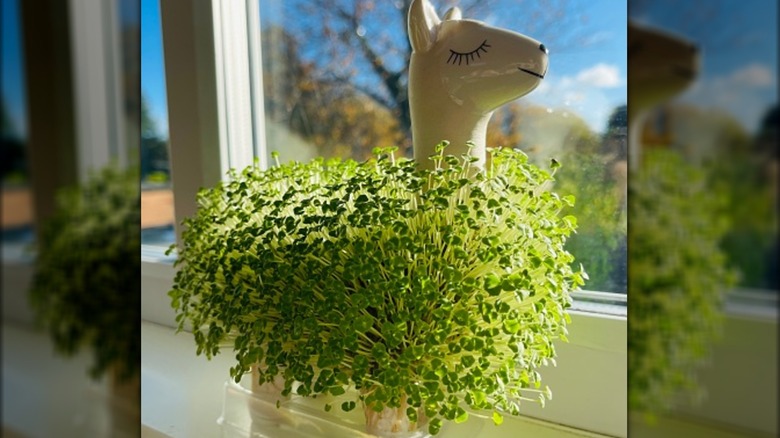
Ch-Ch-Ch-Chia! If you lived in the 1980s, you would recognize that jingle anywhere. The concept was simple enough. Get a clay planter, often shaped as a ram, until people got bored, and manufacturers produced them in other animalistic forms of sheep, cats, turtles, pigs, and teddy bears. These planters were dipped in water and coated with chia seeds, which would eventually grow out, clothing the planter "pet" in green fuzz. Even a short flirtation with gardening will have you know that seeds are finicky. Turns out, those chia pets weren't uniformly green, but they were popular nonetheless.
Mirror overload
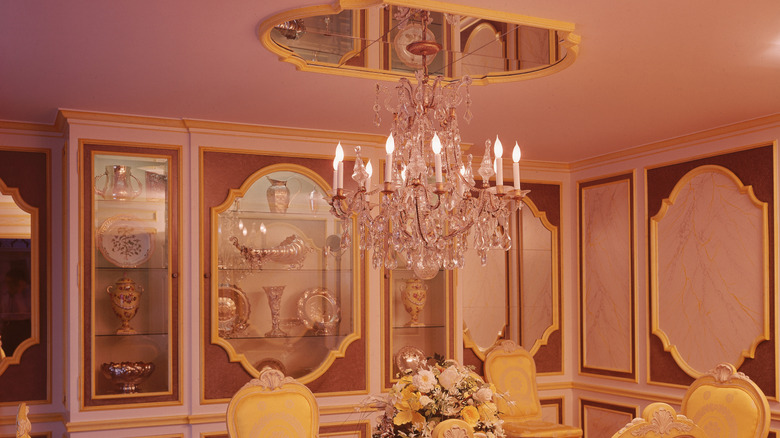
Mirrors are a staple in home design. Designers have used these living room mirror ideas to instantly double your square footage (a play on light reflection). However, the 1980s took this obsession to a different level by covering walls, ceilings, kitchen backsplashes, and closet doors with chunks of geometrically cut mirrors. While we accuse '90s minimalism of turning homes into showrooms or hotel lobbies, a mirrored wall in the '80s accomplished something similar while you were working in the kitchen or eating in the dining parlor (when they were still a thing). Your home could even resemble a nightclub if you had neon lights to boot.
Country geese
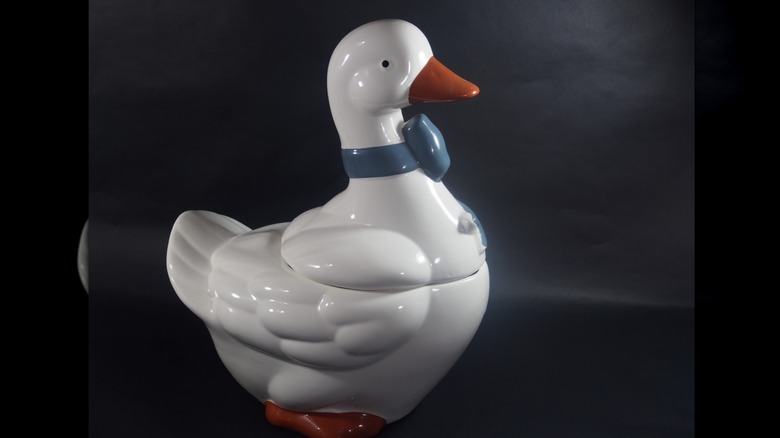
In the 1980s, there was no escaping the mighty white goose. Sure, it looked cute — initially — with the blue ribbon around its neck and bonnet to finish the country look, and maybe made for a fair furnishing when manufacturers added in more "friends." But seeing that face on every kitchen item, like cookie jars, dish towels, casserole dishes, and floor mats, felt boring fast. The obsession didn't stop here, though. People even included ducks on wallpaper borders. No, thank you.
Faux stains and more

Although people aspired to grandeur in the 1980s, it had a steep price point. The result? Move to faux. From faux fruit to silk flowers, all was game. But the worst of it was perhaps the paint. To riddle their walls with texture à la stoneware style, people took to soaking and balling up sponges and rags in paint and impressing them on their walls. The result was far from grand, and we're glad they just went back to cladding their walls in wallpaper.