

Skip Concrete & Gravel — There's A Smarter, Weed-Resistant Patio Option
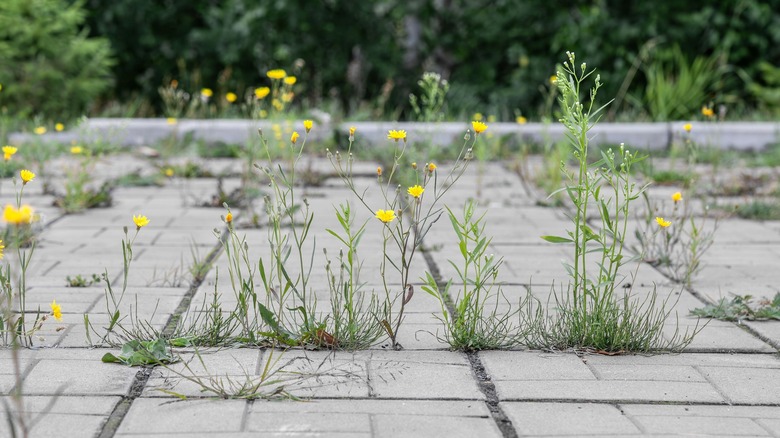
Using a permeable material like pavers or gravel for your patio helps control drainage, and it's good for the environment, as both allows rainwater to seep into the soil and become groundwater, preventing damaging runoff. However, weeds love most permeable materials, because readily available rainwater allows them to take root near the surface, above any weed barrier you've installed. Once rooted, they continue to sprout through the same gaps that allow water to drain. There is, however, one permeable patio material that discourages weed growth: Resin bound gravel (or resin bound for short). It also happens to make a particularly attractive, durable patio.
The idea behind resin bound is simple: Combine the gravel of your choice with a polyurethane or epoxy binder to make a viscous and sticky sludge that an installer spreads flat with a trowel. When the binder sets, gaps form among the stones that are large enough to let water drain, but too small for weeds to sprout. It's worth nothing that "resin bound" and "resin bonded" — two common terms you might come across — refer to two very different processes. To make a resin bonded surface, the installer spreads resin first and scatters stones on top, creating a non-permeable surface. A resin bound surface, on the other hand, is made by mixing the resin and stones together before application.
The installation process is similar to spreading concrete, but it isn't one you can DIY, and if you try, the manufacturer may not honor the warranty. It takes skill and experience to mix the resin in the proper proportions and to spread it before it hardens. There's also a risk involved, as mixing resin creates toxic gasses that require proper safety measures. If you get the mixture wrong, or you work too slowly, you've got a lumpy mess that's extremely difficult to clean up. This is one job you should definitely leave to the pros.
The perks and quirks of a resin bound patio
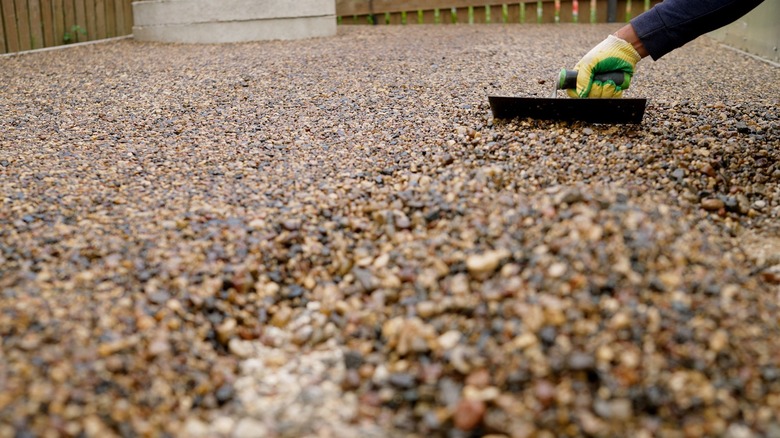
A resin bound patio offers all the benefits of a permeable surface, including elimination of drainage problems and standing water that can freeze in winter and cause slipping hazards. You can adjust the color by your choice of aggregate (pea gravel, rounded quartz and crushed granite are common picks), with colors range from pure white to jet black, and a broad palette of earth tones in between. However, the resin itself can fade in the sun unless treated with UV-resistant additive, and that will affect the eventual color of your driveway or paths. It's another reason to hire a reputable pro.
A quality resin bound surface can last 30 years, so it's very durable. It's less prone to cracking than concrete, but you only receive that benefit if it's properly installed on a stable sub-base. With a permeable sub-base, the surface is easy to incorporate into a sustainable drainage system (SuDS), an increasingly popular feature of new urban construction. Installation costs for a resin bound driveway range from $11 to $17 per square foot, but a patio is usually cheaper because the sub-base doesn't need to be as deep. It's still more expensive than concrete or gravel.
When it comes to maintenance, a resin bound surface needs very little, except for the occasional sweep and wash, since it's essentially sealed and level. You don't have to worry about weeds, because the material keeps them at bay, but you might have to remove moss and algae that grow on the surface. You can do this by using a pressure washer.