

The Nectar-Rich Flower That Attracts Hummingbirds And Butterflies To Your Garden
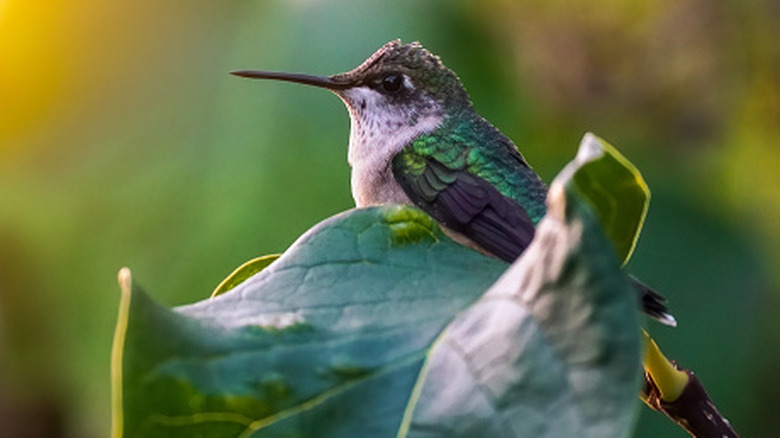
Watching hummingbirds flit around can really brighten up your day, which is one of the reasons so many people start a hummingbird garden. While you can absolutely hang up a feeder to offer them some food, planting flowers offers you both the lovely hummingbirds and the colorful flowers to enjoy. Plus, many of them also attract beautiful butterflies for you to watch! There are plenty of flowers that attract hummingbirds and butterflies, one of which is the lovely delphinium (Delphinium spp.). With tall stems covered in striking blue, purple, pink, or white flowers, they make quite the display, especially once the butterflies and hummingbirds begin to visit!
Delphinium flowers produce nectar, which hummingbirds and butterflies both rely on as a food source. In turn, they help pollinate the delphinium, allowing new flowers to grow each year. Since each stem has multiple flowers, they're an abundant food source throughout summer. Depending on the variety you plant, they may begin blooming in spring or continue into fall, attracting hummingbirds and butterflies for many months. You may also see bees and moths visiting the flowers to drink some of the nectar as well.
If you love seeing butterflies come and go, but are concerned about caterpillar damage, you can rest easy. While butterflies visit delphinium flowers to drink the nectar, delphinium is not a host plant for their caterpillars. It is, however, the host for the moth Polychrysia esmeralda, the larvae of which are called delphinium worms. You may see some damage from them or other pests, but try to resist the urge to use pesticides to treat the problem. Pesticides will also harm the hummingbirds and butterflies that you're trying to attract. Instead, you can remove the delphinium worms by hand or cut the plant back if it's heavily infested.
Attracting more hummingbirds and butterflies to your delphinium
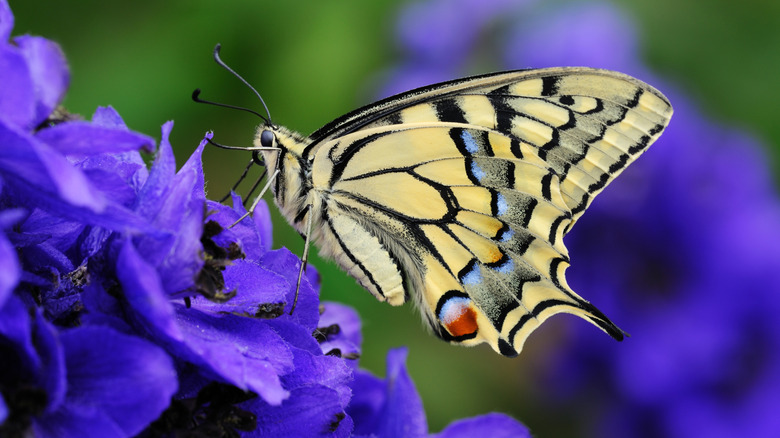
Delphinium flowers will naturally attract hummingbirds and butterflies, but there are a few ways you can improve their impact. A good strategy is to plant a mix of delphinium varieties that bloom at different times. Plant early-blooming varieties like Austin's Dawn Chorus or Galileo alongside later-blooming ones, such as Highlander Bolero. You can also include some larger varieties that may have more flowers per stem, like Pacific Giant and even reblooming ones like Blue Lace! A staggered bloom time will ensure your garden has delphinium flowers throughout most of the year. Additionally, planting multiple types of delphinium can give you a variety of flower shapes. Hummingbirds are adapted to drinking nectar from tubular flowers, while butterflies prefer more open ones. Delphinium can have either shape, so planting a mixture ensures every visitor will be able to easily access the nectar.
Once you have your varieties picked out, it's important to ensure they're properly planted and that you know how to grow delphiniums. Otherwise, your delphinium may not get everything it needs to thrive, which can lead to a weaker plant and fewer flowers. Some varieties may have increased heat or cold tolerance, but in general, delphiniums are hardy in zones 3 through 9. Outside of that range, you may be able to grow delphinium as an annual and still get to see lovely butterfly and hummingbird visitors. Plant your delphinium in full sun where the soil is rich and well-draining. Give them some shelter from the wind and water them whenever the soil dries out. Deadheading can encourage delphinium to bloom a second time as well, so clip flower stems once all or most of the flowers have faded.