

5 Common Problems With Kenmore Refrigerators
We may receive a commission on purchases made from links.
Sometimes, mysteries (and mysterious paradoxes) are solved by a fresh look at your assumptions. If you hear, for example, that Kenmore makes good refrigerators and that Kenmore makes bad refrigerators, you might question the assumption that Kenmore makes refrigerators at all. In fact, it does not actually manufacture fridges, but instead contracts with other manufacturers to make them under its name. There are particular issues that often crop up in models made for Kenmore/Sears by companies like LG, Frigidaire/Electrolux, and Daewoo. These issues include clogged drain hoses, a failed evaporator fan, a faulty water inlet valve, or even a failed compressor and coils.
On the other hand, if you have a Kenmore fridge made by Whirlpool, you might not experience many issues at all. If you do, it's likely to be an easily diagnosed (and easily fixed) thermostat problem. Consumer advocacy organizations suggest that Kenmore is a risky brand of refrigerator to buy, largely because of the quality control issues that are inherited from the actual manufacturers, or because of catastrophic and far-reaching problems like those encountered in LG-made refrigerators (and in LG-branded fridges, as well). Meanwhile, a Whirlpool-made Kenmore refrigerator is still considered a reliable purchase.
While there are a couple of common problems that cause Kenmore refrigerators to misbehave, diagnosing is never quite as easy as it seems. This is because water, mechanical failures, and other things tend to roll downhill. One problem can cause a whole host of symptoms, and a minor issue like a clogged drain hose can turn into a much more onerous component-killing issue (or, worse, a hardwood floor-destroying leak).
Freezing or intermittent cooling caused by a thermostat failure
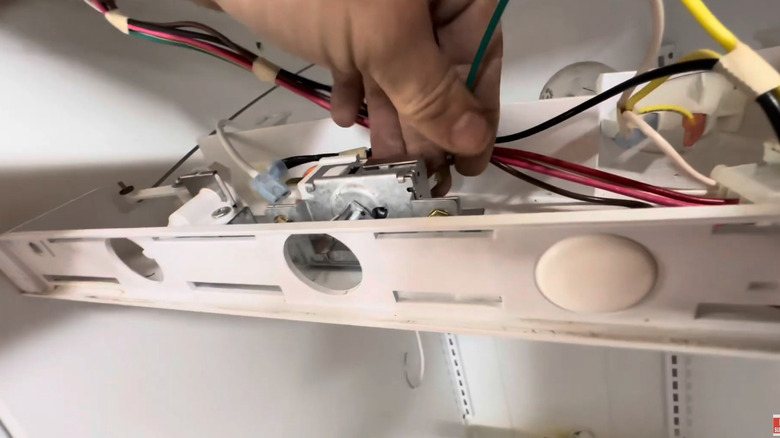
The best thing about this problem — a refrigerator that's prone to freezing food, or only cools properly sometimes — is that you can often fix it, temporarily, by giving your refrigerator a (controlled) smack. This works for exactly the reason you think it will: Something is stuck, and unsettling the fridge unsticks it (just don't hit it so hard that you risk damaging the contents, the fridge itself, or your hand). The thing that's usually stuck is the temperature control thermostat, which senses the temperature in the cooling compartment and turns the refrigeration components on and off. This problem is most common in the otherwise-excellent Whirlpool-made Kenmore refrigerators, which have model numbers starting with 106. The best and only long-term solution is to replace the thermostat. Fortunately, changing a Kenmore refrigerator thermostat is a relatively simple task.
You can further diagnose the problem with a multimeter, but if banging on it works briefly, you probably have enough information already. However, it does help to be mindful of other potential causes of a refrigerator that freezes or runs intermittently, in case the thermostat isn't the main or only cause of your trouble. Assuming it's not a new refrigerator, you haven't just filled it up after a grocery run, and you're not keeping your home unusually warm, the most likely non-thermostat cause of a fridge running too much (and therefore freezing) is the need to clean your condenser coils, which dissipate heat from the refrigerator. Sometimes, a unit whose back is too close to a wall can have the same problem, for the same reason.
Water leak caused by clogged drain hose
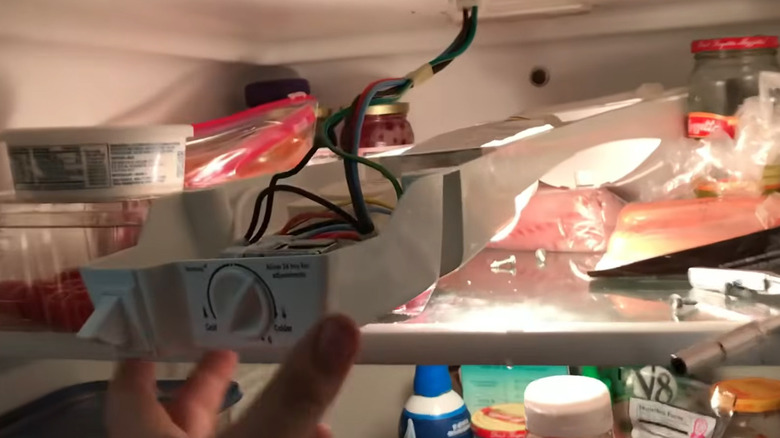
If you really want a reason to give your fridge a sound thumping, try coming home from a weekend away and discovering that your Kenmore has kept your food cold but has also kept your flooring wet, and now it's buckling faster than Ralph Nader in a Corvair. Refrigerators with incoming lines for water and ice dispensers occasionally leak for other reasons, but the most common cause of water leaking from all Kenmore models, especially the Frigidaire/Electrolux-made models numbered beginning with 253, is a clogged defrost drain line. These tubes can be clogged with foreign material like dust, frozen water, or both. Most often, the blockage starts with some kind of mystery gunk that accretes ice until the drain is completely blocked and water has to find another path to fulfil its obligations to gravity. It can also happen when the drain strap — a strip of metal that carries heat into the drain tube to prevent freezing – stops working.
Depending on the layout of your fridge, these clogs might occur where defrost meltwater exits the freezer or in hoses outside of the fridge that guide water to the drain pan at the bottom of the refrigerator. Freezer-on-top models sometimes have components inside the top of the refrigerated compartment for handling defrost water, and those can get clogged.
Blocked drains can cause a lot of problems besides leaking. It's fairly common, for example, for accumulated ice — a result of leaking — to interfere with airflow or even with the operation of the evaporator fan, which can destroy the fan and cause all manner of cooling difficulties for the refrigerator.
Water/ice-dispensing failure due to faulty water inlet valve
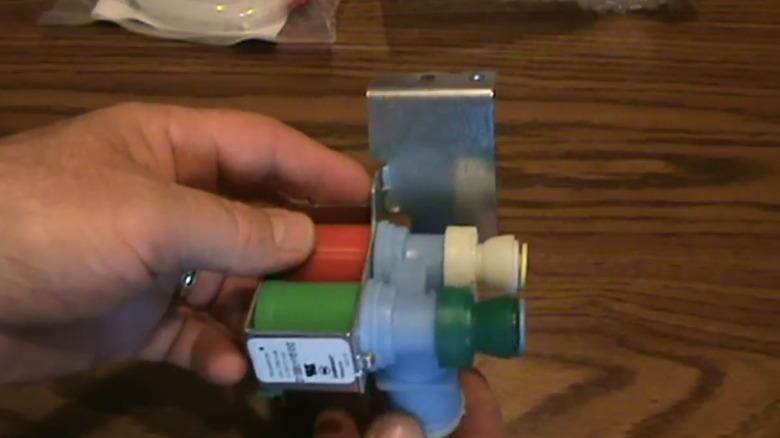
There are, predictably, other water-related difficulties common to Kenmore refrigerators. In models with ice or water dispensers, it's always tempting to look for failures in the dispensing mechanisms and related sensors. But repair professionals find that Occam's razor is useful for cutting through all the noise, and it turns out that the most probable reason your fridge isn't dispensing water or ice is that it's not getting water in the first place. The indispensable (sorry!) bit of kit for turning water on and off includes a solenoid valve that can fail and, if your refrigerator has spent any time in freezing conditions, absolutely will fail. (They're almost universally made of plastic, and the expansion of freezing water does not play nice with plastic.)
There are three main reasons you could experience trouble via your water inlet valve. An electrical failure of the solenoid can, of course, stop water from entering the refrigerator at all. The easiest way to test this is bypassing the control board and applying AC power directly to the solenoid. This is not unusual, but it's safer to use a multimeter to test the power arriving at, and continuity within, the solenoid. The second major cause, a mechanical failure of the plastic solenoid housing will provide plenty of evidence in the form of water. And it's also possible that the inlet valve is, itself, working properly, but isn't getting enough water pressure from the house to operate properly (the threshold is usually around 20 psi).
Cold freezer, warm fridge caused by evaporator fan failure
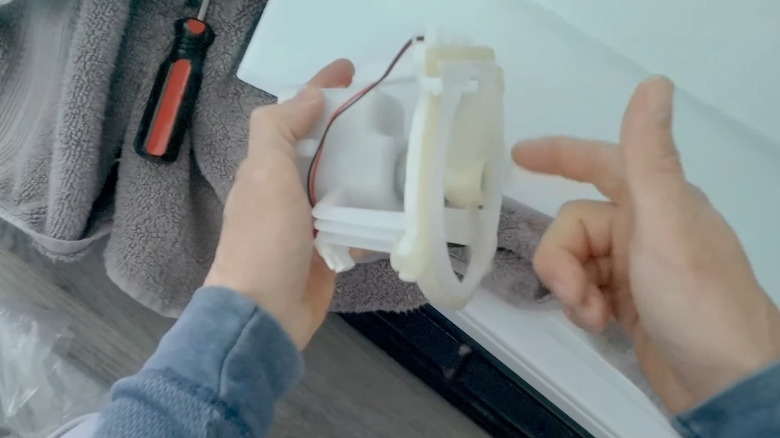
The oddity of having a very cold freezer but a warm (or at least insufficiently cold) refrigerator compartment is common in Kenmore refrigerators, and is seen regularly in most refrigerators in general. Generally speaking, this problem is caused by airflow problems that prevent cold air from moving from the freezer compartment to the refrigerator compartment, as the unit is designed to do. If a failed component causes this problem, it's usually the evaporator fan (often referred to, when failing, as the fan motor ... the part that's actually failing). And, as we've seen, this can have other causes, like ice buildup from blocked drain hoses.
There are a ton of other potential causes for this problem, mostly related to airflow. Airways may be blocked by ice buildup or by food arranged in such a way as to block vents. It can also be caused by sensor problems, frozen-over evaporator coils, gasket and other door-sealing problems, and a failed damper control — the assembly that directly controls airflow between the two compartments.
LG-made linear compressor failure in French door models
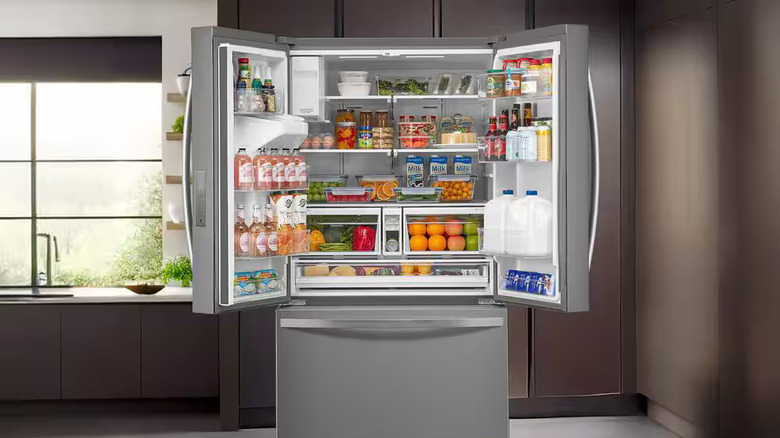
The real star of Kenmore refrigerator flameouts in recent years is the habit of compressors to fail in French door models with LG-made linear compressors. These defective compressors stop working prematurely, and as a result the refrigerator doesn't cool at all. This might be accompanied by complete silence, by a humming sound, or by the fruitless clicking of the compressor's start relay. It's also possible for the compressor to sound as if it's running properly, but without ever producing any cooling.
There are a few minor problems that can mimic the failure of a compressor, but at far less cost to repair. These include the failure of that aforementioned start relay, a common problem in older Kenmore refrigerators. There are various signs and symptoms of a bad start relay on a refrigerator, but often the start relay will click periodically without starting the compressor. Failure of the compressor's overload protector can also cause the compressor to not run, or to only run intermittently.
Some LG refrigerators, however good they are otherwise, share the same issue that you can't afford to overlook, and a class action lawsuit awarded compensation to LG fridge owners, but not owners of Kenmore refrigerators with failed LG compressors. A subsequent class action lawsuit against Transformco, owner of Sears and the Kenmore brand, specified a number of affected models that cost between $2,000 and $3,700. The lawsuit doesn't say when the affected refrigerators were manufactured, but indicates that a full list of affected refrigerators will emerge during the discovery phase of the trial. LG first introduced the linear compressor technology in 2001.