

Neither Banana Peels Nor Eggshells: The Unexpected Scrap To Toss In Your Compost
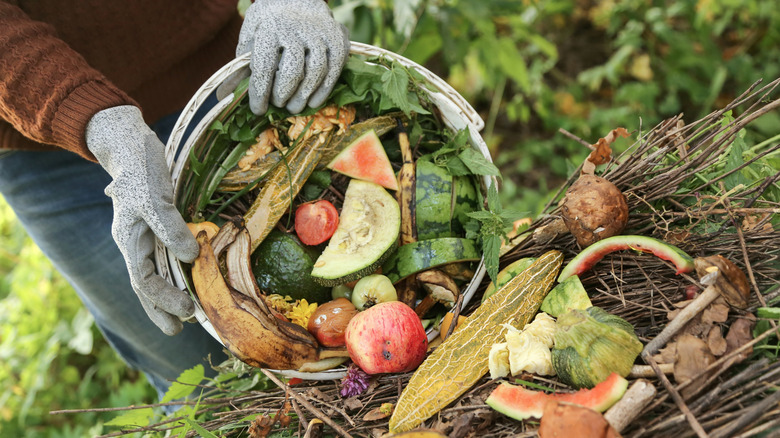
If you're new to composting, you may be wondering what things you can and cannot put in your compost. For an efficient blend, you'll probably need to toss more kitchen scraps into the pile than just eggshells and banana peels, and corn husks are a fantastic addition. The leaves from fresh corn are bulky and take up a lot of space in a trash can — instead let them enrich your compost by adding important nutrients. Depending on your composting practices, you may want to prep husks by chopping or shredding them before composting them.
One interesting characteristic of corn husks is how they're classified amongst that decaying pile of scraps. Fresh, recently peeled corn husks are occasionally considered green compost material, along with other kitchen scraps like leafy greens and potato peels. However, corn husks dry out quickly and usually take a rather long time to decompose. As a result, they tend to provide more carbon than nitrogen, and are typically used as brown compost material, like leaves and wood shavings, along with corn stalks. Whether you use your compost for lawn care or to fertilize your vegetable or flower garden, corn husks are a kitchen scrap you'll want to add to the mix.
Helpful tips for composting corn husks
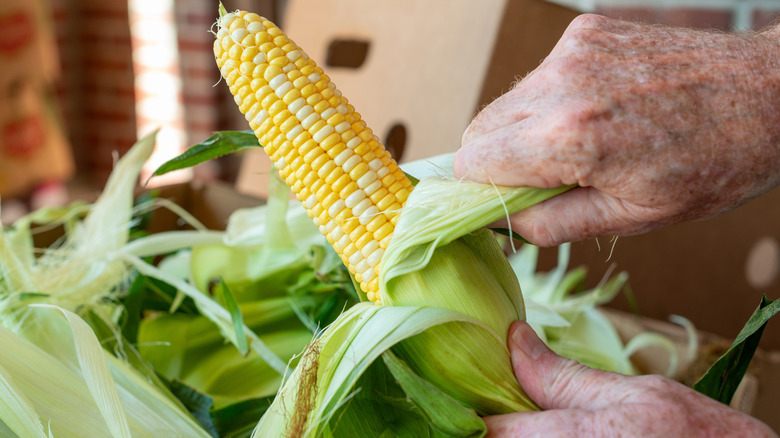
Because corn husks are made of tough fibers that decompose at a slower rate than many other composting materials, it's a good idea to cut them up or shred them before throwing them into your bin. If you're processing a lot of husks, try laying them in your yard and mowing over them to easily shred the scraps (make sure you have the grass catcher in place). This will not only help them break down more easily, but the sturdy chunks of corn debris will contribute to aeratinging dense compost as well.
To use corn husks in compost, make a depression in your pile approximately 5 inches deep. Add the corn husks, throwing greens like grass clippings on top. Combining the husks with faster-composting materials will speed up the process a bit, allowing the husks to break down faster than on their own. Other parts of the plant, such as the stalks and cobs, are excellent additions to the compost pile as well. Depending on how the corn was grown and where you bought it, remember there could be remnant pesticides on the husks. If this concerns you, be sure and check or ask before you buy it.
The ratio of brown versus green materials is an important component of home composting, as it determines how much of which scraps you're adding to an existing pile. Generally, compost should consist of one part greens to two or three parts browns. Corn husks a wonderful way to bulk up the carbon-boosting brown portion of your compost, but they can add a little nitrogen too, making them a useful ingredient.