

Not Granite, Not Marble: Erin Napier Says This Retro Countertop Trend Is Making A Comeback

We may receive a commission on purchases made from links.
There are so many different options to choose from that picking kitchen countertop materials can be tricky, but luckily, we have our favorite HGTV stars to look to for guidance. Erin Napier says that there's a retro countertop trend that's having a major resurgence in recent years. "Butcher blocks are having a huge comeback," Napier told House Beautiful when talking about trends she's seeing in clients' homes. In fact, the material is so popular that her team can hardly keep up with all the demand. "We've been having to hire more people in our factory, where we manufacture butcher block countertops," she continued.
While Napier doesn't really do trends, her understanding of why butcher block is regaining so much ground is that it's due to a certain nostalgia. "People love walnut and oak countertops," she told the outlet. "Maple was very big in the '70s and '80s." And now, as more lived-in, unique spaces are taking over from the all-white, high-gloss kitchens that were so popular in the last decade, wood countertops have the perfect opportunity to step back in. They add a certain level of charm, making the room seem more like our grandmothers' kitchens instead of a sterile builder-grade space. And now, these warm woods can work across many different kitchen aesthetics. Whether you have a warm and welcoming modern farmhouse kitchen or something a bit more mid-century, butcher block won't look out of place.
Caring for butcher block countertops in your home
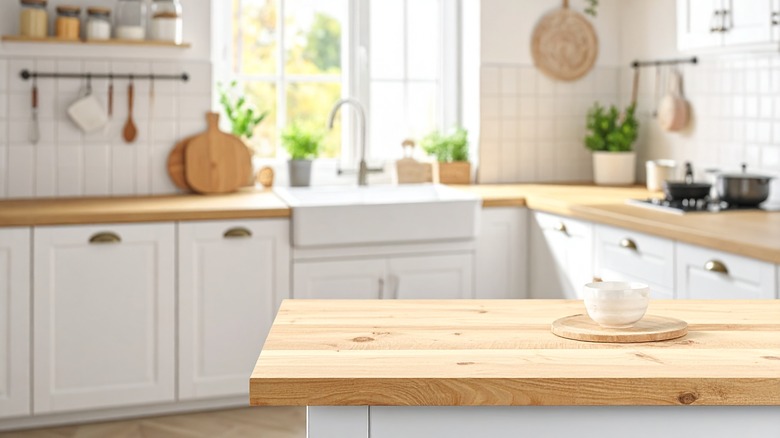
When you step away from stone options like marble and granite countertops, you open yourself up to a whole new kitchen aesthetic. It embraces a warmer, more nature-inspired look because of the wooden tones. However, you'll also notice that the upkeep required to keep them looking nice and performing well is a little different, too. As butcher block countertops are made of wood, they are porous and need to be sealed to keep out bacteria and moisture. In fact, forgetting to seal them is an unsanitary mistake you could make when cutting on butcher block countertops. You can use something like Walrus Oil Cutting Board and Wood Butcher Block Oil for this purpose. Depending on what material you use, they will need to be resealed within a range of every six months to two years.
In the day-to-day, butcher block is relatively easy to maintain as long as you stay consistent with it. While wood is more prone to marks or chips than stone might be because it's softer, it's also easier to get rid of them. You can just buff them out or restain the area, making the material very forgiving. That said, remember to wipe up spills ASAP so the wood doesn't warp. It's the same with placing something too hot directly on the surface. Always use a trivet!